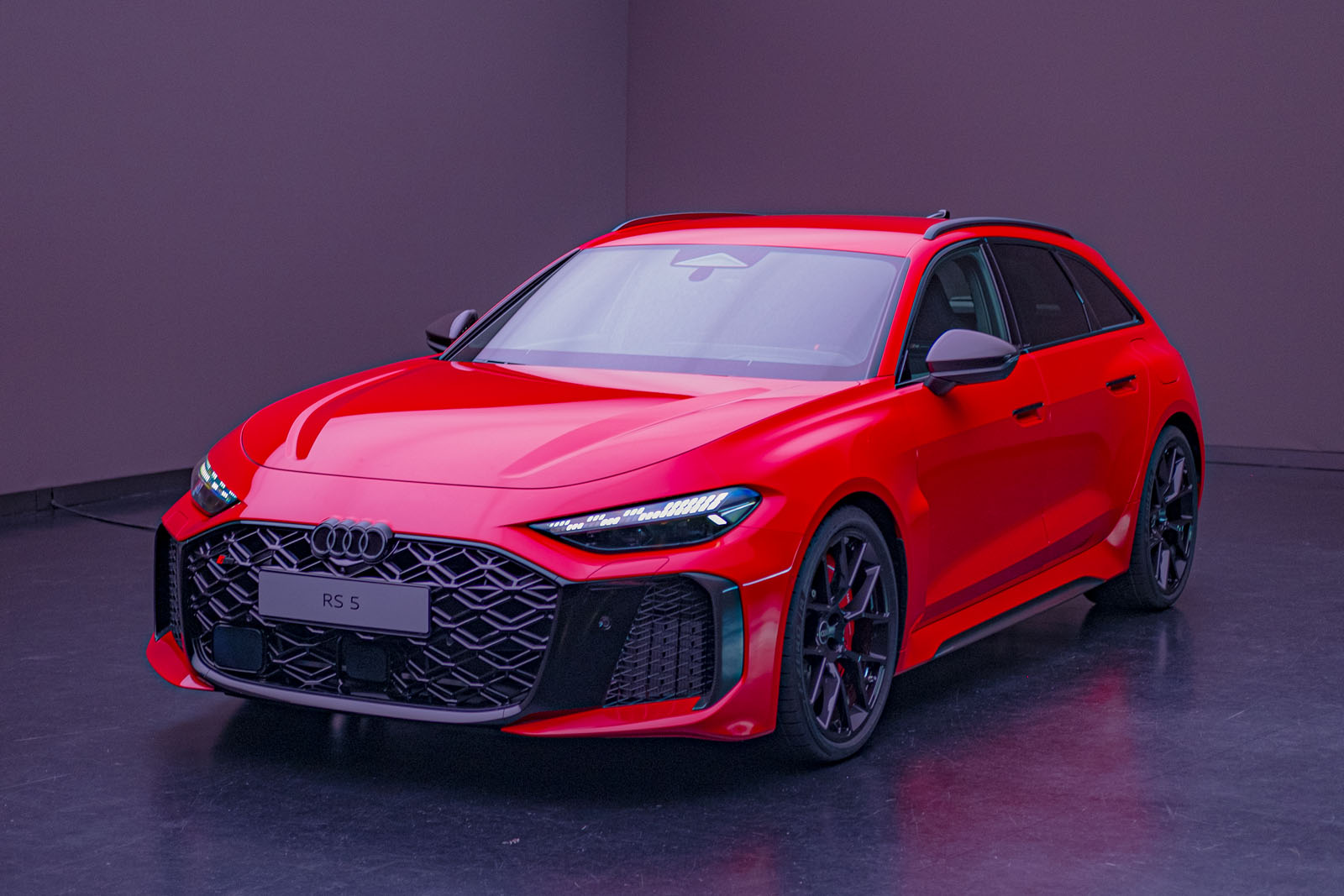

The plug-in powertrain also allows some 50 miles of electric-only running, making the RS5 a viable – if slightly outrageous – option for company car users.
Stopping power comes in the form of 420mm steel front discs and 400mm rears, but Audi also offers carbon-ceramics all-round as a £6000 option for a 30kg saving in unsprung weight.
Banishing understeer
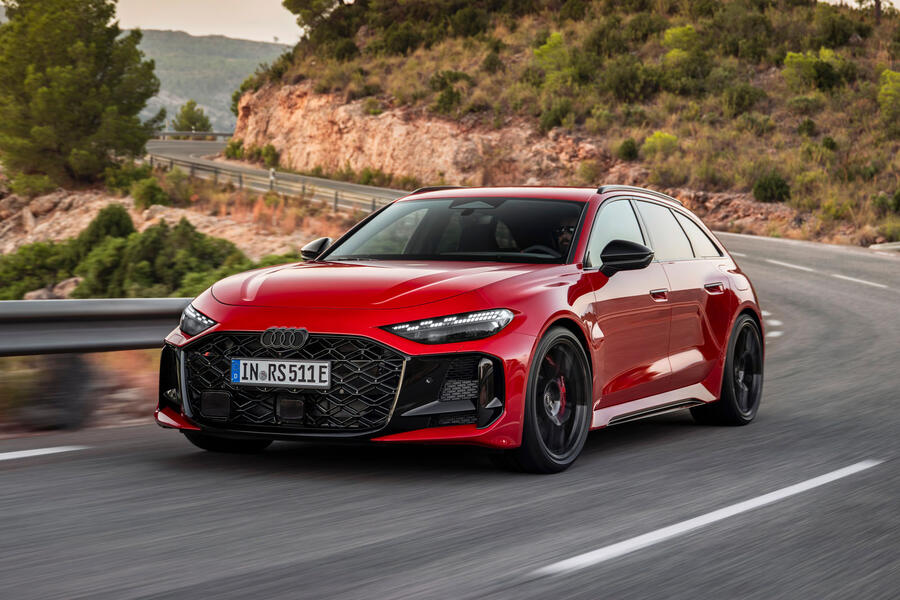
The new plug-in hybrid drivetrain has also been configured to address the RS4’s long-running understeer issue, says Audi. A new Dynamic Torque Control system includes an electromechanical torque vectoring rear differential – effectively a limited-slip differential but with an 11bhp motor, geared so it can shift 1475lb ft between the wheels in fractions of a second.
This is combined with a new locking centre differential that is capable of sending up to 100% of drive to the rear wheels. An ‘RS Torque Rear’ drive mode – essentially a drift mode – is included to take advantage of this.
“Basically, there is no understeer,” said Michl. “Even in the latest RS4 we could manage it better, but this is a new dimension – and it is my favourite development, because you can experience it every day.“
It remains to be seen whether this will translate into more driving enjoyment in the hands of Autocar’s road testers, but it puts the RS5 in the same conversation as its key rivals, the BMW M3 and Mercedes-AMG C63, whose four-wheel drive systems have the same rear-biased attitude.
“We asked how big the exhausts can be, and the answer was yes”
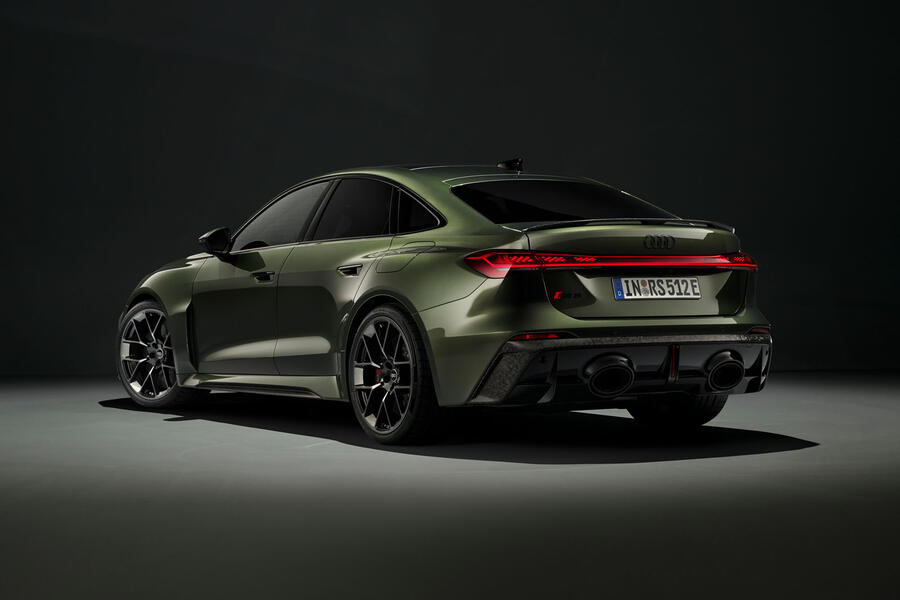
Enveloping that powertrain is a more aggressive design than has been applied to the new RS5’s forebears. It sits lower and wider than the standard A5, hunkered down over a choice of 20in or 21in alloy wheels.
“We have to go as far as possible to really differentiate this from the base model,” said designer Wolf Seebers. “We had proposals that were going even more into a motorsport direction, and we wanted to tone it down a little bit. In my view, this is already quite restrained.“
 By
By