
At the end of 2025, Google announced several changes aimed at improving how users find and install apps on Android. These changes included cracking down on unsigned apps from developers using alternative app stores and highlighting apps on the Play Store for regular battery misuse.
Both measures are presented as pro-consumer, but if Google truly wants to improve users’ lives, it should address the myriad issues that are immediately apparent when opening the Google Play Store itself.
The Play Store is a guaranteed headache, and every time I open the app, I’m overwhelmed by the confusing UI with conflicting visual elements. But this isn’t its only issue. Below, I outline some of the more apparent Play Store problems that Google should remedy in 2026.
What is your primary problem with the Google Play Store?
5 votes
Please, Google — there are enough ads

Andy Walker / Android Authority
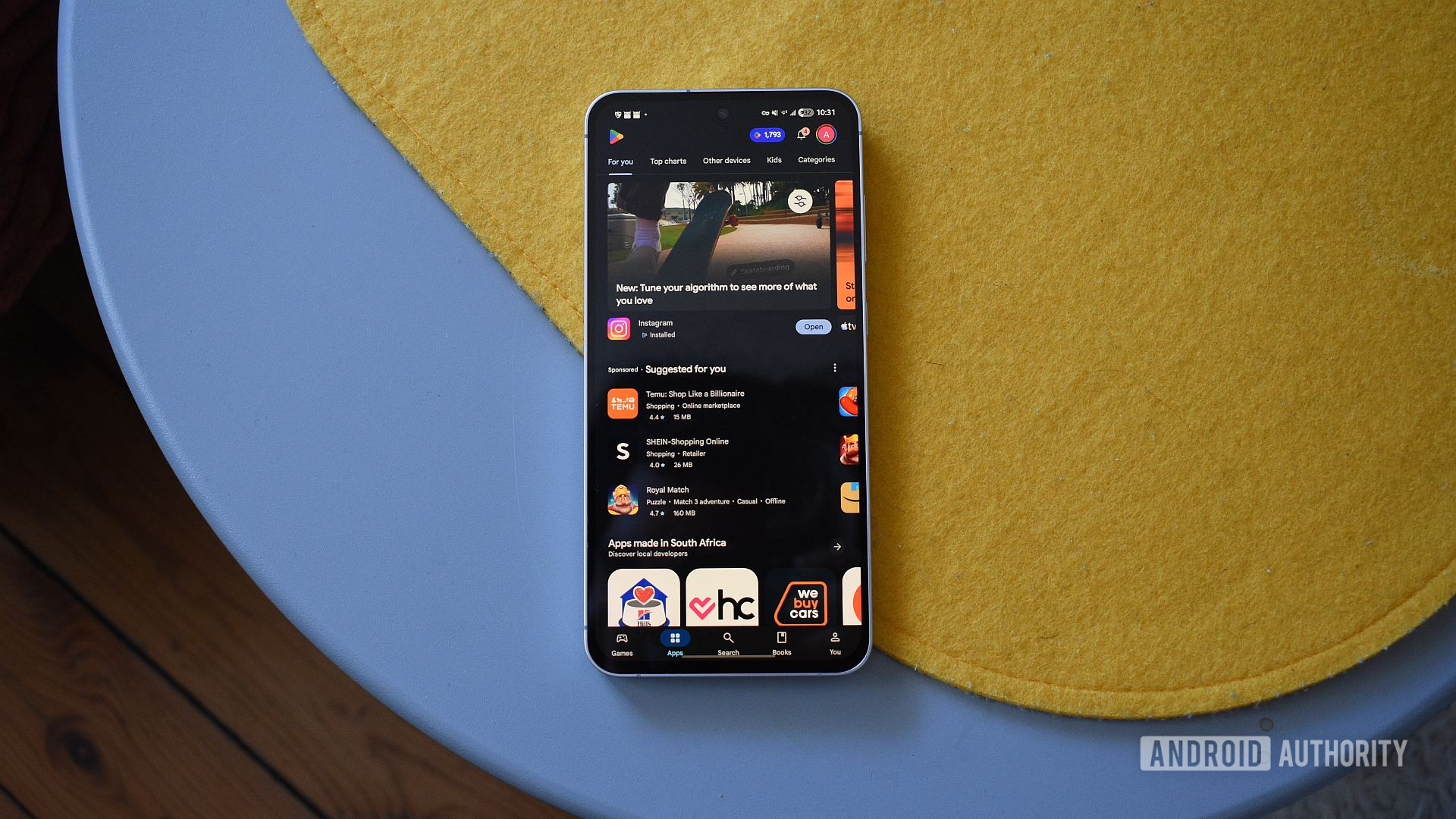
Let’s start at the top. It’s no secret that I have a complicated relationship with ads in apps. I’m well aware that developers need to earn a living, and I completely respect that, but there is a point where the sheer number of ads detracts from an app’s usability. The Google Play Store is a prime example of this.
Immediately upon opening the Play Store, I’m greeted by a flurry of ads urging me to download apps I don’t want. Google just can’t help but shove ads into practically every nook and cranny of the Play Store, making finding the app I actually want more difficult than juggling water.
How bad is the ad situation on the Play Store? Well:
- Open the app: the lion’s share of the first screen is just ads.
- Tap on the search icon: there’s an ad.
- Activate the actual search screen: more ads!
- Search results? There’s an unrelated ad for an app I didn’t search for.
The Play Store experience in 2026 involves dodging ads more than downloading apps. This shouldn’t be the case.
It’s not just a problem for usability, either. These ads generate additional revenue for Google, but they also trick unsuspecting or inexperienced users into downloading random apps. Given my experience helping my dad navigate an ad-related snafu on his device, I can’t help but feel that this is a very slippery slope.
The search company still gets search wrong

Andy Walker / Android Authority
Google is still a generic trademark for most search-related activities on the internet, so it’s remarkable that a company that made its name in this field is so resistant to delivering a comprehensive search experience on its apps.
The half-hearted search in Google Keep and the poor search function on the Pixel Launcher are just two examples. However, once again, the Play Store is the best example.
Google makes it more difficult than it should be to initiate a search in the Play Store. Users are forced to tap the search icon twice to open the keyboard, which is simply unnecessary. The experience doesn’t improve beyond this, though.
Google makes it more difficult than it should be to initiate a search in the Play Store.
Far too often, search terms highlight an entirely different app than expected. This is common on a desktop. The top of search results also includes a massive ad that occupies a third of the page on the app, which, once again, can easily fool the undiscerning user into installing something else entirely.
Don’t want to miss the best from Android Authority?


This also has other related problems. Developers often name their apps to game search rather than providing an adequate explanation or giving them a unique title. You can test this yourself by searching for PDF apps. The sheer number of duplicates makes picking the right app an absolute nightmare for experienced users. Can you imagine how overwhelming this is for newcomers?
The Play Store could greatly benefit from filtered search, allowing users to filter out low-rated apps, those released within the previous week, search within specific genres, and various other key details. A great example of an app that outclasses the Play Store in this regard is App Finder.
Quality over quantity of information

Andy Walker / Android Authority
I’d argue that individual app pages on the Play Store show far too much information, but it’s not the quantity that’s the problem — it’s the quality.
I can’t say that I’ve ever downloaded an app because of its download total, the top “relevant” review, or the size of the app itself. Sure, all these details are important to some degree, but they could certainly be presented in a more useful manner.
Here are a few concepts that would benefit users:
- I’d love to see details about download trends rather than an overall total. This would allow me to judge how popular an app is in a certain period, making trending apps easier to find. It would be a much better indicator of popularity than Google’s popular lists and also provide some context to that nebulous “50k downloads” indicator.
- A review score trend would allow me to visualize whether an app has improved (in the eyes of its users) over the past month or since its latest version update. A simple green up arrow or red down arrow to indicate a change in rating month-to-month. This can be placed in the reviews section on the app’s main page.
- A note on update frequency would be useful to gauge a developer’s commitment to addressing issues and implementing new features in their apps. We have a “last updated” notice, but it would be even more useful if Google added a frequency indicator. It could be a “x updates this year” or a “x updates per month” detail.
I’m sure regular Play Store users could think of several additional information snippets they’d prefer seeing over the current meaningless figures. Please share your ideas in the comments section.
Demands for more standardized, accurate, and useful changelogs

Andy Walker / Android Authority
Speaking of app updates, I’m not quite done here. As they currently stand, changelogs on the Play Store serve little informational purpose. They’re not standardized, so it’s up to the developer to choose what to include within them. This means that, more often than not, these integral textual updates, which should inform the user about new features, fixed problems, and future app progression, do nothing of the sort.
Changelogs should explain to users what has been added, removed, changed, and planned in an app.
I’d like to see a set of key points addressed in every changelog for every Play Store app, including what has been changed or fixed, details of features added, any items that have been removed, and plans for future versions. This should be standardized and mandated for every app on the Play Store — including Google apps. Google has been among the key offenders in this regard in recent years. It needs to set a better example.
Ultimately, detailed changelogs would allow users to make a more informed decision about how an update will affect their experience, or if the app they’re about to download has a clear roadmap.
App Store-like pricing details

Andy Walker / Android Authority
The Apple App Store doesn’t get enough credit for providing users with clear and concise pricing information for the apps it hosts. I can easily open the app on an iPhone and see exactly how much an app will cost me, either one-time, monthly, or annually, along with the names of these subscription tiers. Currently, the Play Store only details the range of in-app purchases, not any one-time payments or ongoing payments.
I don’t think I need to explain why this is an incredibly important detail, especially since many apps offer free trials before dumping pricing demands on users. Outlining these details from the outset would enable consumers to avoid any unexpected credit card surprises.
Would you stick with Android if the Play Store was your only option for apps?
231 votes
A roll-back to the previous app version facility

Andy Walker / Android Authority
Google might malign third-party app stores, but these repositories do so many things right. Let’s take F-Droid as an example. One of its more useful features that’s often overlooked is its offering of older app versions, allowing users to roll back to previous app builds if necessary. This might not sound like a must-have feature, and it isn’t, given the other problems I’ve outlined above, but it does allow users to temporarily sidestep any new bugs or issues that arise in new versions of apps.
I understand the technical demands of such a feature might not warrant the benefits, but even if it’s a single previous version for the apps available on the Play Store, or the option made available to developers themselves, I can see the value for users.
A review of the reviews system

Andy Walker / Android Authority
Lastly, let me touch on another key element of every marketplace: user reviews. Opinions from those who have used an app before you are critical for understanding if that product is indeed for you, its pitfalls, and its strengths. A well-written review is sometimes all I need to hit that download or buy button, but these are few and far between.
Granted, this can be attributed to the content users provide, but Google could also improve the way the information is presented.
To use Deezer’s Play Store entry as an example, the first review listed by Google was posted by a user from 2020. Now I agree that six years ago certainly feels like yesterday, but that is an eternity for an app. So much could’ve changed for the better or worse, and this review simply won’t take that into account. I’m not sure how Google regards this review as “Most relevant,” given its age.
I believe a more effective solution would be a templated review system that asks users specific questions about aspects of the app, such as performance, UI, stability, and whether it’s worth its price. These details could then be better collated using the current AI tools, providing potential users with a quick list of pros and cons. It would also help developers understand where their app might need further improvement.
I will say that I do like the Play Store’s Maps-like keyword cloud for reviews, but there’s still room for more improvement.
The Google Play Store is one of Google’s older properties and is now almost unrecognizable from its early days as Android Market. This is certainly a good thing if you’re an advertiser looking to promote your product on the Play Store, but it’s a horrible experience for those seeking high-quality apps for their Android phone.
These problems I’ve outlined have existed for some time now, but given Google’s clear intention to make third-party apps from external app stores more difficult to install in the future, it’s more important than ever that Google addresses the issues on its own marketplace. This would also benefit consumers — developers have plenty to gain from a cleaner, swifter, and smarter Play Store experience.
Thank you for being part of our community. Read our Comment Policy before posting.
 By
By