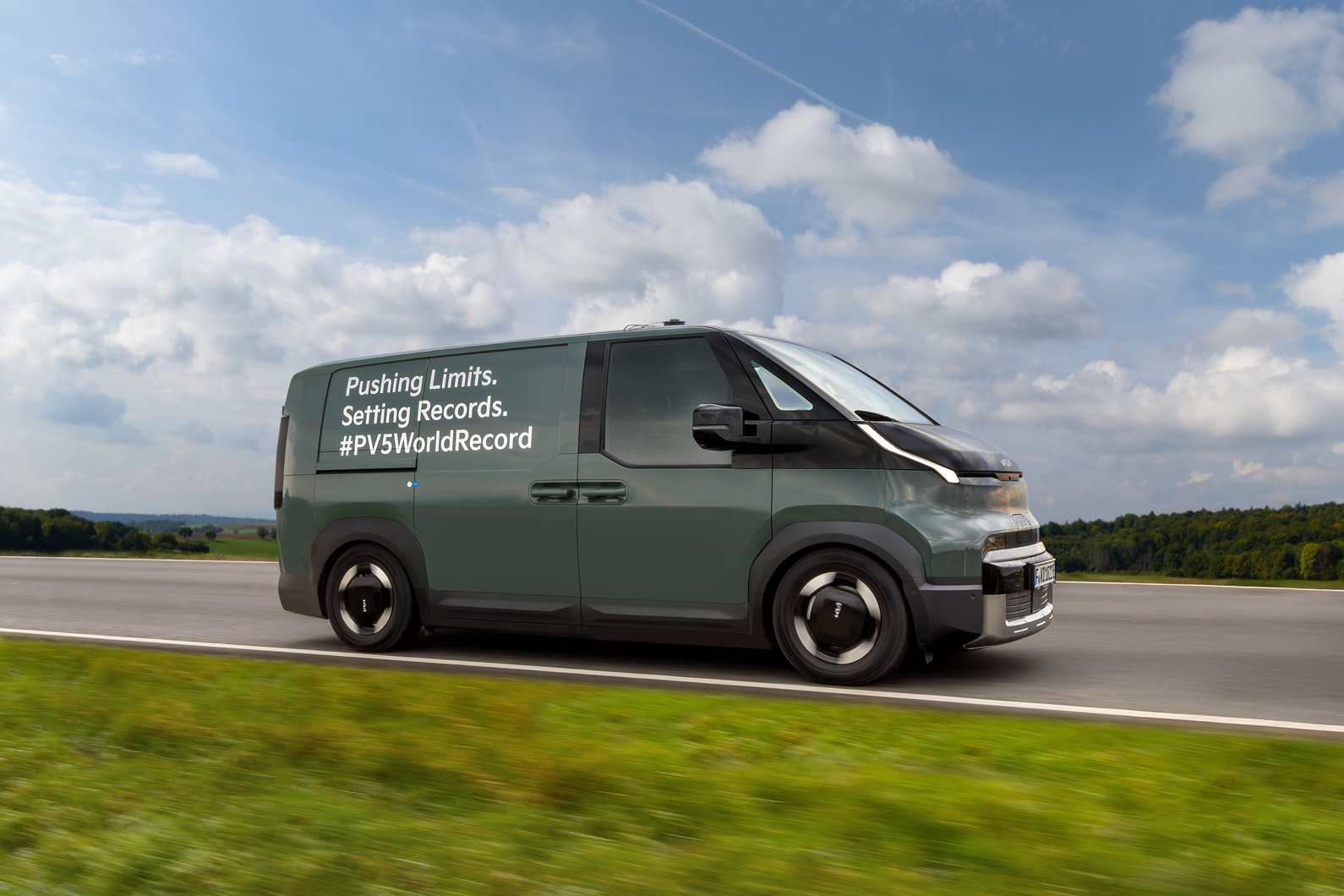

A lot longer than expected, it turns out. Using Kia’s own payload calculations, I knew that the maximum payload should theoretically reduce the range by just 10.5%. That would bring the adjusted WLTP combined range for the PV5 to just 230 miles, but by maximising the range with a repertoire of economy driving tricks, the true number would be something of an unknown.
One thing was for certain, it was likely to be crushingly boring – and, dare I say, uncomfortable.
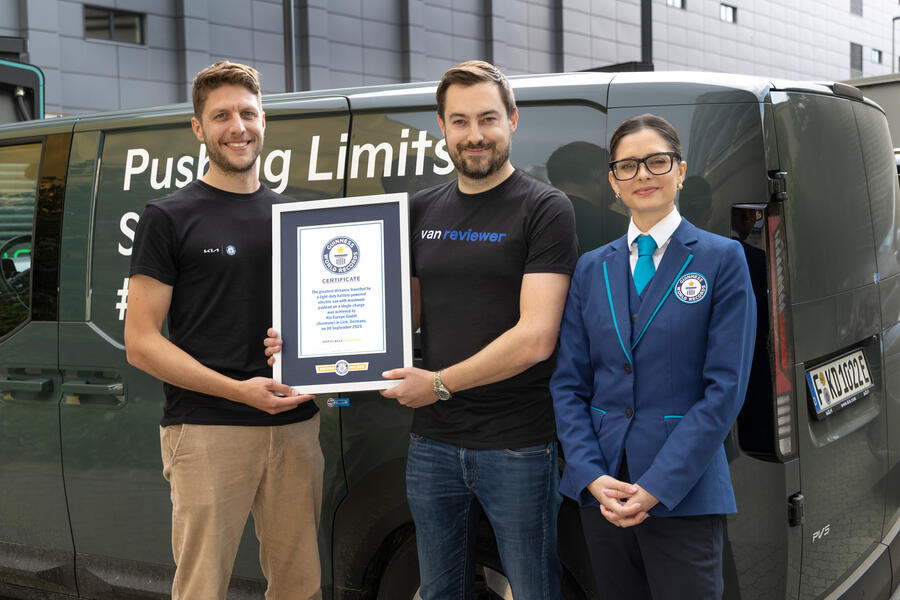
After scrutineering by independent inspectors from TÜV Hessen and buck Vermessung, as well as a Guinness World Records adjudicator, the attempt began.
Minimising harsh acceleration and braking is the key to good economy, so as I crept out onto the road, I was pleasantly surprised to find a gradual downward slope. We slowly built up speed as the indicated range crept up, as the computer adjusted itself to the new reality of travelling at half of the German speed limit. After one lap, which took just under two hours, it was clear that this attempt was going to take a lot longer than anyone might have imagined.
It was also my first time experiencing the route. I’d done some light reconnaissance with satellite images and maps, while my co-driver Chris informed me he’d put the route through running app Strava and discovered there were more than 370m of elevation changes. Some of those ascents were brutal, battery-sapping affairs with long, sustained slopes that would make a cyclist’s knees tremble.
The descents were also less than ideal: often extremely steep, and many of them had sharp bends and ended in little villages with speed limits – ruining the chance to coast through them. Careful use of the three levels of regenerative braking were needed, along with huge amounts of concentration to navigate the scores of roundabouts, traffic lights and junctions without coming to a stop.
 By
By