
The supermini was almost realised by Fiat in 1971 with its 127.
Almost, because this small, neat and peppy two-box fastback first appeared with a bootlid. A hatchback was optionally offered a year later, when the three-door Renault 5 was launched.
These two defined the silhouette of the supermini from 1972 until now and doubtless well beyond, despite the hatchback’s losing battle with crossovers.
The Fiat went further than the Renault with its epoch-making, because unlike the French car, its engine was arranged transversely, like a Mini’s, and its gearbox was hung off the end of the engine rather than stacked beneath it, unlike a Mini’s.
The 127 wasn’t quite first with this near-universal front-drive arrangement, but the Fiat Group was testing the layout with the group’s 1966 Autobianchi Primula, a bigger hatchback, and the smaller A112 city car.
The 127 and the Renault 5 looked chic, trendy and very now compared to the small three-box saloons of the late ’60s, and it wasn’t long before other manufacturers scrambled to produce rivals. Fiat and Renault gained a huge head start, however, Fiat particularly. It eventually sold close to five million 127s and followed this with another 8.8 million Unos, variations on this hatch surviving in South America until 2014, nine years after European sales ended.
The Uno was followed by the first-generation Punto in 1993, both these cars designed by Giorgetto Giugiaro’s ItalDesign.
During its six-year life, the first version sold almost 3.5 million examples while the second, launched in 1999 and overstaying its welcome right out to 2010, made almost three million. The third and final version, originally launched as the Grande Punto, appeared in 2005, its predecessor hanging around as the Punto Classic.
Of the Grande Punto, high hopes were held following the disappointment of its predecessor, whose on-the-road reality fell well short of what plenty of rivals now offered.
Scoop images showed a crisply handsome design whose grille was frequently likened to a Maserati’s, and what was rumoured to be an appealing interior too.
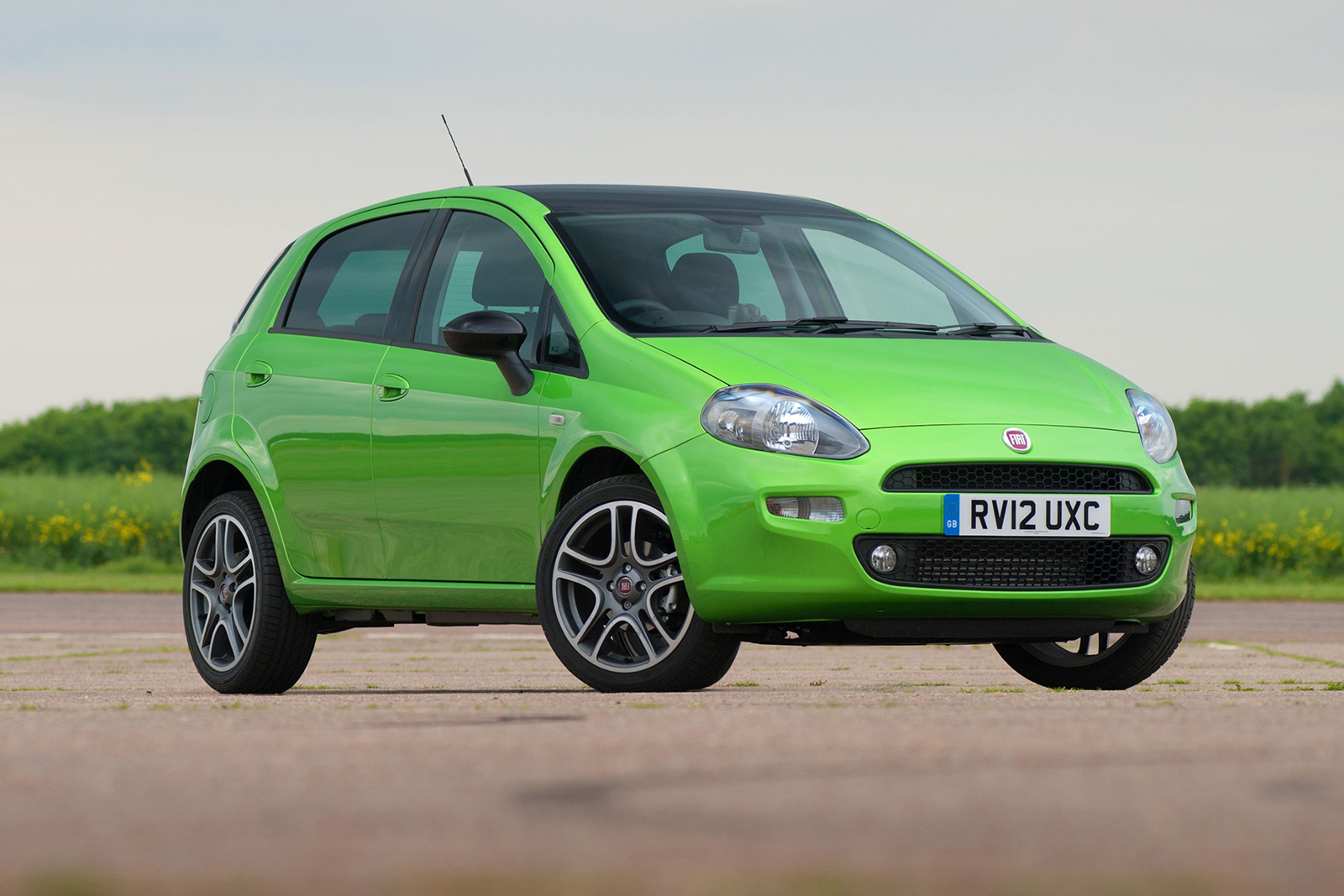
And when it emerged in 2005, the Grande Punto certainly didn’t disappoint in the looks department. Its grille couldn’t be mistaken for a Maserati’s, but like the rest of the car, it carried a tasteful Latin elegance about it. Particularly appealing was the rear end, as it is today, the high-mounted tail-lights pioneered by the original Punto, allowing for an especially classy and minimalist design.
 By
By