

Written by Jenny Morgan. Posted in Riders
The Dakar Rally is a unique motorsport event, allowing amateur participants to line up with their professional counterparts and race over exactly the same course, under exactly the same rules. It’s also one of the few premier-level sports where men and women compete together on completely equal terms.
Originally conceived as the ultimate endurance test of competitor and machine, the Dakar has evolved into a big-budget factory showdown, and it’s now all about who is fastest off-road over an arduous two weeks and torturous 9,000 kilometers.
So, what continues to attract women to take part in what is often cited as “the toughest off-road race in the world”? British adventure rider, rally racer and 2011 Dakar competitor, Jenny Morgan, profiles three successful female Dakar riders, asking what inspired them to take on this brutal and often heartbreaking pinnacle of off-road motorsport.
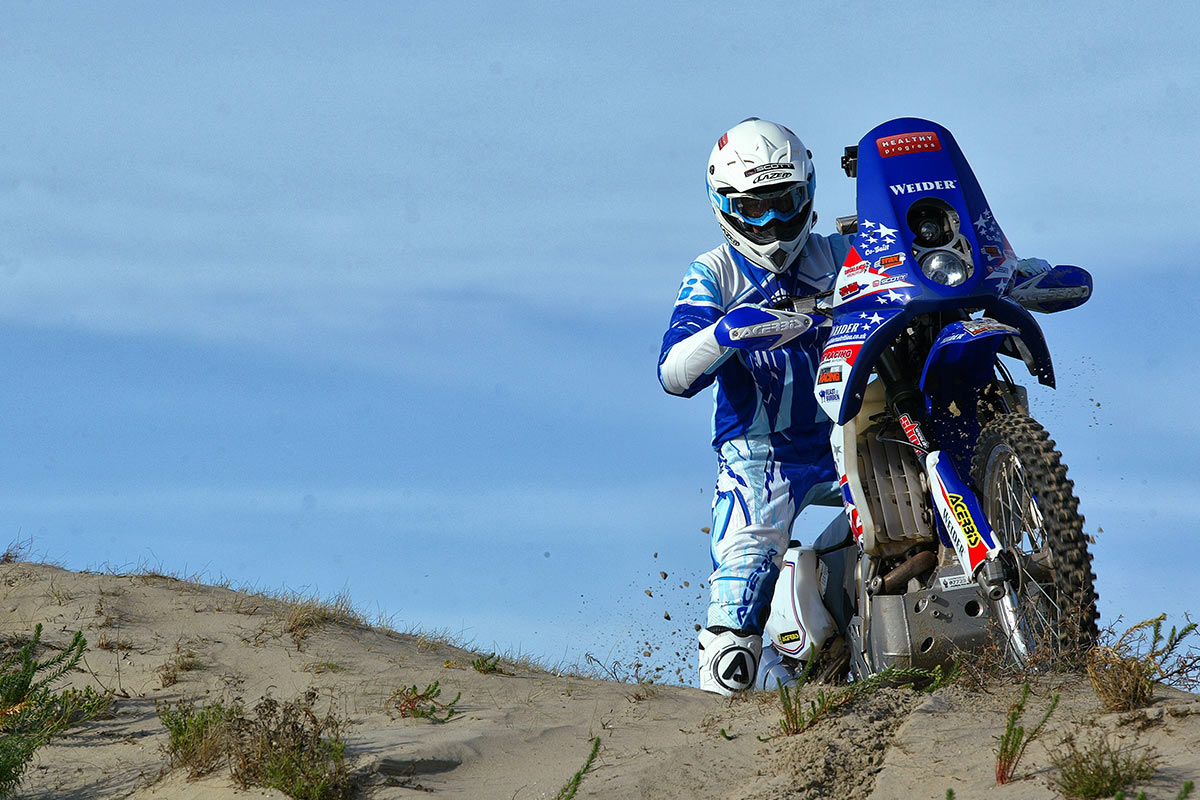
Annie Seel
Number of Dakar Rally participations: 5
2002 Africa—54th
2007 Africa—94th
2009 South America—79th (2nd moto feminin)
2010 South America—45th (1st moto feminin)
2011 South America—83rd (4th moto feminin)
Annie Seel, a petite and personable Swede, is arguably the most successful female rider in Dakar, having finished all five editions she entered and placing 45th overall and first female in 2010. She is also the only woman to have raced in both the African and South American editions, together with a 100% finish rate in all 21 International rally-raid events she has competed—earning her the moniker “Rally Princess” by adoring fans.
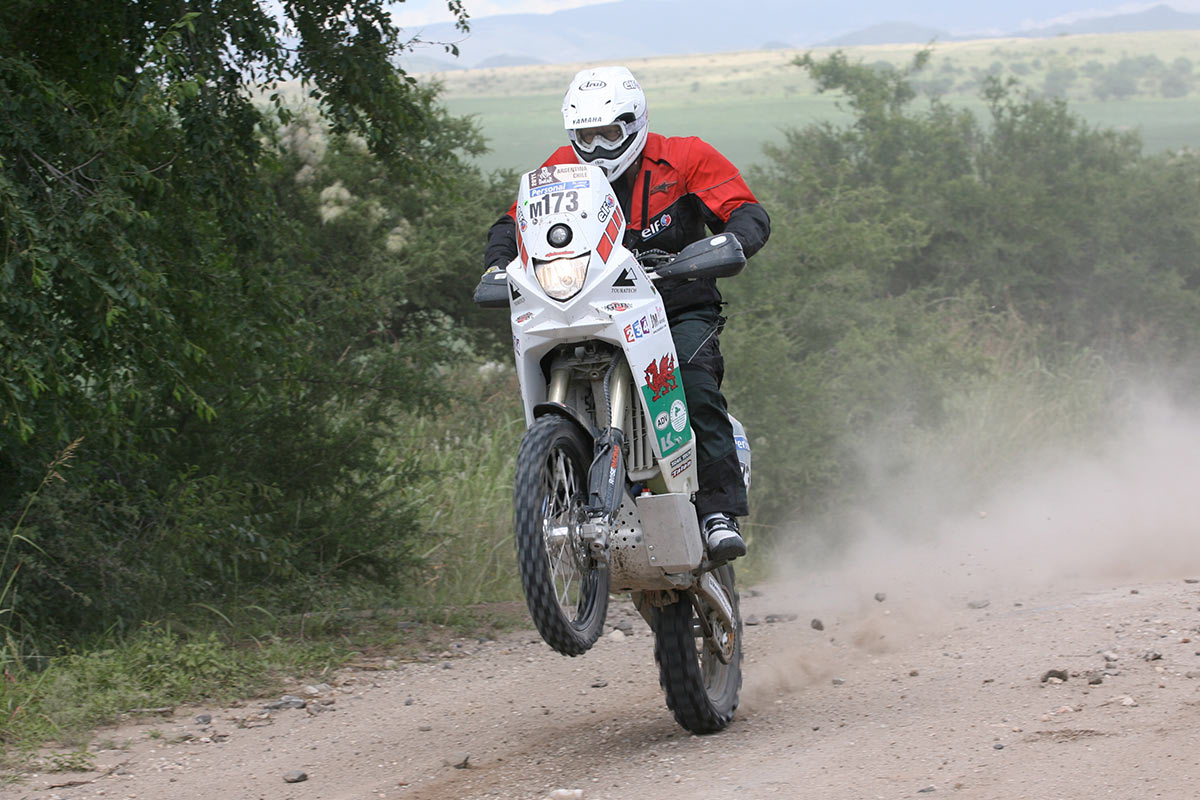
Her determination stems from childhood, “Before my father died, I would spend weekends with him working on old cars.” In her late teens Annie started road racing, then achieved success in the Nordic enduro championships during the 1990s. “The moment I first rode on sand I knew I’d found my specialty,” she grins. Her first international rally was just 10 days later and she was a top 50 finisher, despite riding the last two days with a broken foot!
“I had friends who had raced the Dakar, but never thought I would be capable to take on that event,” she says. “But having finished well in other rallies, by 2002 I felt I might actually have a chance after all….” Misfortune struck just four days in when she broke her hand. Undeterred she struggled through the marathon task ahead of her and was rewarded with an impressive 54th overall in her first Dakar.
After her crowning success in the 2004 Cross-Country Rally World Championship, Annie believed she could return to the Dakar in 2007 with a more professional and calculated approach. Plagued with technical issues, she was disappointed with her final position of 94th.
Returning two years later to improve on that performance coincided with the move to South America, and Annie was struck by how different the Dakar had become.
“In Africa, bivouacs were very basic, and short daylight hours meant you would struggle to get in before dark. It felt endless—and whatever you didn’t bring, you did without. Conversely, the overwhelming spectator support in South America means it has lost that profound feeling of survival I so enjoyed.”
Recurring injuries also mean that Annie has effectively retired from moto racing, and she’s now focused on four wheels—auto stage rallying, together with co-driving the Dakar this year in an SSV (side by side vehicle). “I like a new challenge,” she smiles, “because I still feel I’m at my best when things are at their worst!”
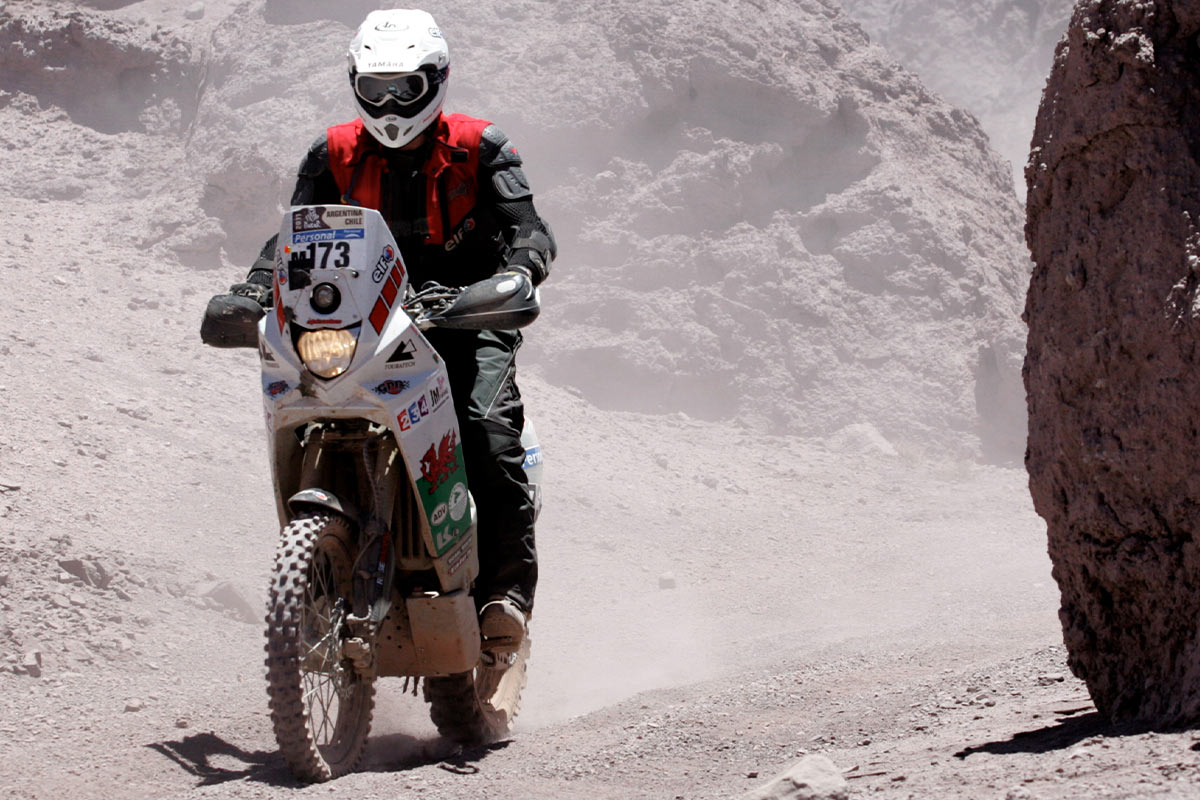
Patsy Quick
Number of Dakar Rally participations: 4
Africa 2003—DNF (injury and evacuation)
Africa 2004—DNF (timed-out due to adverse weather)
Africa 2005—DNF (withdrawal due to mechanical issues)
Africa 2006—Finished at last! 88th
Patsy Quick’s tenacity during her four-year campaign exemplifies the “Dakar spirit”—failing to finish in almost every way possible, only to come back year after year ever more determined—ultimately achieving the accolade of “first British woman to finish the Dakar,” in 2006.
“It’s like a drug,” she says, “the Dakar really gets under your skin, and you just have to keep going back until you beat it!”
Her first attempt ended prematurely with a serious accident and medical evacuation, resulting in surgery to remove a ruptured spleen. Undeterred, she returned the following year—but was ultimately excluded after failing to make her start due to horrendous weather conditions—a casualty of the event’s rigid timekeeping.
Her third attempt was cut short due to a mechanical failure. “Dakar is like the ‘Everest’ of the off-road world,” she offers, “it was a mixture of stubbornness and determination to get that finish for everyone who had supported me—but most of all, I just wanted to beat the desert itself.”
It wasn’t until the 2006 edition—immortalized in the TV series “Race to Dakar”—that Patsy finally achieved her goal, together with her compatriot Clive Town. “It was a surreal feeling. You can’t really believe that after four years of blood sweat and tears, it’s all over. It’s hard to explain to people back home just what you’ve been through, and for a number of years afterwards I felt there was a huge hole to fill.”
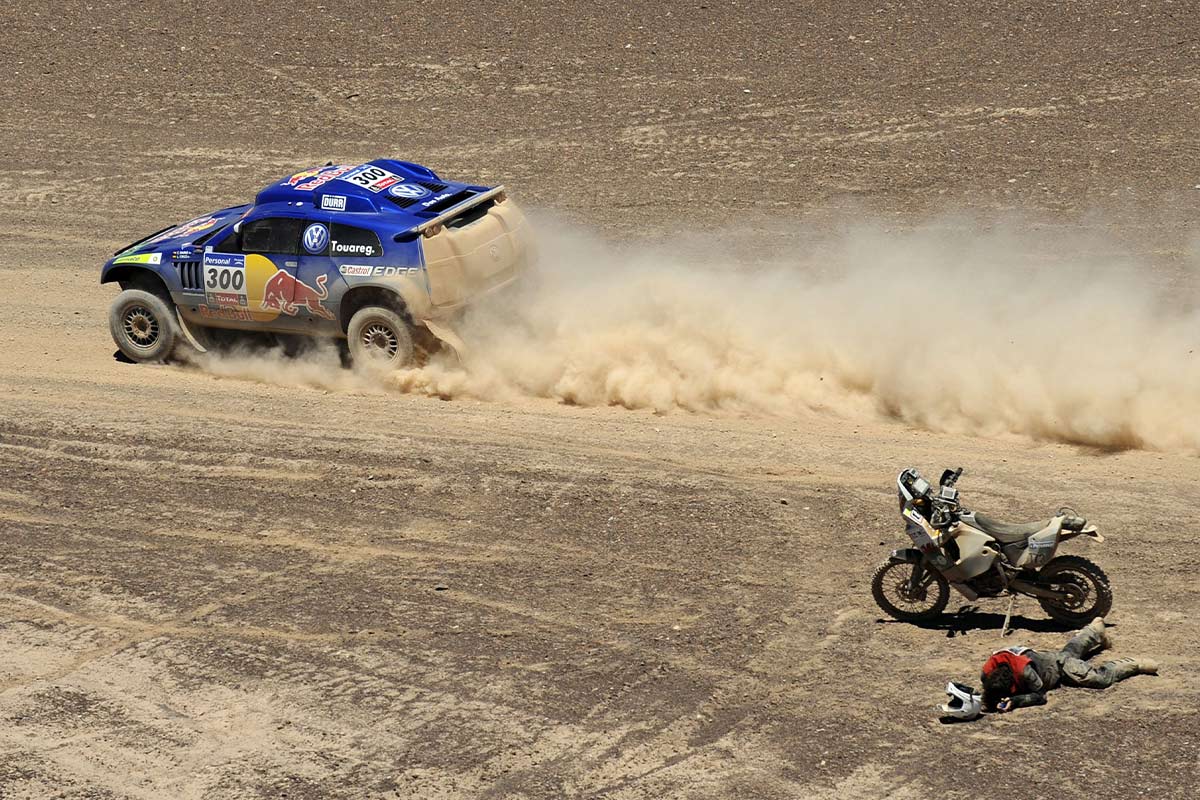
Patsy decided to use that experience in developing her own rider training and rally assistance company: Desert Rose Racing (DesertRoseRacing.com), and continues to support riders from all over the world, including, of course, at the Dakar every year.
“The Dakar has really changed [since it moved to South America]—it’s become much more of a [professional] race now,” she suggests. “Before you’d have a handful racing, then the rest of us—now everyone is going as fast as they can every single day! In Africa, you’d all be queuing for breakfast together and sleeping in tents, now it’s all about who’s got the biggest motorhome!”
Patsy’s advice? “Be under no illusion how hard it is—you have to be utterly dedicated and committed, and I think a lot of riders still underestimate that.”
Tamsin Jones
Number of Dakar Rally participations: 1
South America 2010—86th (4th moto feminin)
Tamsin Jones is typical of the new breed of Dakar racer, coming from a multi-disciplined background of extreme sports—long distance running, snowboarding, World Cup downhill mountain-biking and extreme enduro.
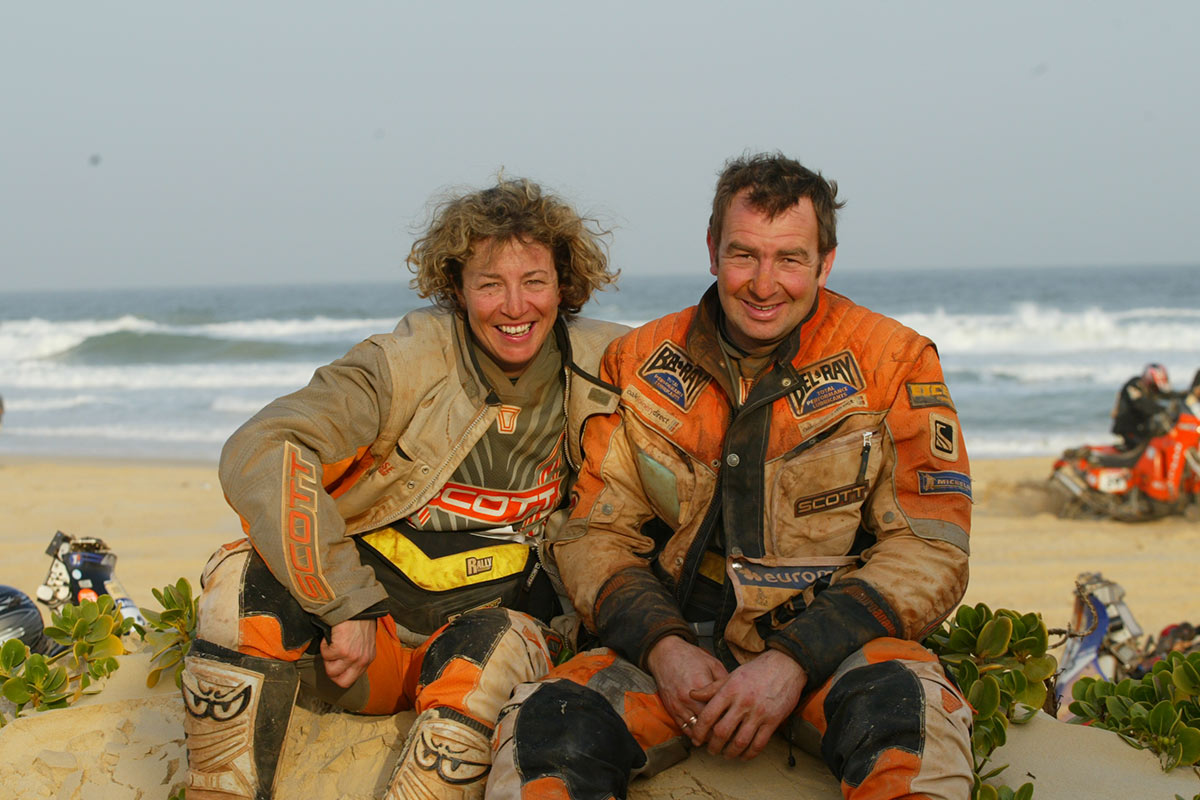
She is engaged to fellow British Dakar racer Craig Bounds and they currently run a successful enduro/rally and trials riding training school Black Desert Training from their base in South Wales. Tamsin and Craig also continue to support the local community with their long-term off-road training program for underprivileged young riders.
“I remember seeing some old TV footage of the Dakar, and the riders were so beaten up—and I thought, I want to do that! Then once I’d told all my friends, there was no going back,” she smiles. Tamsin is one of the few Dakar rally competitors who managed to finish the event on her first attempt. “It was still the hardest thing I’ve ever done—my motivation throughout the second week was to simply finish as I didn’t want to come back! I really would have dragged the bike to the end if I’d had to!”
Tamsin’s experience as a charity fundraiser helped her personal campaign, although she recalls how nervous she was at the start line, “I was thinking how little time I’d spent on the bike recently, with all the fundraising and physical training required.”
The first few days of the 2010 event pushed her to the limit mentally and physically, “You have to be stubborn—have a never-give-up attitude, be multi-skilled and prepared to do what it takes to get what you want. It’s quite a selfish thing to do,” she admits. “For me the most memorable days were those where you got in after midnight—that’s what I imagined Dakar to be, and for me it was!”
* * *
From these brief insights into what it takes to be successful in Dakar, it’s clear that despite different backgrounds and motivations there are common themes of determination, tenacity and, indeed, a degree of selfishness required to compete at this level. Even then it appears luck still plays an important part.
For many the Dakar is a lifelong dream. I too have unfinished business with the Dakar, having suffered an accident and subsequent medical evacuation on the 2011 edition, and agree that once you get the bug, you do whatever you can to return.
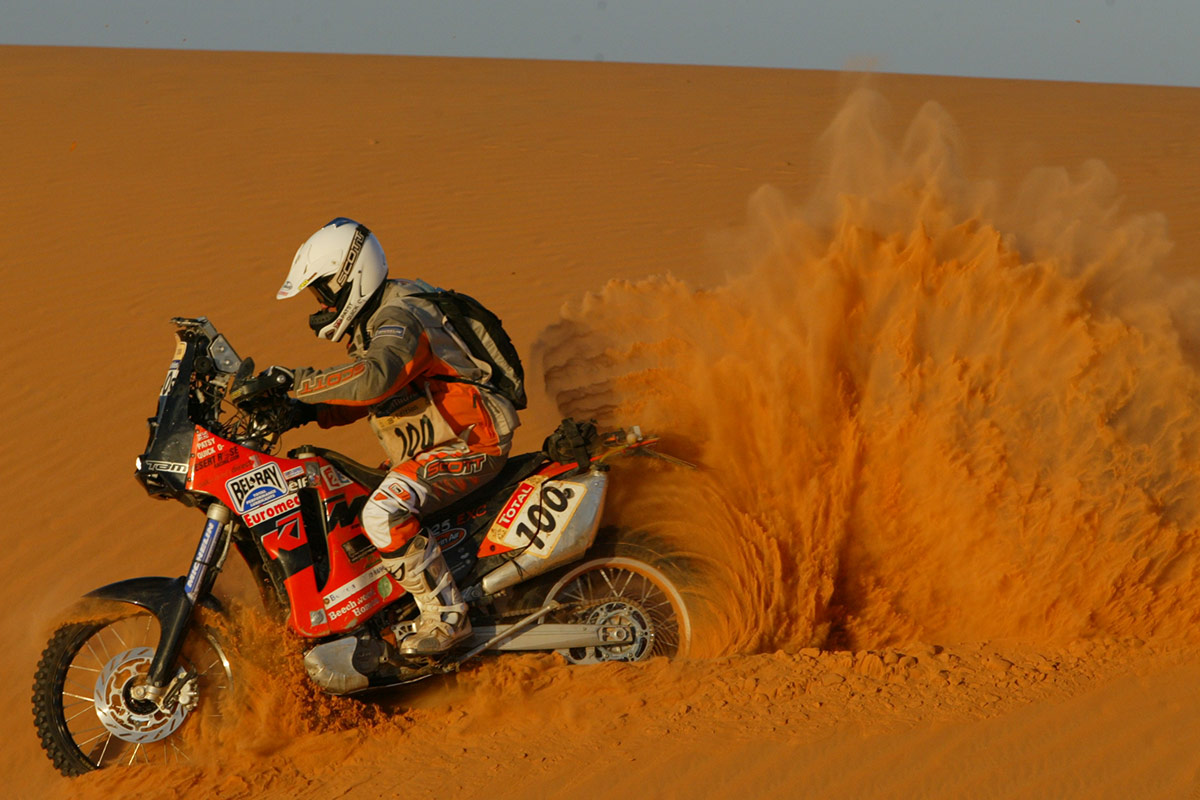
Jenny Morgan had the support of an independent British team who plan to debut their own 450cc bike in the Dakar Rally 2015. It is also their intention to offer a second fully-supported team bike in an all-inclusive rental package, and they’re particularly keen to attract a rider from North America. Rally-RaidProducts.co.uk
 By
By