
With that short front overhang and an upright stacked ‘electric machine’ at the front (motor on top of reduction gearset), there’s limited crushable space there, so a large aluminium casting each side, locating everything from the front suspension to the A-pillar bases (a much greater distance than is normal, remember), helps dissipate frontal crash forces outwards to the sills.
The battery packs are stressed too, of course. In a side impact test, their structures absorb 70% of all crash energy.
There’s no stowage space under the bonnet. Only at the very rear, where clearly there’s no need for an exhaust, is what you might consider dead space. Jaguar has fitted a deeper boot box in there, big enough for a pair of overnight cases.
Shall we spend a few quick words on the recent newspaper report that JLR had asked its engineers to develop a range-extender powertrain for the Type 00?
JLR is adamant that one isn’t coming, and indeed if you were looking to put a combustion engine in here, something else would have to go. A compact engine that replaced the front motor would be perhaps the most (only) sensible option, with a fuel tank where the foremost battery would be, or a small generator might fit under the boot floor. But this is clearly an electric car, and if you went looking for signs that the platform has V8-and-propshaft capability baked into it, you wouldn’t find any.
The Type 00’s wheels are huge, 23in as standard, with Pirelli summer, all-season and winter tyre options, all developed bespoke for this car and sized 255/35 at the front, 295/30 at the rear.
There will be a no-cost 21in option for some markets with particularly crummy roads (insert joke about the UK’s here), but “it’s not compromised on 23s”, says Matthews. “We want the car to ride the best when it looks the best.”
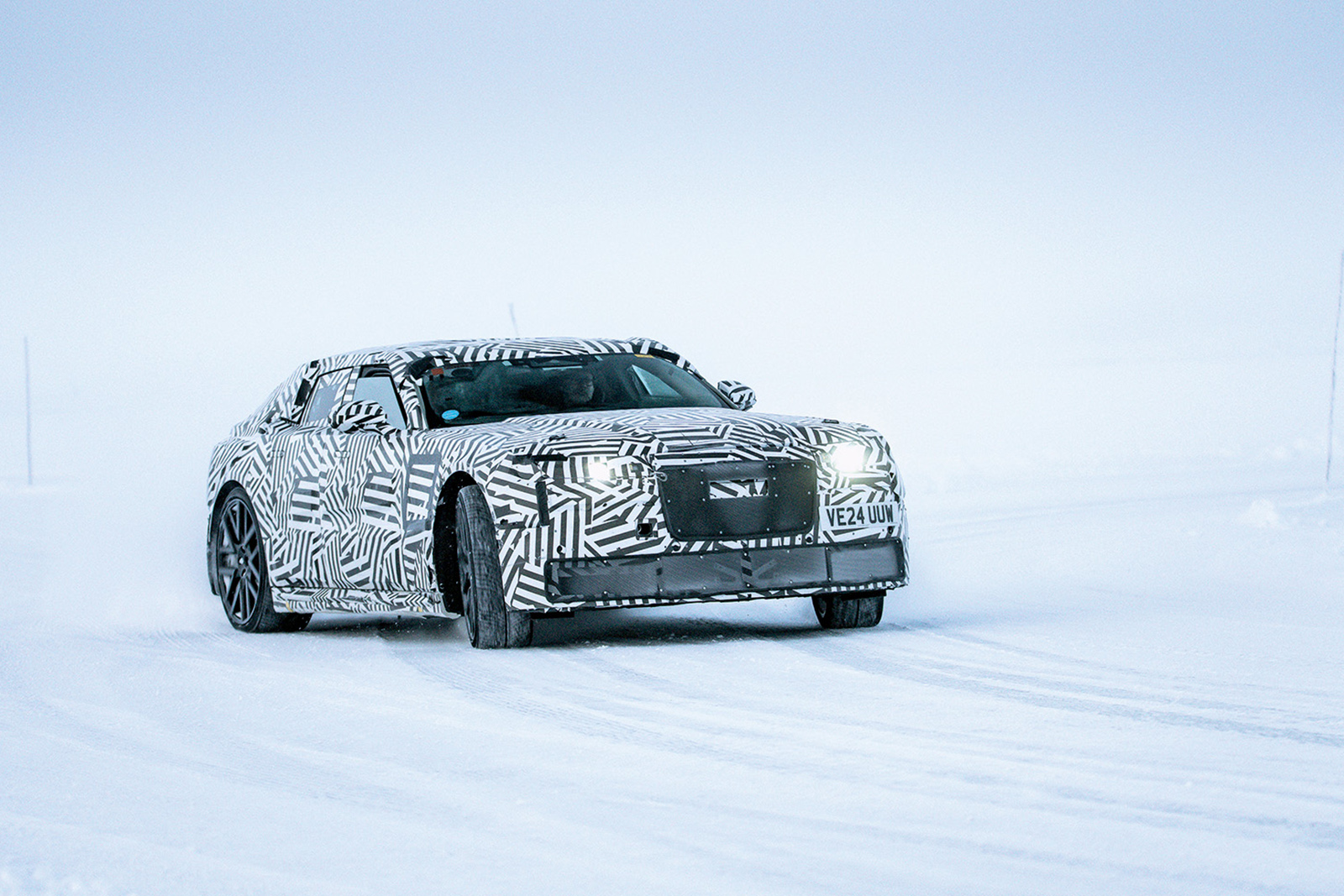
So let’s see. I’m going to drive two different prototypes: one built in 2024, a vehicle dynamics team’s car with stability systems switchable, and a later prototype built in October 2025 in ‘key-on’ mode, meaning all systems active, which is also one of two ‘golden cars’ – prototypes with all of the latest software and hardware fitted to them.
 By
By