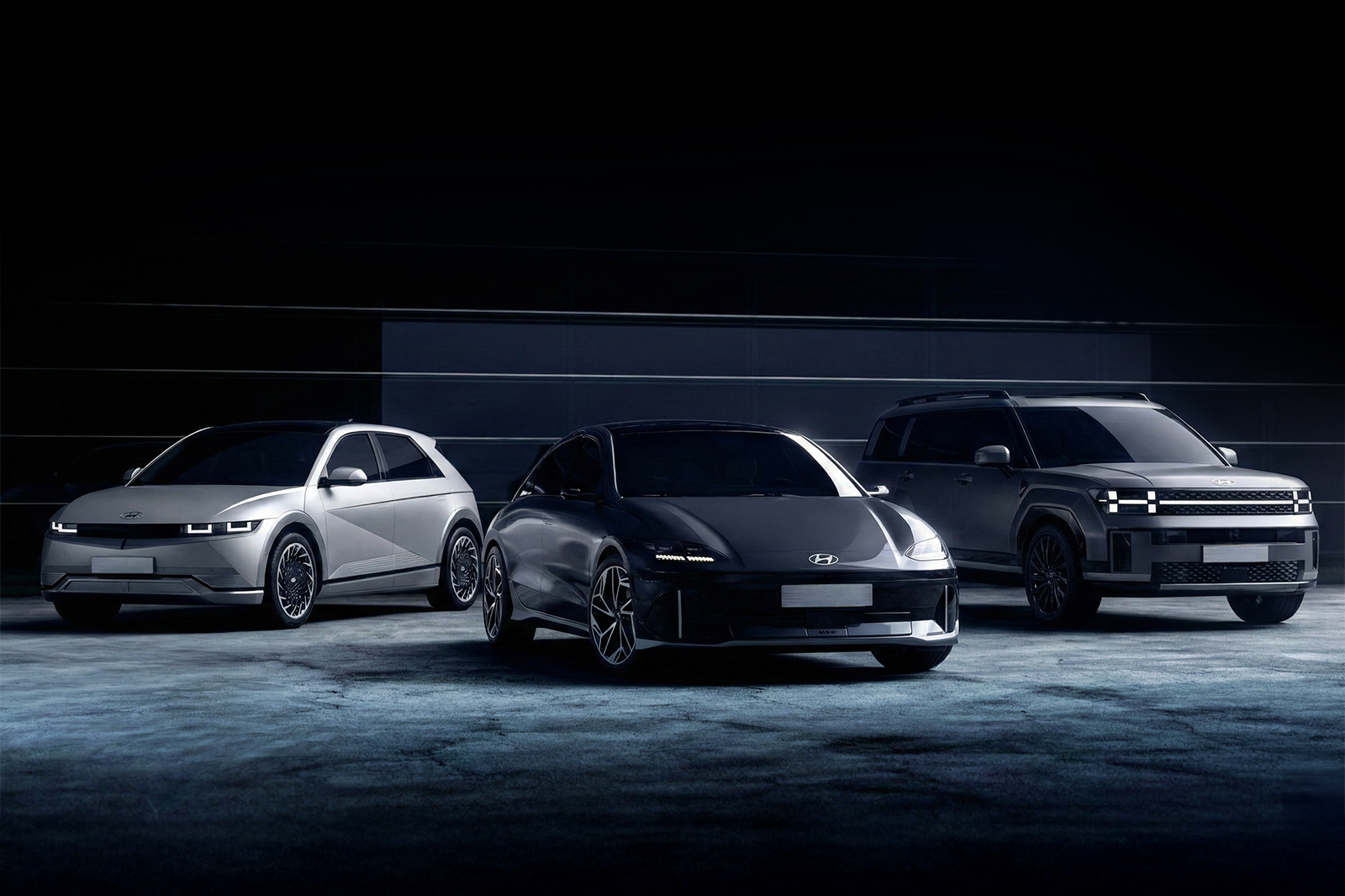

Hyundai will make its cars look more closely related as it targets a more cohesive line-up, but it won’t move completely away from the ‘chess piece’ design strategy that gives each model a distinct character.
The brand’s Europe CEO, Xavier Martinet, said the bold Concept Three show car – which previews the forthcoming Ioniq 3 hatchback – was a statement of intent for the firm’s plan to continue leveraging striking designs as a means of standing out from the competition and catering to evolving customer demands.
“When we revealed the Concept Three at Munich last year, people said: ‘Wow, finally – something different that’s not another SUV. A very strong design,'” said Martinet.
Ultimately he said the company’s prevailing design strategy remains “to create something that nobody has on the market” with each new car.
However, he acknowledged a lack of homogeneity in Hyundai’s line-up, with each model linked only subtly by their pixel-style light designs and a limited number of other small cues, and said the firm would work to redress this by introducing a more obvious overarching design language with future models.
“Maybe in the past, there was not this systematic sense of family between our vehicles,” he said. “It’s something we’re working on, but we will never do the ‘photocopier machine’ and go the other way around. We’ve seen a few brands who went maybe too far in this direction.”
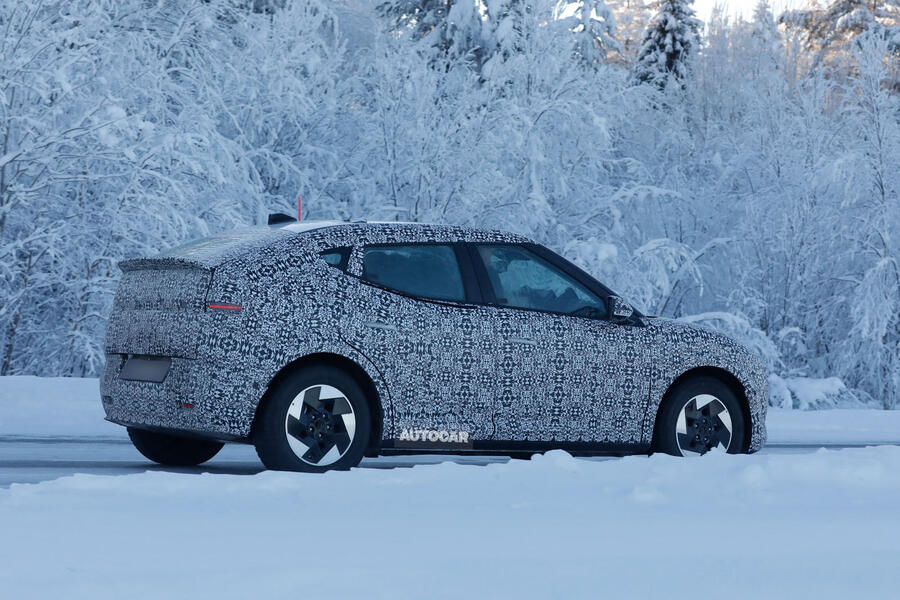
He said the brand remained committed to head designer Sang Yup Lee’s ‘chess piece’ strategy, whereby each model remains highly distinct in character, but said there must be “a sense of family that shows they belong to something that makes sense”.
“It’s really what we’re trying to develop with the new cars,” he said. “I would love to show you all these cars coming; you will feel a much stronger sense of belonging to the same brand, but with the specificity of each vehicle, considering the target audience.”
Early sightings of the new Bayon and Tucson suggest this move will manifest in a chunkier, 4×4-style treatment for all Hyundai’s crossovers and SUVs – building on the latest Santa Fe and the hydrogen-powered Nexo. Meanwhile, the lower-slung models in Hyundai’s range could adopt a sleeker, more rakish silhouette, taking the lead from the Ioniq 3.
Broadly, Martinet said that “the first two criteria are always design and price” when customers are choosing between cars, but the order of importance of those two factors depends on the segment in question.
 By
By