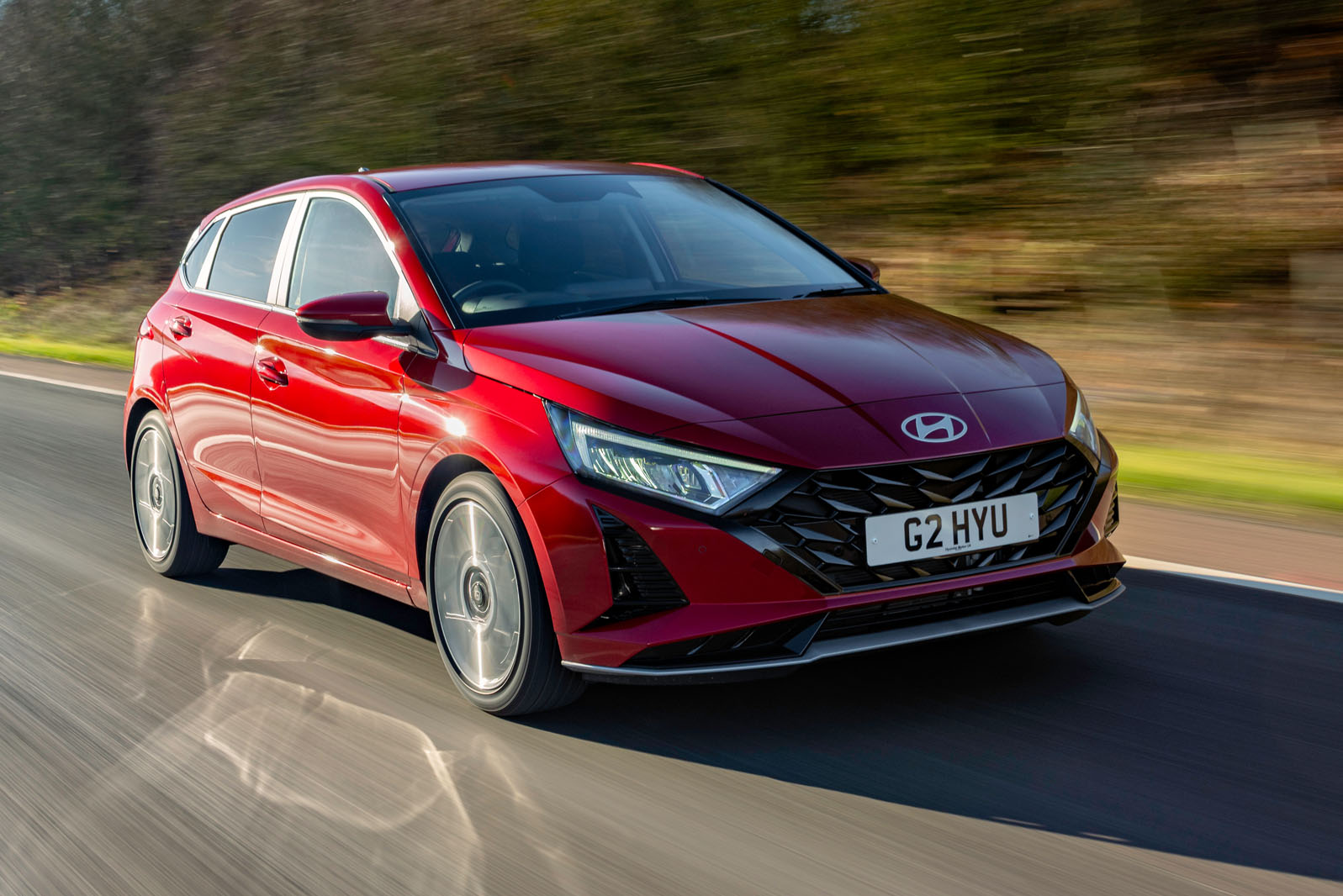

The i20 may be quite a traditional car is some ways, but the interior is bang up to date. As usual with Hyundai, the tech is all there, but it doesn’t dominate.
Some early low-spec versions have analogue gauges, but most i20s have a fully digital instrument screen integrated into a flight console-like panel that passes behind the steering wheel rim and meets up with the central infotainment touchscreen to make one sweeping installation.
The digital instruments are bright, simply rendered and clear, and the infotainment system is equally simple and easy to use, so even those suspicious of the creeping adoption of digital technology in mainstream cars have little to fear from either. That’s helped by the generous allocation of chunky, solid-feeling switches and fittings for the climate and infotainment, as well as things like the drive modes.
The rest of the cabin is likewise a surprise in places. The i20 feels big for a supermini – specifically, wide. Even larger adults sitting side by side can easily avoid brushing shoulders, elbows or knees, and there’s plenty of room for them to sit one behind the other in reasonable comfort. The boot is averagely sized – 352 litres is up on the Vauxhall Corsa’s 309 but down on the Renault Clio’s 391.
There’s a fine driving position that’s quite low and dead straight, though a bit more steering column adjustment wouldn’t go amiss. The front seats are a touch hard and have less lateral bolstering than some might like. This isn’t really a sporty hatch, though, as we’ll come to explaining, so just a little bit of support may be enough.
The i20’s dashboard is decorated with horizontal ribs – a feature also to be found around the door handles, air vents, speaker grilles and elsewhere. They’re the kind of embellishments that someone who liked an earlier i20 or even a Pony or Getz (remember those?) might consider superfluous. But they do work to give the new i20’s driving environment just a smattering of sensory intrigue, which is very welcome. There’s absolutely nothing else to play to the tactile senses here: not a soft-feeling moulding anywhere and – with the exception of some optional yellow accents – a very limited palette of interior colours.
However hard, the car’s plastics do promise to wear well. They’re not too reflective, they don’t mark up under fingernails and they don’t seem to show the dust or grease much.
Hyundai i20 infotainment and sat-nav
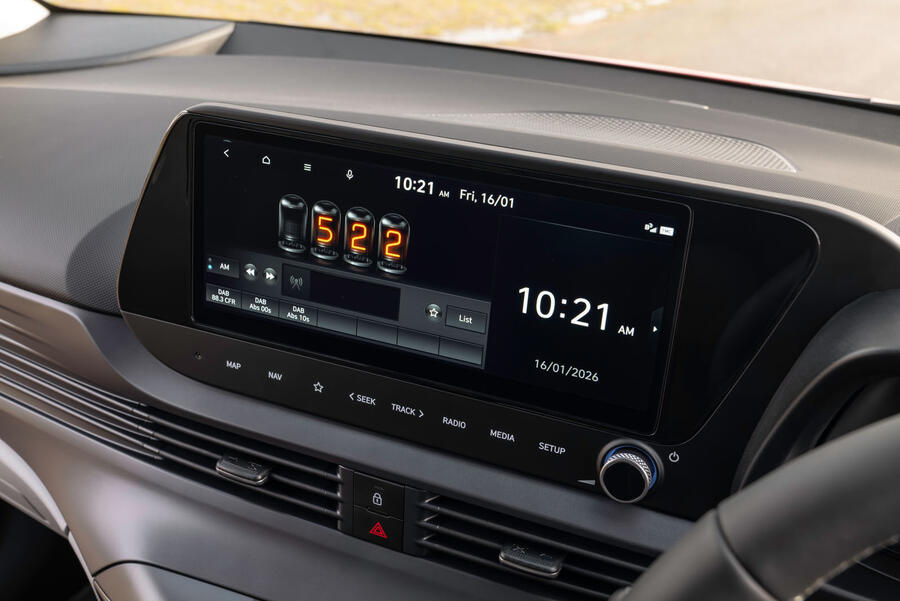
For 2026, all versions feature a 10.3in screen with a row of touch-sensitive shortcut buttons underneath. The interface looks prettier and comes with built-in connected navigation. The graphics aren’t the most modern, but it’s responsive, easy to navigate and the navigation system is very astute in avoiding traffic. The only slight annoyance is that for smartphone mirroring, you need a USB cable, and an old-school USB-A one at that. Hyundai’s standard six-speaker stereo sounds slightly tinny, but you get a more powerful Bose system on top-grade cars.
Some earlier low-spec got a smaller, 8.0in screen. It’s quite basic but works well thanks to big target icons and physical shortcut buttons.
 By
By