
A small team of British engineers are working on what they hope will become the first soapbox racer-style vehicle to hit 100mph.
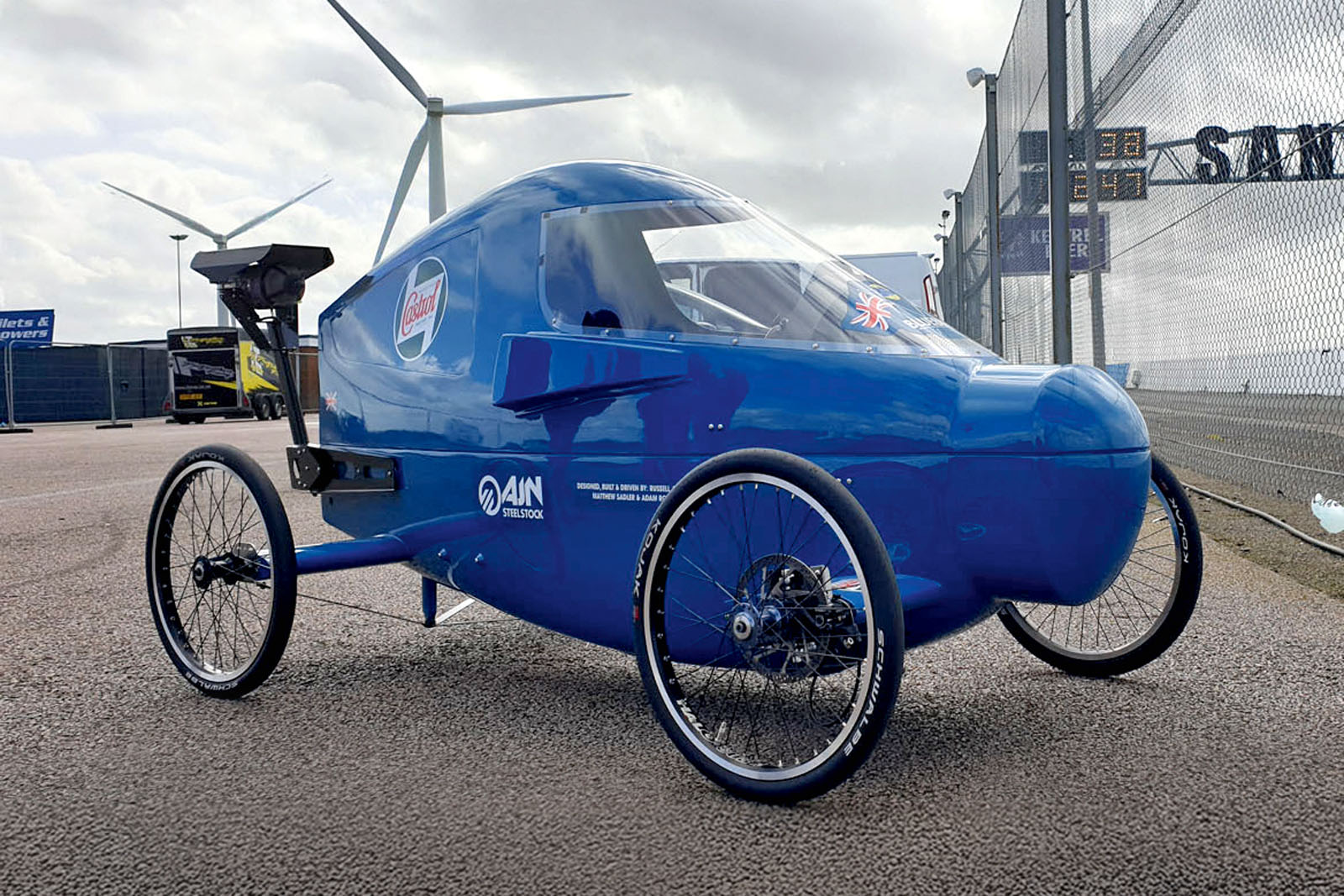
Called the Bluebird Aero, it is a composite-monocoque, jet-powered record car in the fashion of Sir Malcolm and Donald Campbell’s multiple land and water speed record breakers from the mid-20th century.
The pocket-rocket Aero weighs a featherweight 47kg, including fuel. Power comes from a single-stage gas-turbine jet engine, built by German company JetCat for radio-controlled model aircraft. The turbine weighs 2.8kg and generates 17kg of thrust at a dizzying 123,000rpm. Having a jet-nozzle exit velocity of 700mph, it’s also ear-splittingly loud.
Russell Annison is the brains behind the Aero, alongside Matt Sadler (computer-aided design and driving) and Adam Rogers (brakes).
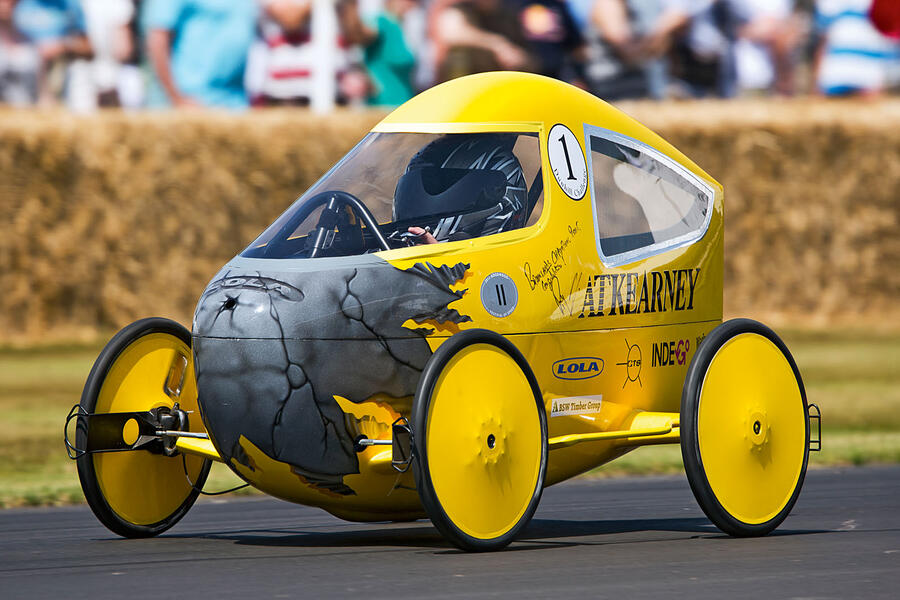
Annison has considerable pedigree in this field, having worked on the Bloodhound land speed record project. But it was his contribution to British motorsport firm Lola’s wind tunnel operation that has had the biggest impact here, because it was a Lola gravity racer from 2013 (created for the Goodwood Festival of Speed) from which the Aero’s engineering inspiration came.
The Lola’s carbonfibre/alloy-honeycomb tub and bespoke running gear and brakes were combined with a wind tunnel-developed body with an ultra-slippery drag coefficient of 0.22 and minimal cross-section to create the Aero.
Squeezed behind the wheel of the Aero in May 2024, Annison grabbed the land speed record for a prototype electric and jet-powered dual-propulsion car by hitting 55mph.
“The Aero is a really balanced and dynamic car,” he said, “and it’s so aerodynamically efficient that it continued to accelerate at the end of the run, despite the jet engine being turned off.”
Now, however, the goal is to almost double that speed with another run.
Annison said that “we actually have sufficient power in the car for getting on for 100mph already”, thanks to new 3D-printed dive-plane aero that improves braking stability by increasing front-end downforce. The main challenges that still have to be overcome are high-speed stability and tyre capability.
The latter means a search for new rubber is on, because the current vehicle’s Schwalbe bicycle tyres have reached their maximum operating speed.
At its heart, the Aero is much more complex than it looks. To get some idea of the depth of the micro-engineering, for example, the bicycle-derived disc brakes feature water-spray cooling, the fuel tank is of bespoke aluminium welded construction and the fuel system runs at low pressure to reduce the fire risk.
 By
By