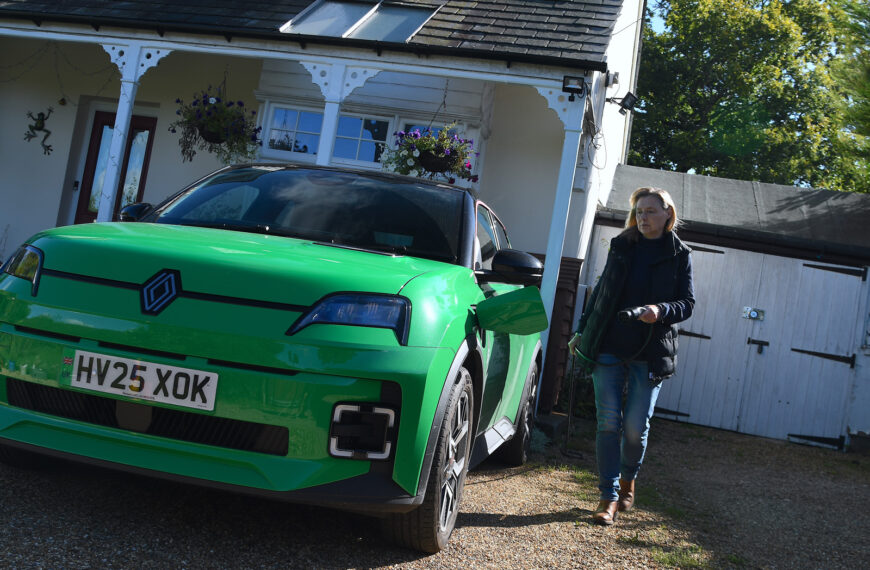
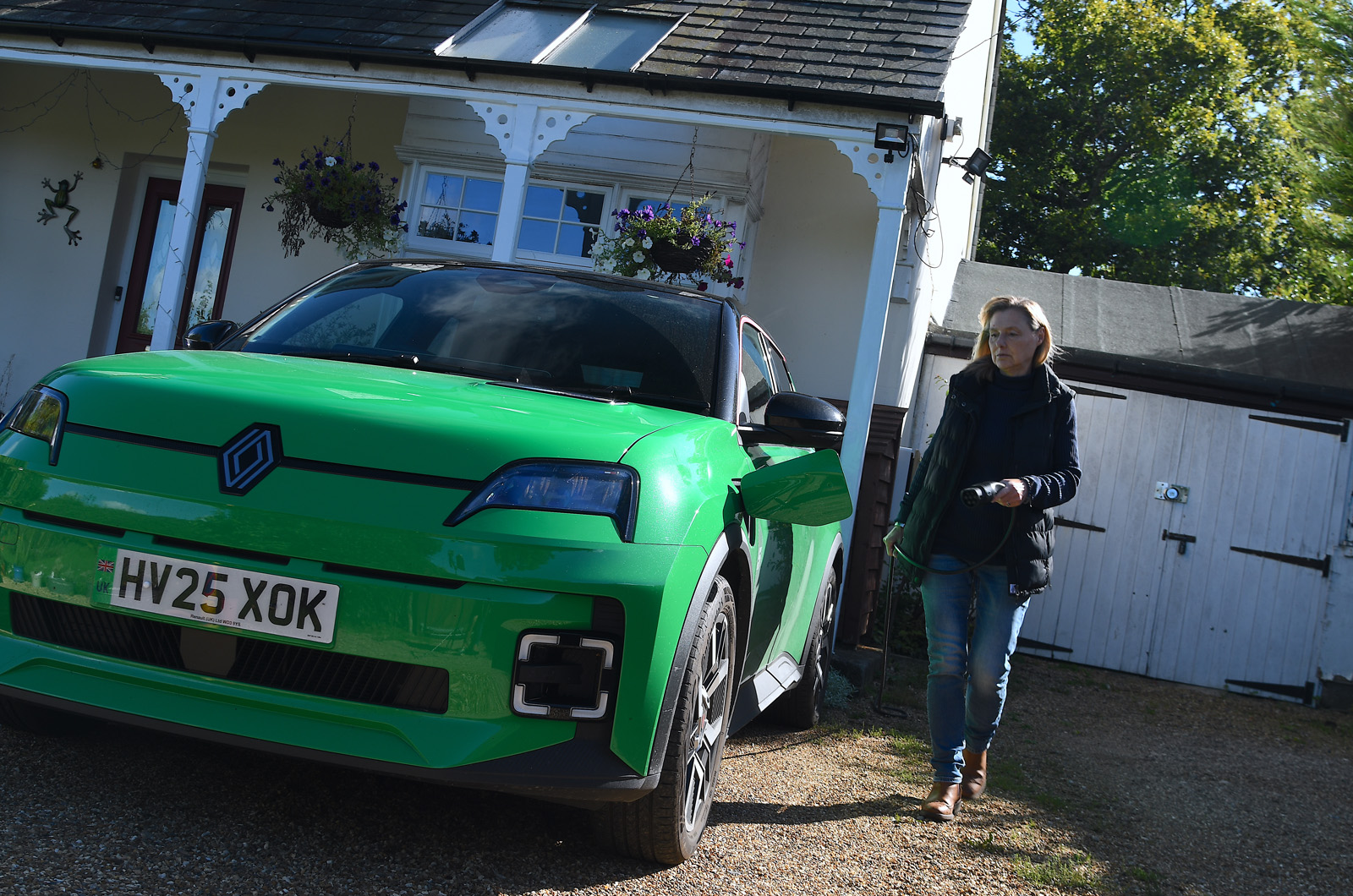

The UK government has extended its home EV charger grant scheme for another year and boosted the available amount from £350 to £500.
The Electric Vehicle Chargepoint Grant was launched in 2023 as part of a drive to boost electric car uptake by making home chargers more affordable. It was initially restricted to home owners with driveways but subsequently rolled out to renters and expanded in scope to include charging solutions for residents who park on the street.
Now the government has extended the scheme through to March 2027 and is offering up to £500 off the cost of installation for renters, flat owners, home owners without driveways and businesses – with the cost of installing a cross-pavement gully included (where necessary and permitted by local councils).
It said this covers “almost half the cost” of installing a home charger, allowing EV drivers to “save up to £1400” on running costs compared with an equivalent petrol car, because the cheapest domestic electricity tariff is theoretically capable of delivering a mile of charge for as little as 2p.
Alongside the investment in private chargers, the government has pledged to “accelerate the rollout” of public chargers nationwide, using a £600 million fund that was ringfenced in two batches last year.
Aviation, maritime and decarbonisation minister Keir Mather said: “We’re taking action to make EV ownership the affordable choice for everyone, not just those with driveways. Bigger grants mean families, flat owners, renters and small businesses can now install a charger for almost half the usual cost, with home charging costing as little as 2p a mile.
“Combined with our Electric Car Grant, which has saved over 55,000 drivers thousands off the price of a new EV whilst boosting sales for car makers, and record funding for our national public charging network, we’re backing the EV revolution for drivers, businesses and industry.”
The charging incentives are the latest move from the government to juice EV uptake in the UK, which so far has lagged behind the increasing annual targets imposed by its own Electric Vehicle Mandate.
The most significant measure has been the £2 billion Electric Car Grant scheme, which gives a discount of up to £3750 off eligible EVs – which is claimed to have prompted 55,000 drivers to make the switch so far.
Jarrod Birch, head of policy at charging industry body ChargeUK, said the move to increase home charger uptake is a “welcome boost for EV drivers” that goes towards making electric power “the obvious choice” but called on the government to work to bring the cost of public charging down.
“Most drivers use a blend of home and public charging,” he said, “so the UK’s 88,500-strong public network is a vital part of the EV driving puzzle, but policy-driven costs mean public charging is more expensive than it needs be, with standing charges alone rising by 462% since 2021.
“The government’s review into the cost of public charging is the opportunity to address this by levelling VAT with home [charging] and tackling the soaring charges that have increased prices.
“Making driving an EV affordable for all is the route to keeping the transition on track.”
 By
By