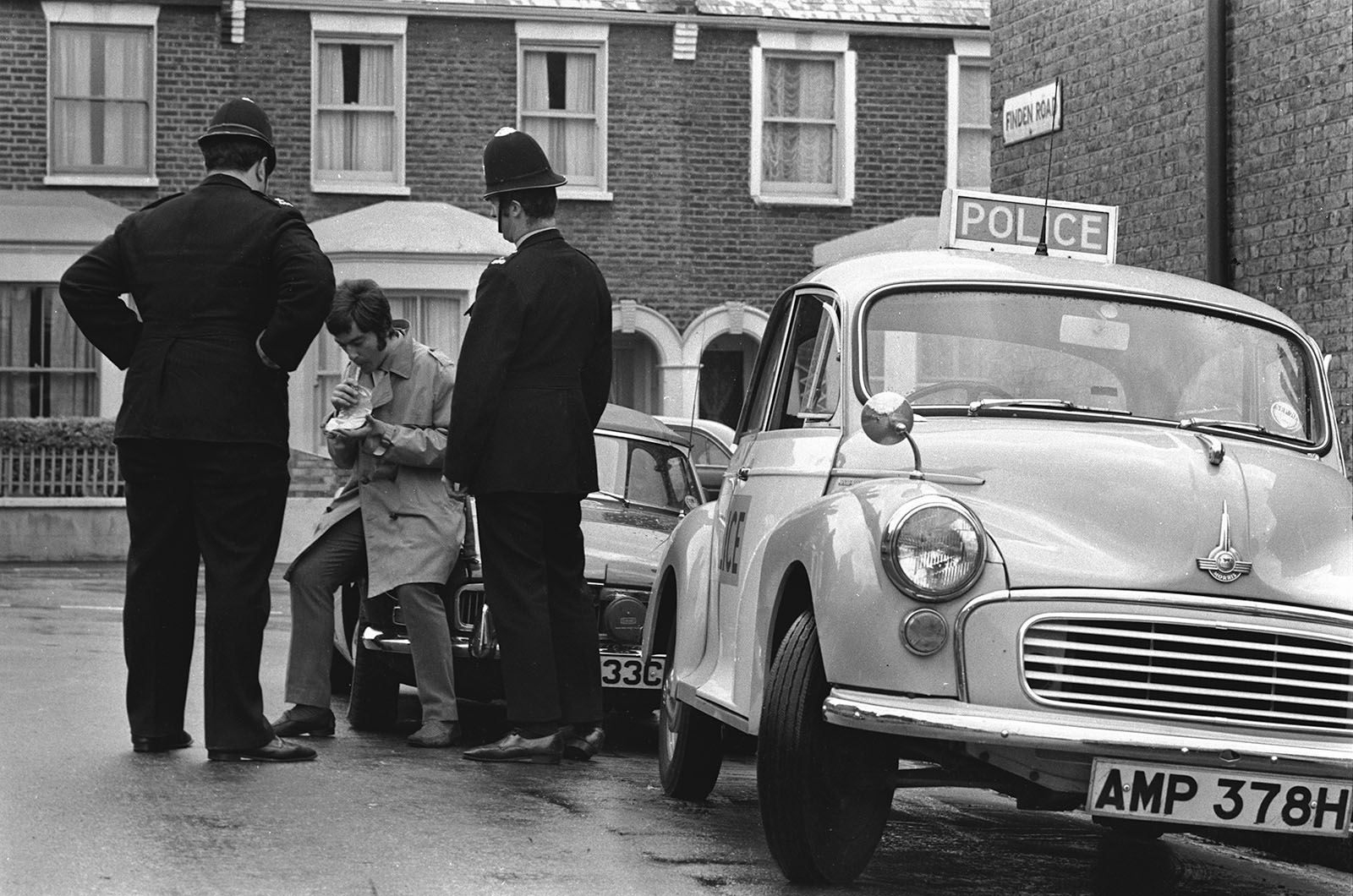

The government recently announced its intention to reduce the permitted blood alcohol level of UK drivers from 80mg/100ml to 50mg, or to 20mg for those newly qualified.
This will be the first change to the limit since it was introduced back in 1967, excepting the reduction to 50mg legislated by Scotland in 2014.
This doesn’t mean, however, that drink driving used to be allowed. In fact, it was outlawed before the car was even invented: under the 1872 Licensing Act, being drunk while in charge of a horse, cow, steam engine or carriage was punishable by a fine and a month’s hard labour.
In September 1897, 25-year-old George Smith became the first Briton to receive a DUI conviction, after his electric taxi was, in the words of London’s Morning Post, seen to “suddenly swerve from one side of the road to the other and run across the footway into [a building], breaking the water pipe and the beading of the window”. He was fined 20 shillings (or £114 today).
Enjoy full access to the complete Autocar archive at the magazineshop.com
Mentions of such court cases subsequently appeared regularly in Autocar, although the legal situation was murky: the authorities had no scientific way of testing inebriation and cars weren’t named in statute.
In 1902, an “obstreperous” Liverpudlian appeared before a stipendiary who “could not treat a vehicle without horses as a carriage, as otherwise a man drunk whilst in charge of a perambulator would be liable to arrest. “The difficulty was eventually overcome by the car being treated as a steam engine.”
Clarification came from the 1925 Criminal Justice Act, which made it illegal to drunkenly command any “mechanically propelled vehicle” in public, on pain of a £50 (£2662) fine, four months’ imprisonment and licence disqualification for a year.
Still, though, drunkenness was open to interpretation, as a 1925 case from Worcestershire shows. The jury had found the defendant guilty, believing that he had been “incapable of driving”, if “not drunk to the extent that which we should call a drunken man” wording that led to a quashing by the Lord Chief Justice on the basis that such words unequivocally described soberness.
We clearly saw a need for absolute legal clarity, but even 37 years later, when a new Road Traffic Act was enacted, this still wasn’t possible. Provisions were made for blood and urine testing of suspected drunk drivers, but there was no mention of any numerical limit, and thus these provisions would be left unenacted until “circumstances permit”.
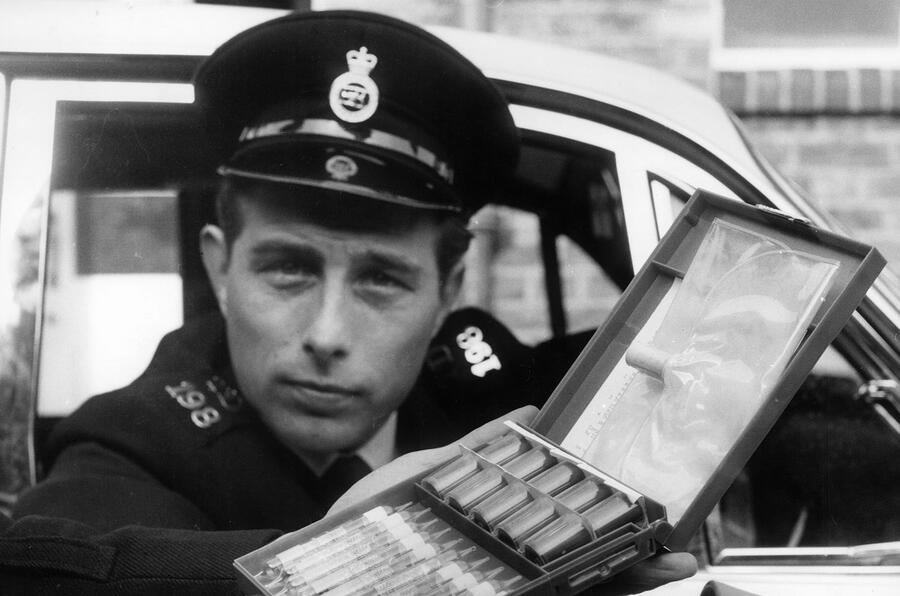
Such circumstances arose in 1964 with the arrival from America of the breathalyser – in Autocar’s words, “a refined, scientific instrument which is easy to maintain and does not need highly skilled operators”.
 By
By