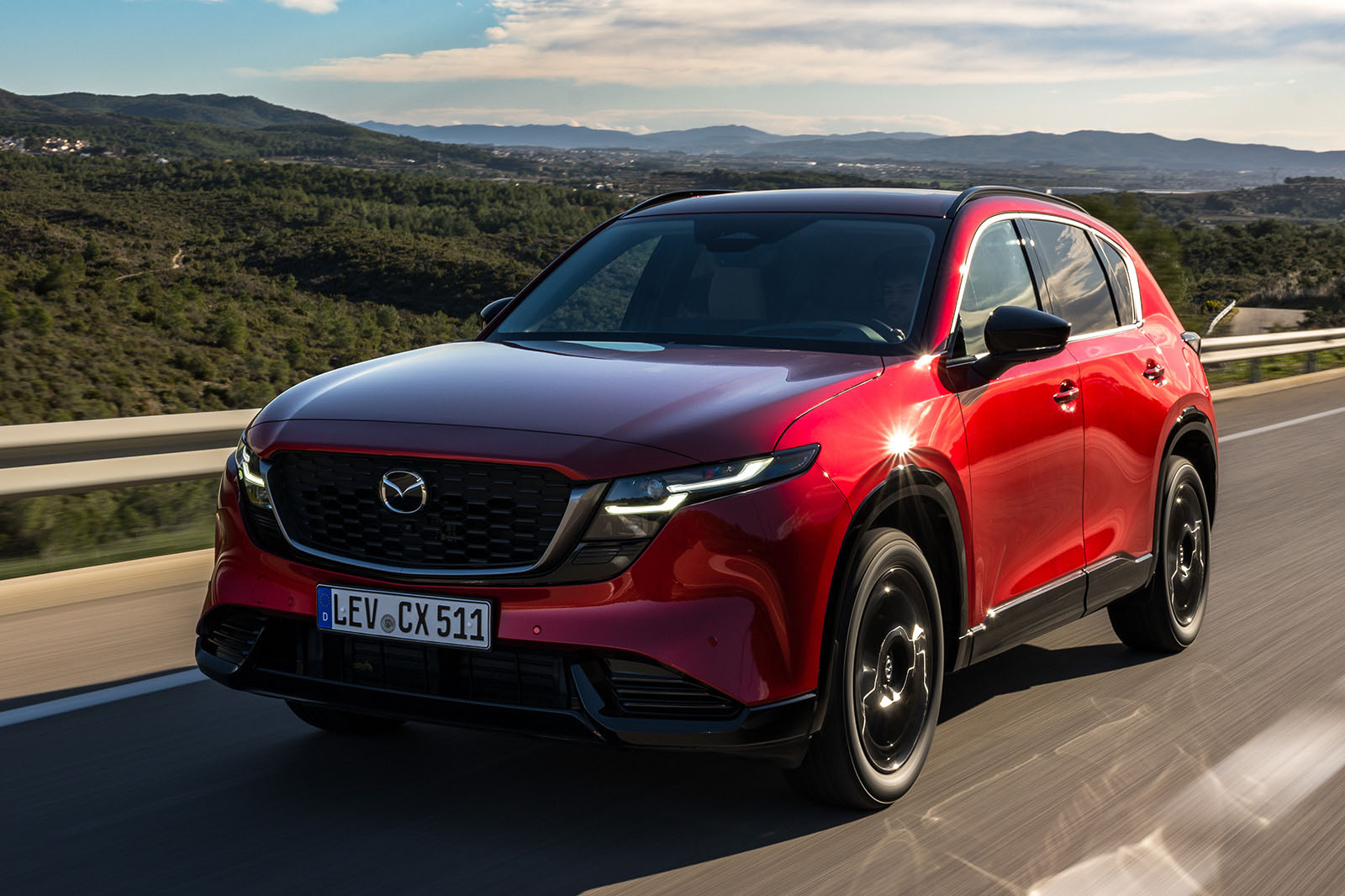

There are few complaints when it comes to the cabin, not least because the already generous rear leg room has been extended further. There’s also plenty of head room, and three of your burliest acquaintances will be able to sit side by side with no shoulder-rubbing grumbles. Mazda has also lengthened the rear doors and allowed them to open to around 90 degrees, giving parents more room to manoeuvre when wrestling in uncooperative offspring.
There’s also a bigger boot with the seats in place (583 litres, up by 61 litres) and a cavernous 2019 litres when the new 40/20/40-split folding rear bench is lowered (easily done with quick release handles either side of the load bay). The loading lip is low and there’s some handy underfloor storage.
Climb behind the wheel and the news isn’t quite so good. Mazda’s now trademark quality is still on display, with plush materials and a solid finish giving the CX-5 the sort of classy mien that elevates it above the slightly tacky VW Tiguan, but there are some ergonomic missteps compared with the old car.
For starters, the new car bundles almost all of its frequently used functions into the new (Google-powered) central infotainment screen. Depending on the trim level, it’s either a 12.9in or 15.6in unit, but regardless of size, you get the same functionality, which means you have to stab at the display to change climate control settings or adjust the audio volume. The only physical controls are buttons for the rear window heater, screen demister and hazard warning lights.
In practice it works crisply enough, but not with the same eyes-on-the-road ease and finger-pleasing tactility as the old car’s knurled metal knobs. Mazda claims it was customer demand that forced the change, although the voices were louder on the other side of the Atlantic.
Then there’s the instrument cluster, which has ditched the classic, carefully rendered LCD analogue clocks of the outgoing model in favour of BMW-style quadrants.

 By
By