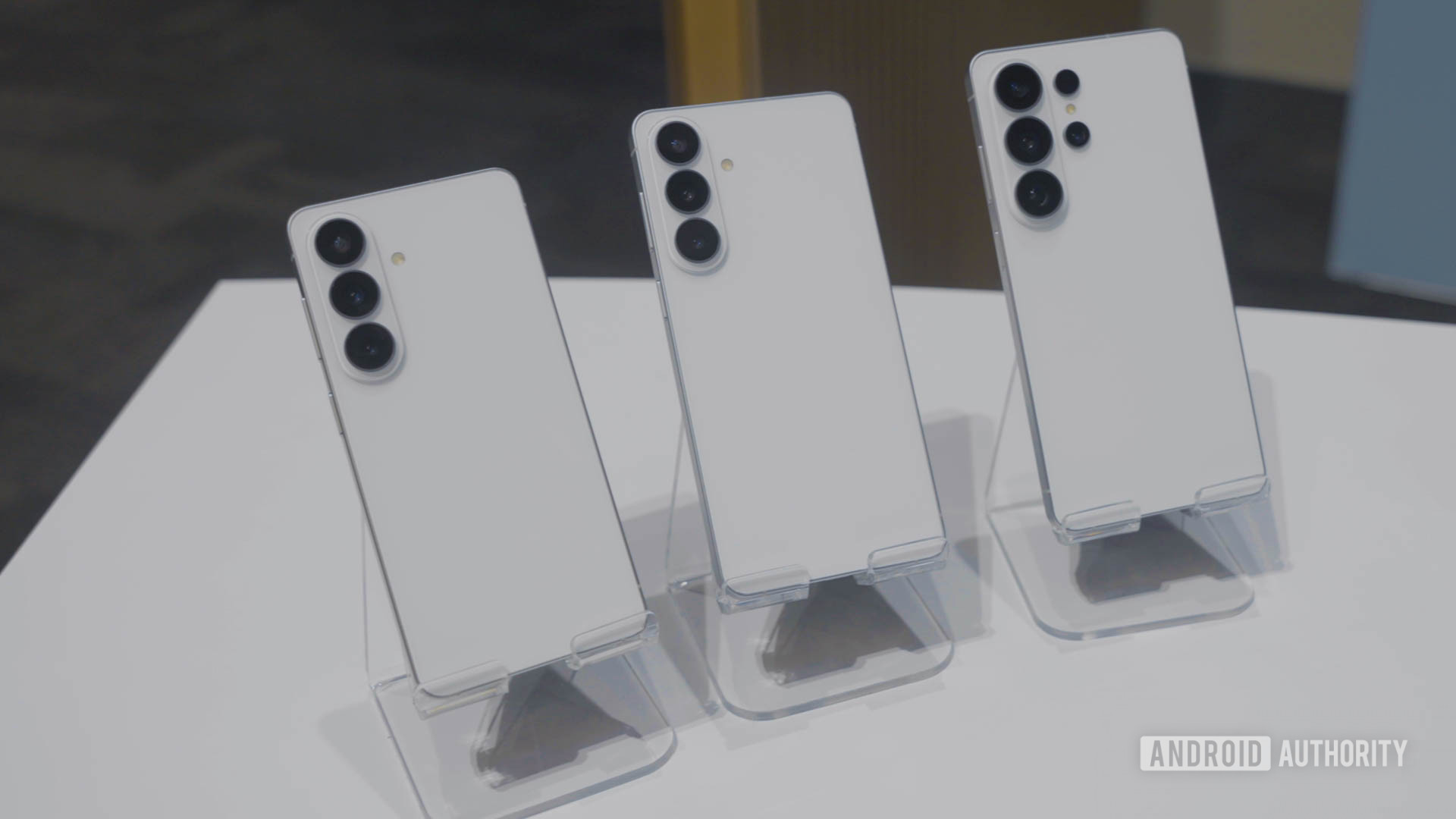

I used to look forward to Samsung’s Galaxy Unpacked event with excitement, waiting to see where the company was going to push its phones to next. But over the past few years, that enthusiasm waned and eventually turned into skepticism.
With the launch of the Galaxy S26 series, I feel particularly underwhelmed. I’ve come to the conclusion that the company needs to make some serious changes to its line-up to regain my interest in its flagships.
What change would you like to see in Samsung’s flagship phones?
5 votes
1. Bigger batteries

Robert Triggs / Android Authority
Samsung’s flagships are seriously lagging behind the competition when it comes to battery size. Much of this comes down to the company’s hesitation to adopt silicon-carbon batteries, which would allow for higher energy density.
The S26 Ultra still comes with a 5,000mAh battery — a capacity that has remained the same since the S20 Ultra. To put that in perspective, it means that since Samsung launched the Ultra tier of its Galaxy S devices, it has not increased the battery size.
Samsung’s flagships have stagnated when it comes to battery capacity.
When it comes to the standard S26 and S26 Plus, Samsung has increased the battery capacity over time. But even this progress is minimal. It’s baffling to me that from the S23 Plus to the S26 Plus, the battery has only increased by 200mAh.
I don’t think Samsung can rely on hesitation to use silicon-carbon batteries as an excuse, even though it’s rumored to be researching larger Si-C cells. The Pixel 10a, for example, has a 5,100mAh battery and costs $400 less than the standard S26, which has a 4,300mAh battery. If Samsung needs to make its phones marginally thicker, that’s a trade-off I’d be willing to make.
2. Less disparity between the standard and Ultra versions

Hadlee Simons / Android Authority
There was a time when it felt like Samsung’s flagship range was well-balanced in terms of features. Over the past few years, though, the focus has definitely shifted. While AI and software have become the headliners of recent launches, whenever hardware is mentioned, the focus is usually on the Ultra. The standard and Plus versions of the Galaxy S phones have become little more than a footnote.
Looking at the S26 vs the S23 series shows just how little the devices have changed in three years. Both the S26 and S26 Plus have the same charging speeds as their S23 counterparts. Regarding the camera setups, there have been no changes to the resolution or optical zoom of the lenses. I find myself underwhelmed by the S26 Ultra camera updates, but at least I can say that its camera is getting updates.
As a result, upper-midrange rivals often outcompete the S26 and S26 Plus on many fronts, especially in battery size and charging speed. Last year’s Nothing Phone 3a Pro launched at $459.99, making it cheaper than a standard S26. Yet it includes a 5,000mAh battery, 50W wired charging, a 50MP periscope camera with 3x optical zoom, and a 50MP front-facing camera. I’ve been using the Honor 400 Pro for the past few months, and despite not being a flagship, it also features a 50MP telephoto lens. Meanwhile, it has a 6,000mAh battery and 100W wired charging.
I no longer understand who the S26 and S26 Plus are for, especially considering the FE version will arrive later this year.
Even within Samsung’s own ecosystem, the Galaxy S25 FE has also become the go-to device for people looking for flagship features at a better price. Since it offers a better price and comparable specs to the S26, I struggle to see the S26’s appeal anymore. Why would you not simply wait for the S26 FE, which will presumably also have an updated processor and more RAM?
This wasn’t always the case, though. The standard Galaxy S device used to be a capable flagship for people who wanted a great experience in a smaller package. It was still decidedly premium, but offered value for money. The Plus gave you a bit of a boost to battery capacity, storage, and screen size. And the Ultra was the ultra-premium option for people who needed a really great camera and even more battery and processing power.
3. Better optical zoom across devices

C. Scott Brown / Android Authority
I’m glad that Samsung has improved the apertures on its S26 Ultra camera lenses (specifically the 200MP and 50MP lenses), as this will enhance its low-light photography performance. However, I think that more improvements can be made to the lenses, especially when it comes to optical zoom.
I’ve never quite forgiven Samsung for removing the 10x optical zoom from the Ultra rear camera. I just never get the results I’d like when cropping to achieve “optical quality” zoom (which is essentially a sensor crop) versus actual optical zoom at long range. This “optical quality” marketing has popped up for other lenses on the devices as well. On the S26 Ultra, its 200MP wide lens is also listed as having 2x optical quality zoom. For the S26 and S26 Plus, the 50MP wide-angle lens also claims 2x optical zoom.
It’s time for Samsung to stop leaning on digital cropping as a replacement for true optical zoom.
I’d prefer actual optical zoom, as well as a greater range across lenses. For the successors to the S26 and S26 Plus, 5x optical zoom could really enhance the user experience. Meanwhile, I’d like to see the return of 10x optical zoom to the next Ultra, while still retaining a good resolution.
But this is the bare minimum, really. Samsung should really be at the forefront of camera innovation, especially with the S26 Ultra. After all, if you’re paying $1,299 for a smartphone, it should really be a leader on the camera front.
The Xiaomi 17 Ultra stands out as possibly the best Android camera phone, thanks to its innovative camera technology. This includes a variable-aperture, variable-focal-length periscope camera and a large sensor. This offers a ton of versatility that can be lost when multi-lens setups include low-quality lenses that up the camera count but produce inconsistent quality.
4. Faster charging
Ryan Haines / Android Authority
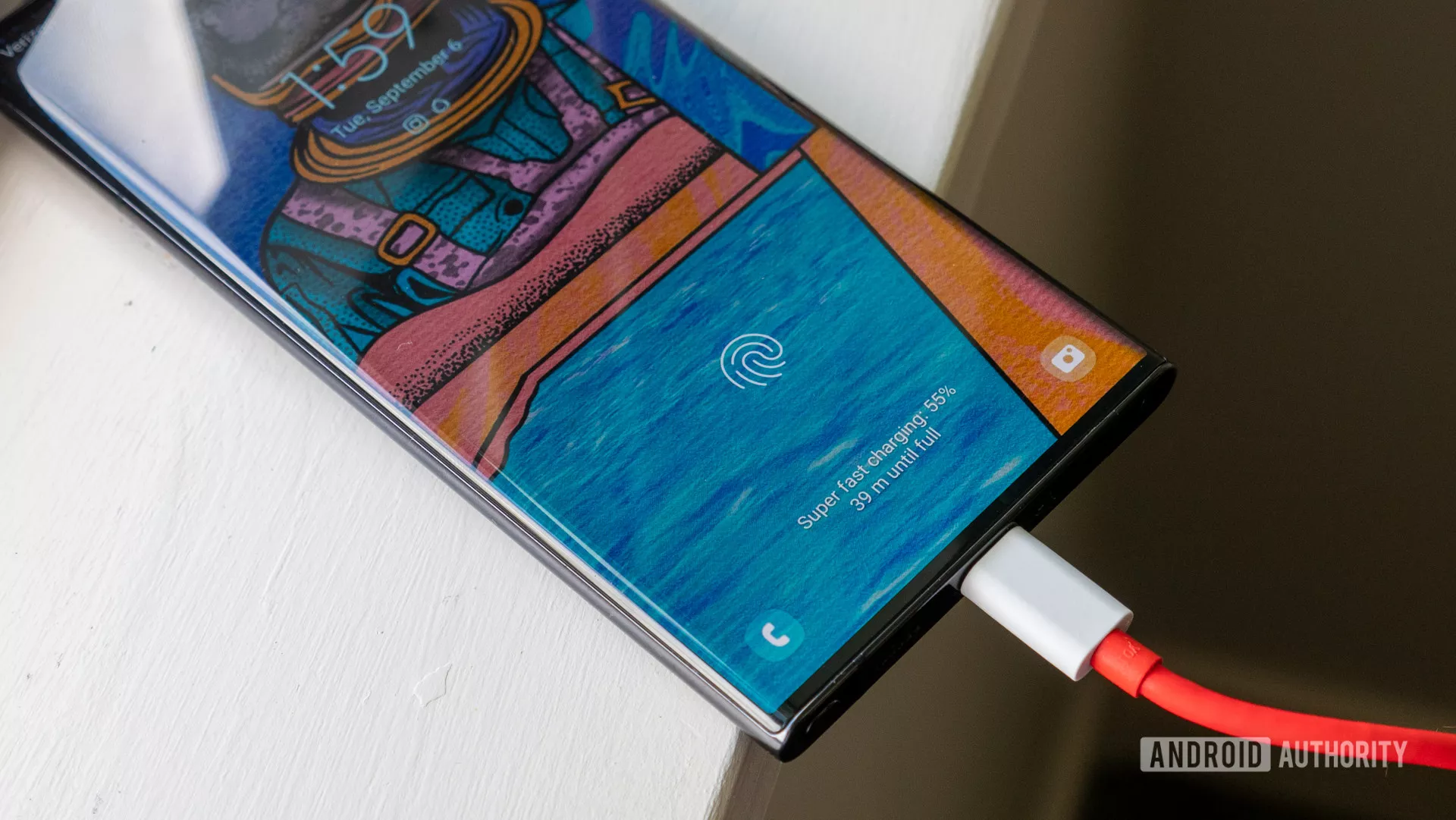
The battery capacity of the S26 series isn’t the only thing stuck in the past — its charging speeds are too.
The only device in the series to get a boost to its charging speed is the S26 Ultra, which now supports 60W charging. While this is an improvement on paper, it’s long overdue. So overdue in fact, that it is still behind the competition.
Samsung has taken a long time to boost charging speeds, and it could go further.
Samsung smartphones use the USB PD PPS protocol, but other devices that use the same protocol already exceed the charging speeds of the S26 Ultra. The prime example is the Xiaomi 17 Ultra, which supports 90W PD PPS charging.
This leaves a lot of room for improvement for Samsung’s devices. The standard S26, in particular, is stuck with 25W charging, which results in incredibly slow charging times for a flagship device in 2026.
Don’t want to miss the best from Android Authority?


5. Less reliance on overhyped AI features

Ryan Haines / Android Authority
Since the Galaxy S24 series, Samsung’s flagship launches have focused on AI. When generative AI was still relatively new, it was interesting to try out the different features. However, it soon became apparent that many did not meaningfully improve the user experience.
The S25 and S26 launches leaned even more into AI. This included promoting Google features, which occasionally arrive on Galaxy devices first or at the same time as Pixel devices. But this partnership with Google is not exclusive, so the tools end up on other Android phones as well. Just look at Circle to Search, which launched first on Galaxy and Pixel phones but is almost everywhere now. Likewise, the Find The Look feature in Circle to Search will arrive on the Galaxy S26 series and Pixel 10 smartphones first, but will roll out to other Android devices too.
AI features often don’t add as much value to your smartphone experience as marketing suggests.
For features specific to Samsung devices, you are required to lean heavily on Samsung’s ecosystem. But if you already have preferred apps for your internet browsing and reminders, you may not see the appeal of switching to Samsung-exclusive apps for just a few AI features.
The newer focus on agentic AI also doesn’t appeal to me, since I worry about potential privacy issues. I don’t think Samsung provides sufficient assurances that data will remain safe when using these AI tools.
Don’t get me wrong, I want to get excited by Samsung’s flagship phones. They’re the largest Android brand by market share. But I don’t feel like they’re the leaders in terms of making the best Android phones anymore.
While the S26 Ultra’s Privacy Display is nifty, it doesn’t feel groundbreaking to me. And it’s certainly not enough to motivate me to invest in a $1,299 new phone. I really hope that next year will be different and we’ll see significant hardware innovation from the manufacturer.
Thank you for being part of our community. Read our Comment Policy before posting.
 By
By