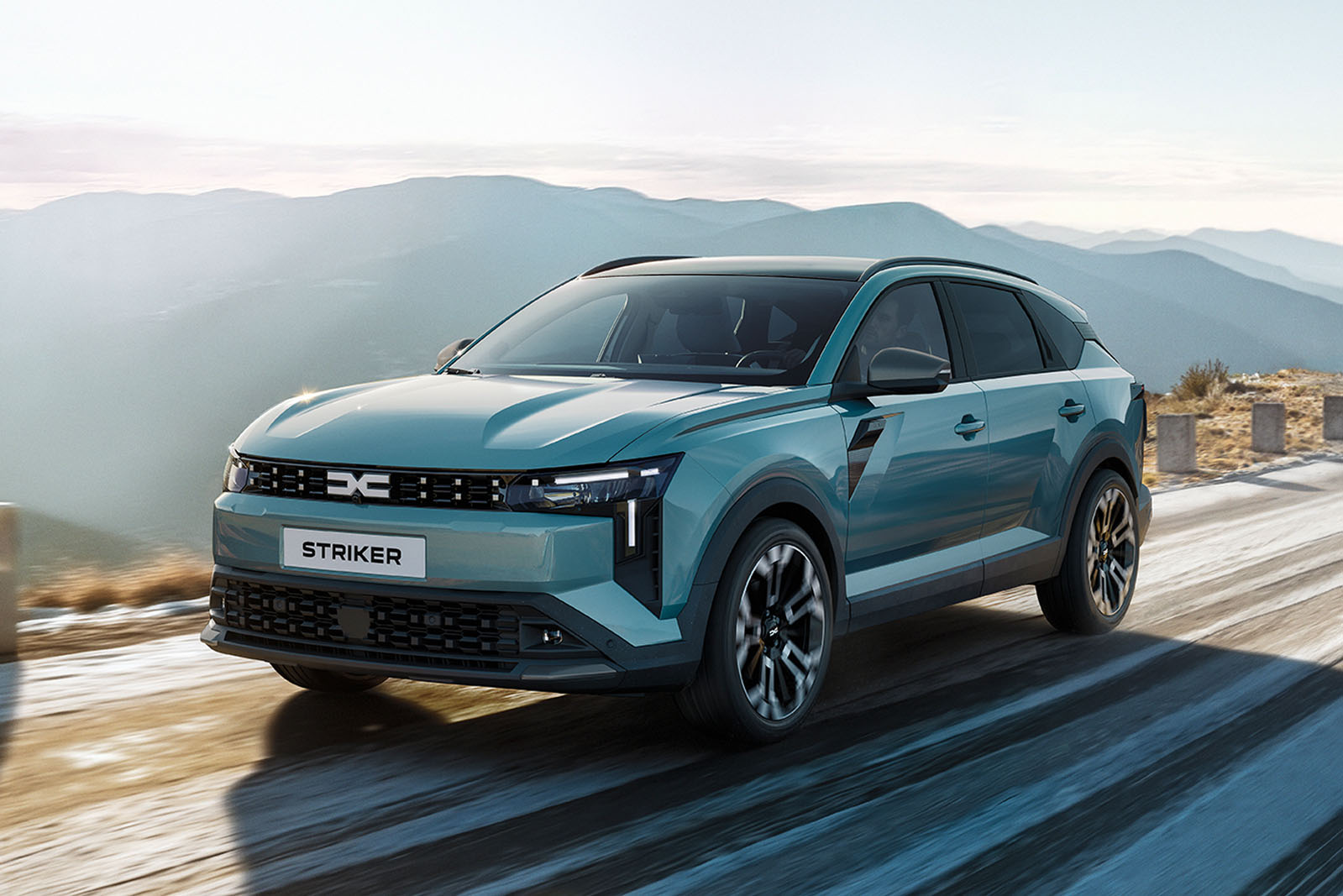

Dacia will continue its expansion into the market for larger vehicles with the launch of the Striker, a high-riding estate that will rival the Skoda Octavia and be priced from less than £22,000.
The new C-segment challenger, known as the C-Neo during its development, will be the firm’s second quasi-estate model after the Jogger. It will join the mechanically identical Bigster SUV at the top of the Dacia line-up. While twinned with the Bigster, the new Striker is notably sleeker in order to broaden Dacia’s appeal.
Brand boss Katrin Adt has previously said it is “a totally different offer to the customer than the Bigster”. The Striker is slightly longer than its SUV sibling, at 4.62m, while its raked roofline sits slightly lower.
Dacia has yet to release full technical details of the Striker ahead of a full debut in June, but it will be based on the Renault Group’s CMF-B platform that underpins most of the brand’s line-up and it will be offered with a range of combustion powertrains.
A four-wheel-drive variant will be available from launch. This is expected to be the same set-up that was recently launched on the Bigster and the Duster: a 1.2-litre three-cylinder petrol engine paired with a rear-mounted electric motor for a combined 152bhp. Other powertrains offered are expected to be mild- and full-hybrid options that range from 138bhp to 153bhp.
An LPG version will also be offered in some markets, but that is unlikely to reach the UK. Dacia has not revealed the interior yet, but it is likely to be broadly identical to that of the Duster and Bigster.
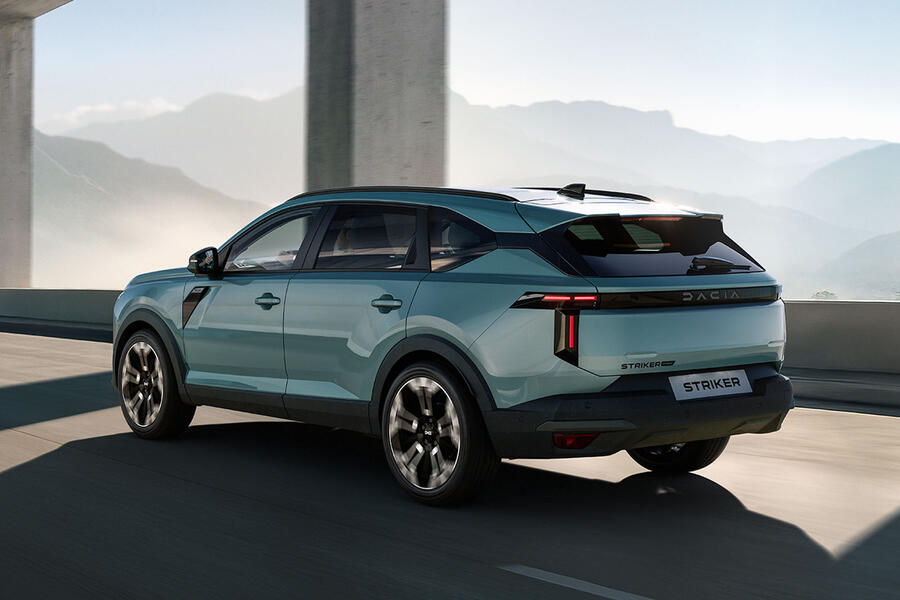
The Striker is the second of three planned models Dacia will eventually offer in the C-segment, which remains Europe’s most popular market; the Romanian firm is aiming for a third of its sales to come from the segment by 2030. Adt previously told Autocar that the success of the Bigster – “we did quite amazingly well” – has inspired confidence that the brand can compete in the segment.
The model amassed 67,573 sales last year, its first full year on sale. The Striker is part of a major range expansion that Dacia is planning between now and 2030. This includes four EVs, starting this year with a £15,000 city car twinned with the Renault Twingo.
One of the other three will be the next-generation Sandero which will also continue to be offered with a choice of combustion engines – but details of the other two remain under wraps. Dacia will also increase its full-hybrid offerings across the range. It aims for electrified cars to account for two-thirds of total sales by the end of the decade.
 By
By