

Every year, MWC (Mobile World Congress) in Barcelona helps set the tone for the tech industry. It may no longer be the event where the smartphone calendar officially begins — that distinction now largely belongs to Samsung’s Unpacked — but it remains a major stage where companies unveil new hardware, showcase emerging ideas, and hint at the direction mobile technology may take in the months ahead.
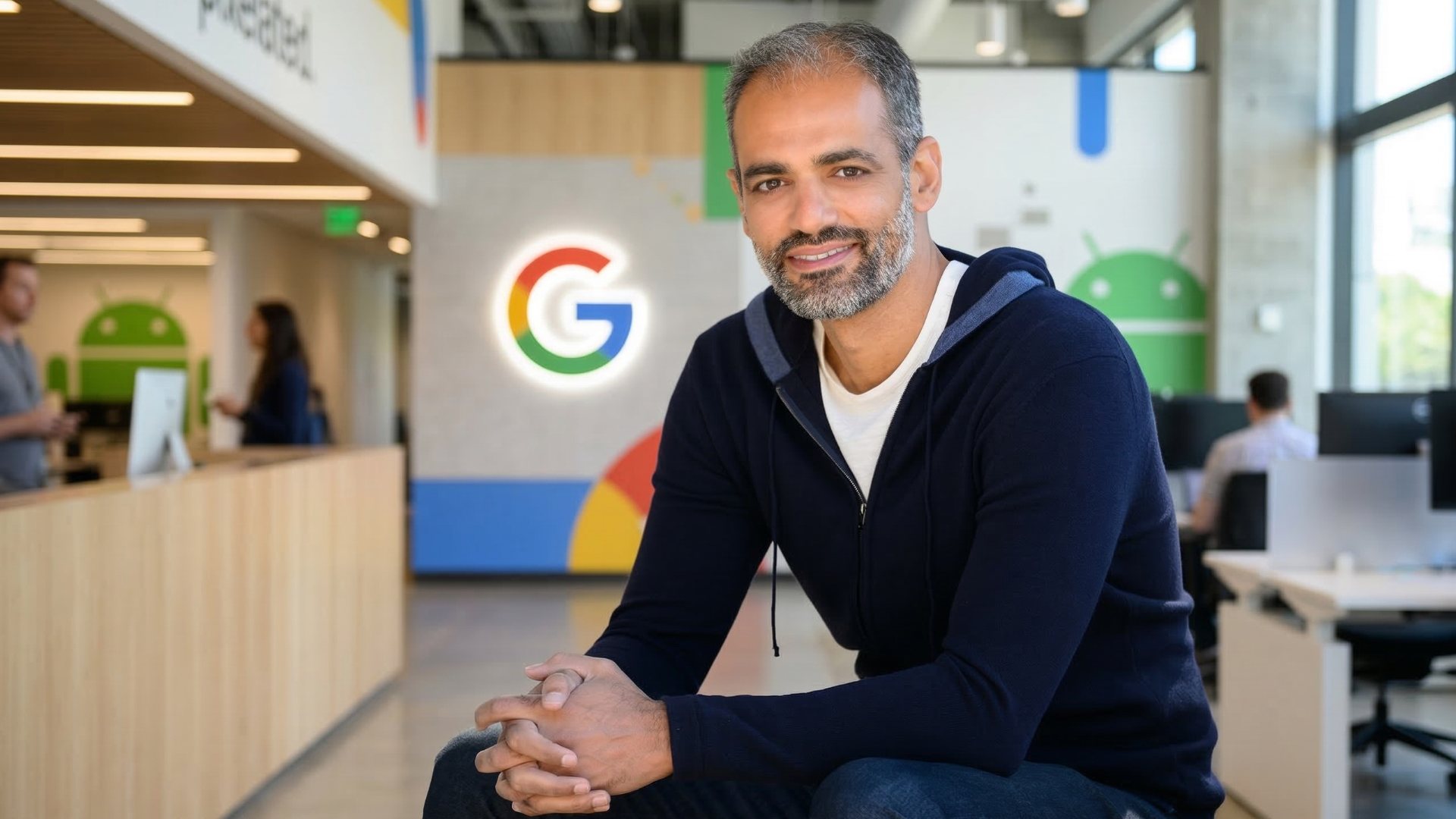
Of course, Google and Android are at the very center of this business, and on the sidelines of MWC 2026, I sat down with Sameer Samat, President of the Android Ecosystem, to talk about what’s next for the platform. Our conversation ranged from Android’s AI-driven future and the role of Gemini to sideloading concerns and even which phones currently excite the person responsible for guiding the largest operating system in the world.
Android 17 is about doing less “digital laundry”

Naturally, our conversation began with Android 17 and what to expect from it. With the next version of Android already taking shape and Google pushing out new betas at a steady pace, I asked Samat how he sees the platform evolving as Gemini becomes more agentic and integrated into the operating system.
According to Samat, the shift is bigger than simply adding more AI features.
“I think Android 17 is moving from an operating system to an intelligent system,” he said, reiterating what he recently said during Samsung’s Galaxy Unpacked event.
Don’t want to miss the best from Android Authority?


Google has been steadily integrating Gemini across its products, but Samat suggested the next phase will go deeper by “re-architecting” Android itself so AI can handle tasks more intuitively and naturally.
“We want our devices and our software to help people do more of what they love to do and less of what feels like digital laundry,” Samat said.
That idea of “digital laundry” or the repetitive tasks people do on their phones every day is exactly where Google believes agentic AI can help.
During our conversation, Samat described several scenarios to illustrate how Gemini could work with Android in the future. A family member had sent him a YouTube video of a recipe and suggested making it for dinner. Instead of manually listing ingredients and opening multiple apps, he asked Gemini to handle it.
“I asked Gemini what the ingredients were and whether it could order them for me. It examined the YouTube video, figured out the ingredients, and made the order happen,” he explained.
Android 17 will mark the point where early agentic capabilities begin rolling out more broadly.
This type of automation is something Google announced very recently. It will soon launch as a beta feature in the Gemini app for the Pixel 10, Pixel 10 Pro, and Samsung Galaxy S26 series, allowing users to offload multi-step tasks directly to Gemini.
Samat confirmed that Android 17 will mark the point where early agentic capabilities begin rolling out more broadly across Android, though initially with a limited set of supported apps.
But what about a multi-agent approach? While Gemini is rapidly gaining more powerful agentic capabilities, I asked Samat whether Google might follow Samsung’s lead. The Galaxy S26 series ships with multiple AI agents, including Bixby, Gemini, and Perplexity. Could Pixel devices eventually offer a similar mix of AI agents?
“Android has always been open,” Samat said, but he noted that “different OEMs have different strategies,” suggesting that while Samsung has chosen to bundle multiple assistants, Google isn’t necessarily pursuing the same approach on Pixel devices.
That said, he acknowledged that the AI assistant space is still in its early stages, and Android will continue to be the platform where many of these ideas and experiments emerge first.
Addressing sideloading concerns

Mishaal Rahman / Android Authority
Of course, no conversation about Android’s future today would be complete without discussing sideloading.
Recent changes to Android’s app security model, particularly requirements around verifying app identity, have sparked concern among developers and power users who worry the platform could become more restrictive.
Governments around the world have increasingly pushed Google to address the problem of malicious apps.
Samat was clear that Google has no plans to remove sideloading, a stance the company has maintained for much of the past year. However, he noted that governments around the world have increasingly pushed Google to address the problem of malicious apps, and Android’s upcoming changes to sideloading are meant to address a growing wave of scams targeting less experienced users.
“Sideloading is really important. It’s not going away, and it’s always been a critical part of Android,” Samat said. “I think if you talk to any government in Southeast Asia, in Latin America, or in a number of places, this is a huge topic for their citizens,” he added.
Android’s current warning systems aren’t always effective.
At the same time, Samat acknowledged that Android’s current warning systems aren’t always effective when scammers pressure vulnerable users into installing malicious apps.
“The warnings we currently have are insufficient,” he admitted.
Google’s proposed solution is to verify the identity of developers who distribute apps at scale, making it easier to warn users about unknown sources and track malicious actors. At the same time, Samat emphasized that power users will still be able to install apps outside Google’s verification system.
“We will have a flow that allows more sophisticated users to install software that has not been verified,” Samat said, confirming that this process is still being finalized.
“We would like to be able to tell the user this app is from this source. Now, that doesn’t mean that the app is safe. The user still has to make decisions. But at least you know who it’s from, and you can decide better — Do I trust this person, or do I not? That’s very important,” he added.
For Google, the challenge is balancing two core Android principles: openness and safety.
Google previously revealed that the new sideloading flow would be a “high friction” process, but Samat did not share specific details about what it might look like, only that Google is actively working on it and plans to introduce it soon.
For Google, the challenge is balancing two core Android principles: openness and safety, Samat noted.
“If the platform doesn’t protect vulnerable users, it won’t be successful,” Samat said. “And if it doesn’t honor openness, it also won’t be successful,” he added.
Foldables, Pixels, and the phones that stand out

Adamya Sharma / Android Authority
Eventually, our conversation drifted toward something lighter, and we spoke about the Android phones Samat personally finds most exciting right now.
With access to nearly every Android device on the market, he’s in a unique position to watch trends across the ecosystem. One of the biggest trends he pointed to is form-factor innovation, particularly with foldables becoming thinner and lighter.
He was carrying a Galaxy Z Fold 7 during our conversation, which he said he uses for work thanks to its larger screen and multitasking capabilities. Naturally, he also keeps a Pixel on hand.
“I’m also carrying a Pixel 10 Pro — the small one — which, especially with MagSafe, is just awesome,” he said. “That’s my weekend phone because it’s so light and the camera’s amazing.”
One of my sons is very fascinated with NothingSameer Samat
Samat also praised Motorola’s recent devices for their materials and colors, and pointed out how Nothing has built a strong following among younger users.
“One of my sons is very fascinated with Nothing,” he said. “They do a wonderful job attracting younger consumers.”
And given the setting, he couldn’t leave out Xiaomi’s latest flagship reveal at MWC, calling the Xiaomi 17 Ultra a “gorgeous” phone.
I also noticed that Samat wasn’t using a case on any of the phones he was carrying. When I asked about it, he laughed.
I can’t use a cover, especially the phones that I find just so beautifulSameer Samat
“I can’t use a cover, especially the phones that I find just so beautiful,” he said, admitting that working at Google gives him a bit of a safety net if something goes wrong.
“I understand that I’m in a privileged position because I have too many phones,” he joked. “If I drop it, I can probably get another one pretty quickly.”
And in a way, that small detail neatly summed up the spirit of our conversation at MWC. Between new form factors, evolving AI capabilities, and ongoing debates about openness and security, Android is entering another transitional moment. If Samat and Google’s vision for Android plays out, the platform may soon start feeling less like software we operate and more like a system that works on our behalf.
Thank you for being part of our community. Read our Comment Policy before posting.

 By
By