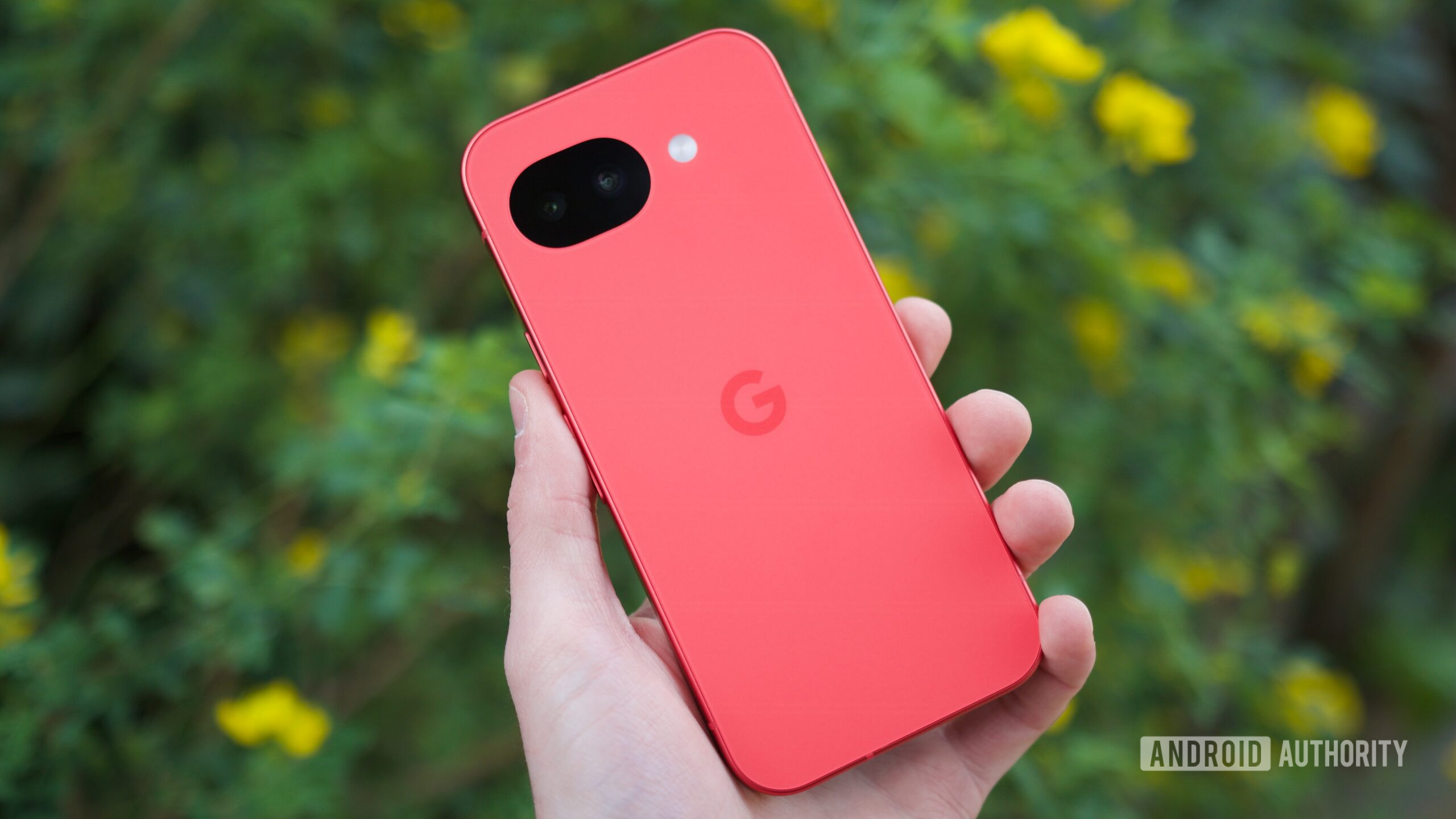


The Google Pixel 10a is an outstanding Android phone. Its hardware is great, performance is smooth, the cameras are dependable, and Google’s software experience remains unmatched. Is it basically the same phone as the Pixel 9a? Yes. But is it also the best $500 you can spend on a new phone right now? Absolutely.
The Google Pixel 10a is bound to be one of the most decisive and controversial Android phones of 2026.
From the moment specs began leaking up until (and well past) Google’s official announcement, there’s been no shortage of criticism about how little Google changed with the Pixel 10a compared to last year’s Pixel 9a. The battery, cameras, RAM, storage, and even the chipset are all identical between the two phones. If you’re a Pixel fan and/or tech enthusiast — which I am both — I understand that frustration.
However, after using the Pixel 10a for the last two weeks, I’ll be the first to tell you it’s the best $500 you can spend on a new Android phone right now.
What’s actually new with the Google Pixel 10a?

Joe Maring / Android Authority
Let’s start by talking about what is new with the Pixel 10a. Because, believe it or not, there are a few things to mention here.
Although the Pixel 10a’s design looks identical to the Pixel 9a’s, it has a handful of changes that — while minor on their own — come together really nicely. The first of those is the flush camera. The Pixel 10a is the first smartphone I’ve used in years with a completely flat back, and I had forgotten how good it is.
I mentioned this in my Pixel 10a early impressions, but there are so many instances in daily use where the flush design is appreciated. From sliding the phone in and out of pockets to having it rest completely flat on a table, it’s just more practical than a giant, honking camera bump like we have on virtually every other modern smartphone. I love it.

Joe Maring / Android Authority
The Pixel 10a is the first smartphone I’ve used in years with a completely flat back, and I had forgotten how good it is.
The other notable design change is the new color selection. My Pixel 10a came in the new Berry color, which is outrageously good. It’s such a deep, saturated red that I’m confident in saying it’s one of my favorite Pixel colors of all time. I’ve heard from some people that Berry is a bit too much for them, but luckily, Google’s Iris and Fog shades look excellent as well. I desperately wish there were built-in magnets hidden beneath those gorgeous colors, like the rest of the Pixel 10 series, but you’ll unfortunately need a magnetic case to use the Pixel 10a with any MagSafe or Pixelsnap accessories.

Joe Maring / Android Authority
There are also a handful of display upgrades. The Gorilla Glass 7i covering the display is much more durable than the old Gorilla Glass 3, and the display is slightly brighter, with a max brightness of 3,000 nits (up from 2,700). The display bezels are also now symmetrical and 10% thinner. That doesn’t sound like much on paper, but I’ve been surprised by how much better the bezels look to my eye. Even if none of this is game-changing stuff, it’s appreciated nonetheless.
Rounding out the Pixel 10a’s new features/specs are Satellite SOS and faster charging speeds. The former lets you text and share your location with emergency services via satellite when you don’t have a mobile or Wi-Fi connection. I’ve (thankfully) not had to test it during my review period, and it’s not a feature you’ll ever want to use, but it does add some peace of mind.

Joe Maring / Android Authority
As for faster charging, Google increased wired charging speeds from 23W to 30W and wireless charging speeds from 7.5W to 10W. Wired charging from a depleted battery to 100% takes about 84 minutes on the Pixel 10a, which is 10 minutes faster than the Pixel 9a and identical to the regular Pixel 10. It’s not a massive upgrade (and a far cry from the 80W wired charging of the OnePlus 15R), but it’s still nice to have.
Performance, cameras, and battery are the same — but that’s not a bad thing

Joe Maring / Android Authority
That’s a decent list of changes, but as you probably noticed, we haven’t talked at all about performance, cameras, battery life, or software — some of the most critical aspects of the Pixel 10a. This is where the stark similarities to the Pixel 9a are most evident, and they’re the parts of the 10a many people have been so critical of.
Chief among them is the Tensor G4 chip powering the Pixel 10a. This is the exact same chipset used in the Pixel 9a, and of all the complaints around reused specs between the two phones, this is the one I agree with the most. Google’s Pixel A series has consistently used the chip of last year’s flagship Pixels, and following that pattern, the Pixel 10a should have received the Tensor G5 from the mainline Pixel 10 family. But it didn’t.
Combined with no increase in RAM either (the Pixel 10a is still stuck with 8GB), this means that the Pixel 10a benchmarks exactly how you’d expect — no different from the Pixel 9a. In Geekbench’s CPU test, the Pixel 10a scored almost identically to the 9a. The 10a came out slightly ahead in 3DMark’s Wild Life Stress Test for GPU performance, but not by a significant margin.
But here’s the thing. The Pixel 10a isn’t a phone you buy because it has the best benchmark numbers. Hell, you shouldn’t buy any Pixel for that reason. The Pixel 10a isn’t designed to have the most horsepower possible — it’s designed to deliver smooth and reliable performance for everyday use. And in that regard, it’s great.
I struggle to imagine you’ll feel bottlenecked by the Pixel 10a.
I’ve been using the Pixel 10a as my primary smartphone for about two weeks at the time of publication, and coming from the Pixel 10 Pro, it’s commendable how little of a difference I’ve noticed. Google’s Pixel UI moves like butter on the 10a, the phone handles split-screen multitasking just fine, and all of my most-used apps (Slack, Telegram, Gmail, YouTube, and Chrome) run flawlessly. For everyone but power-users or hardcore gamers, I struggle to imagine you’ll feel bottlenecked by the Pixel 10a.

Joe Maring / Android Authority
The cameras on the Pixel 10a aren’t any different either. The 48MP primary and 13MP ultrawide sensors from the Pixel 9a return completely unchanged, as is the 13MP front-facing camera. Video recording capabilities are the same, too, with the Pixel 10a going up to 4K at 60 frames-per-second.
Does this mean the Pixel 10a’s camera system is boring? Sure. But I also think it’s still one of the best you can get for a $500 smartphone. I exclusively used the Pixel 10a to capture my recent trip to Barcelona for MWC, and the results speak for themselves.
All of the usual Pixel camera strengths are here. The Pixel 10a does a great job capturing more complicated details, such as black fur, and handles moving subjects extremely well; the photo of my cat mid-yawn is a great example.
The primary camera also performs surprisingly well in low light, capturing dimly lit restaurants and nighttime alleys better than any phone I can think of in this price range. Whether snapping “normal” photos or keeping the exposure open longer with Night Sight, the 10a does a great job.
We could sit here and nitpick things like sensor size, the 8x maximum zoom, and the lack of hardware upgrades compared to the 9a, but that would completely miss the point of the Pixel 10a. There are better cameras out there, but they all cost significantly more. For $500, the Pixel 10a’s cameras are about as good as you’re going to get.

Joe Maring / Android Authority
The 5,100mAh battery inside the Pixel 10a is identical to the Pixel 9a’s and far from the largest capacity we’ve seen. But in my testing, it’s still great. Even on some really busy days during MWC — with ample Google Maps navigation, tons of 5G connectivity, and nonstop Slack/WhatsApp/Telegram messaging — I still made it to the end of each day without any top-ups in the afternoon.
Battery life on the Pixel 10a is great.
I was particularly impressed with the Pixel 10a on my travel day back to the US from Spain. After taking the Pixel 10a off the charger at around 6:00 am CET, it lasted through three plane rides, multiple layovers, and almost six hours of screen-on time. Once I was finally home and ready for bed, the phone had 6% battery remaining at about 11:00 pm EST. For a very demanding 23-hour day, that’s excellent.
The software sweet spot

Joe Maring / Android Authority
The cherry on top of the Pixel 10a, as with all Pixel phones, is the software. The 10a ships with Android 16 QPR3 installed out of the box, with the usual promise for seven years of major OS upgrades and security patches.
Google’s Pixel software is a treat on any Pixel phone, but I think it shines especially bright on the A-Series. To get features like Now Playing, all of Google’s calling tools, and so much more on a $500 smartphone just adds to the value of the Pixel 10a. The upgrades with QPR3 further add to that. At a Glance is better than ever, the Google Search bar customization tools are excellent, and Google’s custom AI-generated app icon packs are a lot better than you’d expect.
Having just 8GB of RAM means the Pixel 10a misses out on a few of Google’s more advanced features (such as Pixel Screenshots and Magic Cue), but the core Pixel experience is retained wonderfully.
More subjectively, Google’s Material 3 Expressive interface is my favorite Android skin on the market right now. I love the bright colors, big buttons, and how distinctly Android it feels rather than trying to be an iOS copycat — something I can’t say most other Android interfaces these days. Google’s Pixel software has easily cemented itself as my favorite way to use Android in 2026, and it’s a big reason why the Pixel 10a is so successful.
Still the best $500 you can spend on a new Android phone

Joe Maring / Android Authority
When my colleague Ryan Haines reviewed the Pixel 9a last year, he called it the best $500 phone that he had ever used. Fast forward a year later, and the Pixel 10a is easily the best $500 phone I’ve ever used. Google nearly perfected the $500 smartphone formula with the 9a, and the 10a is that same phone again, now with a better design, improved durability, a nicer display, and SOS safety features. This was never going to be a losing strategy.
Is it a boring strategy? Sure. A new chip, more RAM, upgraded camera sensors, and faster charging would obviously have been great. But asking for those things in our current economic and RAM shortage crisis is unrealistic. Google could have made those changes, but then we’d almost certainly be looking at a much more expensive phone. The Galaxy S26 just proved that even the smallest of spec upgrades can still translate to a significant price hike. The fact that the Pixel 10a has the same $500 price is a big win.
The Pixel 10a is easily the best $500 phone I’ve ever used.
The elephant in the room, of course, is the Pixel 9a ($499 at Amazon). Given how similar it is to the 10a, there’s a strong argument for buying last year’s phone instead. And if you can find a good deal on it, I think you should. Sale pricing has been inconsistent since the Pixel 10a’s release, but at the time of writing, the Pixel 9a is hovering at around $430 on Amazon. If you can find it on sale for that price or lower, you might as well save some cash and go that route.
But once those Pixel 9a sales dry up and when stock eventually runs out — which it will — it’s hard for me to recommend another phone as strongly as the Pixel 10a.
The Samsung Galaxy S25 FE ($534.99 at Samsung) gets you a larger display, a bit more horsepower, a dedicated telephoto camera, and faster charging speeds. It’s a decent phone if you can find it on sale, but at its full retail price of $650, I don’t think it’s worth an extra $150 over the Pixel 10a. The OnePlus 15R ($699.99 at Amazon) has a much more capable chipset, extra RAM, and a monstrous battery, but that all comes at the expense of a poor camera experience and bad software — not to mention a higher price tag.
There are cheaper options out there, such as the Galaxy A36 5G ($399.99 at Amazon) and the 2026 Moto G Power ($299.99 at Amazon), but then you’re sacrificing stable performance, wireless charging, long-term software updates, and more. In global regions, brands like Nothing do offer more viable alternatives, but in the US, the Pixel A series really does sit above the pack.

Joe Maring / Android Authority
All of these other Android phones aren’t bad, per se, but each one comes with a list of caveats that the Pixel 10a doesn’t. And even if you’re contemplating jumping to iOS, it has a $100 advantage over the iPhone 17e right out of the gate.
Just like the Pixel 9a, the 10a is such an easy, safe recommendation that I think virtually anyone would be happy with. It’s reliable, built well, and — most importantly — thoroughly enjoyable to use. As boring as it may be, that doesn’t change the fact that the Pixel 10a is the best $500 you can spend on an Android phone today, and it’s one I’ll happily recommend until the Pixel 11a rolls around.

Flush camera design • Good performance and battery life • Strong cameras • Great software support promise • Excellent price
MSRP: $499.99
Google’s best AI features, in a more affordable mid-tier device
Google Pixel 10a is a refined mid-range phone built around Tensor G4, a brighter 120Hz 6.3-inch display, tougher Gorilla Glass 7i, satellite SOS, and trickled-down Pixel AI features — paired with a reliable dual-camera system, 30W charging, and seven years of updates.
Positives
- Completely flush rear camera
- Smooth day-to-day performance
- Very reliable cameras
- Great battery life
- Google’s Pixel software
- $500 price is sweeter than ever
Cons
- No built-in magnets
- Missing some more advanced Pixel features
- Almost identical to the Pixel 9a
Don’t want to miss the best from Android Authority?


Thank you for being part of our community. Read our Comment Policy before posting.
 By
By