
After a long 5G rollout, we’re finally at the point where flagship phones and networks no longer need to advertise the current cellular technology as a feature — it’s the standard. To that end, we’re seeing 5G coverage improve nationwide, and new form factors like smartwatches are starting to support the network, too. You may have just gotten used to using 5G instead of 4G LTE, but I’m here to tell you that 6G is much closer than you think.
At MWC 2026, industry leaders like Qualcomm and Nvidia shared their visions for the upcoming 6G mobile network, with a boatload of corporate partners in tow. For the average user, the buildout of 6G infrastructure and companies working together isn’t exciting. You want to know what you’ll actually be able to do with 6G. We now have that answer, and it’s pretty exciting. Here are three new types of experiences the 6G mobile network will provide, and what they’ll mean for you.
6G will power low-latency connected AI experiences

Everything goes back to artificial intelligence these days, and 6G is no exception. However, there are signs that the AI-connected world we’re building will demand more from our mobile networks, and that’s where 6G comes in. Specifically, global wide area network (WAN) traffic is expected to jump by between three and seven times by 2034, compared to 2023 traffic data. AI is also going to account for roughly 30% of all network traffic, according to current projections.
Article continues below
The AI takeover will demand faster, lower-latency connections — hence the need to deploy 6G — but it’s about more than just raw traffic spikes. Industry leaders see a future where AI agents become the centerpiece of mobile ecosystems. Right now, your phone is the heart of your technology portfolio, and it connects with earbuds, smartwatches, tablets, laptops, and more. In the future, AI agents might be orchestrating these hardware categories, connecting them all with streamlined software.
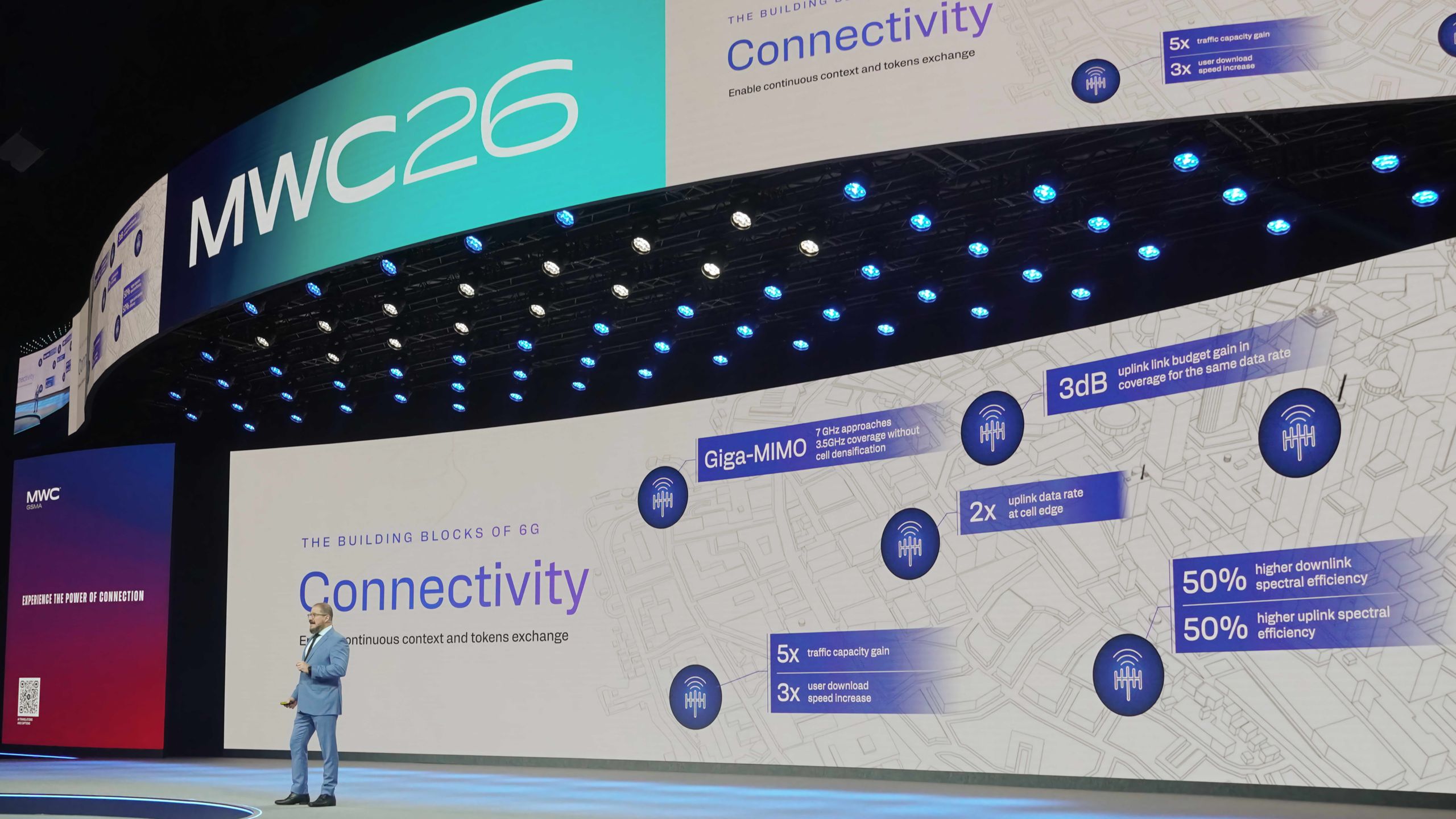
That sounds pretty clever, but if AI agents are working across multiple wireless devices at once, they need fast connections. That’s why 6G is being built to address these traffic and speed needs. We’re expecting 6G to offer a five times greater traffic capacity than 5G, and 50% higher spectral efficiency for uplink and downlink connectivity.
In simple terms, this means your AI devices will be able to connect with each other and cloud servers faster than ever before. 6G will deliver connected experiences that aren’t currently possible due to latency limitations.
6G will make XR and spatial computing mainstream

Speaking of connected experiences, 6G will go a long way in making mixed-reality XR experiences mainstream. Currently, devices like Meta Ray-Ban Display or Samsung Galaxy XR are bottlenecked by how much data can be transferred to deliver high-quality video, AI processing, and gaming performance. Then it arrives, 6G will improve these experiences by providing higher uplink speeds capable of supporting multiple 4K or 8K video streams.
Since most XR glasses and headsets rely heavily on streaming, tethering, or cloud processing to provide features, a high-speed and low-latency mobile network like 6G could make use cases like game streaming or remote desktop control actually usable. It’s all about cutting down the time you have to wait for your devices to talk with your phone and the cloud to return a response. So, when you look at something and ask a question while wearing camera-equipped smart glasses, the response will feel nearly instant when 6G arrives.
6G will elevate public infrastructure in the next decade

6G will also enable a sensory network that can use RF signals and drones to map out environments, powering new kinds of infrastructure, like self-driving car networks. As self-driving car systems like Waymo become mainstream, you’ll need a fast, low-latency network to connect cars to control centers. You’ll also need to be able to process data from sensors like cameras, radar, or LiDAR, in a near instant, and 6G will make that possible.
Robotics is another emerging technology that’s not too far away, with companies like Tesla going all-in on humanoid robots that could be controlled remotely. Just like with self-driving cars, robots need a fast and efficient network to work properly. 6G’s biggest feature might be its capacity upgrade, as new uses for mobile networks like AI, self-driving cars, and robotics will increase congestion. 5G isn’t fast enough, nor does it have enough capacity for the expected traffic spikes.
6G aims to solve both of those problems, and you can expect to see advances in autonomous vehicles, robotics, AI, and spatial computing coincide with the upgraded mobile network when it’s ready for a commercial release.
When can we expect consumer-ready 6G?
Right now, 6G is currently in development and in the research and study phase. That will continue into 2027 and 2028, when pre-commercial devices will be tested. Then, the commercialization of 6G will happen the following year. That means you’ll be able to start using 6G at the end of this decade, with the mobile network likely going mainstream in the 2030s. It sounds far away, but it’ll come sooner than you think, bringing new AI and XR experiences with it.
 By
By