

Hadlee Simons / Android Authority
TL;DR
- Samsung’s new Privacy Display feature uses a combination of narrow and wide pixels to limit visibility from off-axis viewing angles.
- The viewing mode is intended to hide your phone’s content from people trying to sneak a peek, but there’s an unintended consequence.
- Samsung confirmed in a statement that there will be “some variation” in display brightness at certain viewing angles.
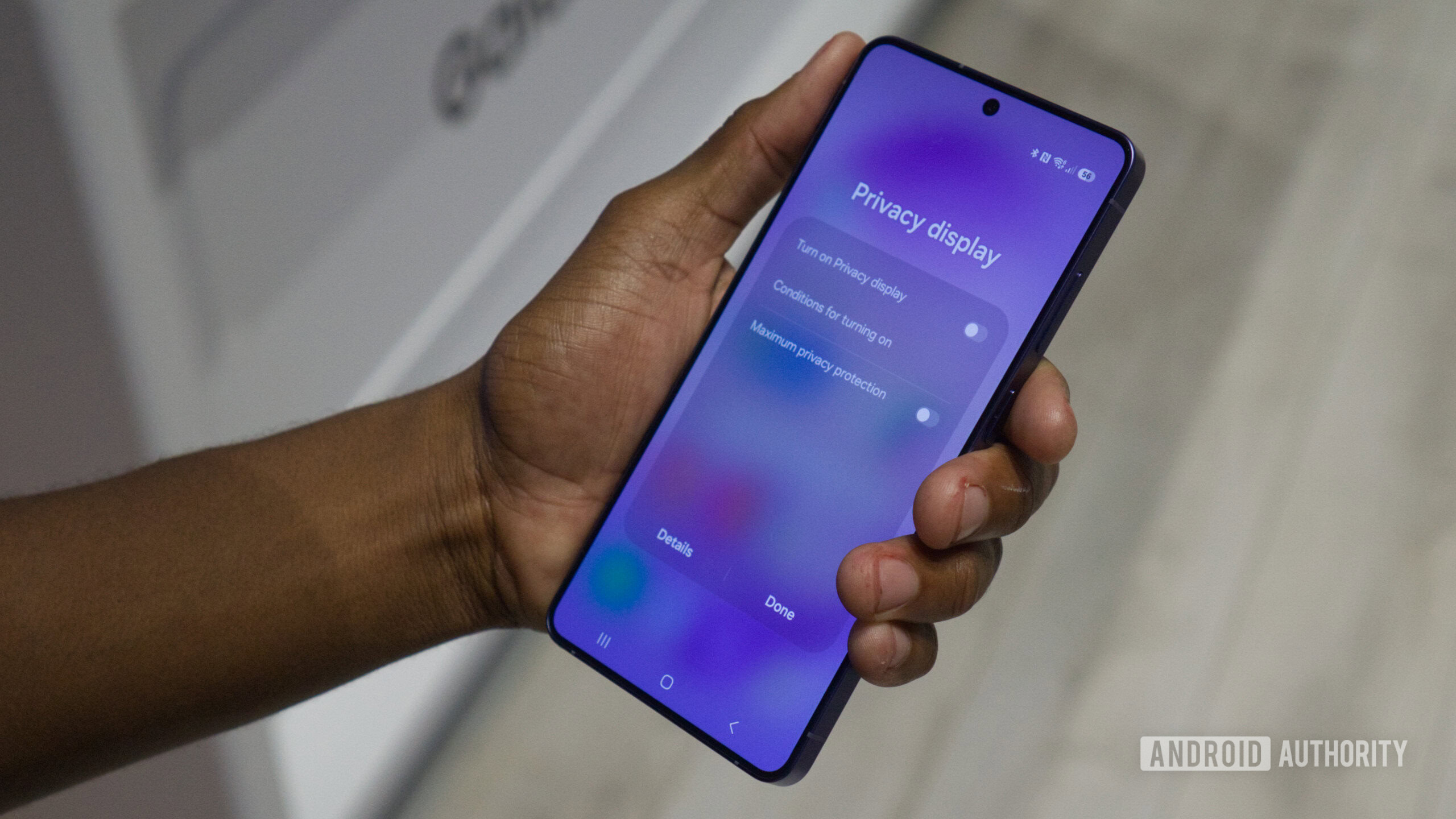
The Samsung Galaxy S26 Ultra includes a genuinely neat display trick, and it’s the Privacy Display. The new display technology keeps the content on your phone safeguarded from prying eyes by controlling how wide and normal pixels emit light. However, anecdotal user accounts and lab testing have both pointed to the extra feature resulting in lower Galaxy S26 Ultra screen brightness than the Galaxy S25 Ultra in certain situations.
Following the Galaxy S26 Ultra’s official launch, Samsung is finally acknowledging that the device’s screen indeed may appear to be less bright when viewed at certain angles in a statement to TechRadar. The company says you can expect to see “some variation” at certain viewing angles, but also claims that there should be a “negligible” impact on usage.
Don’t want to miss the best from Android Authority?


Here’s what Samsung told TechRadar regarding the results of brightness testing of the Galaxy S25 Ultra:
Privacy Display is designed to protect user’s privacy by providing a vivid visual experience for using the phone in normal use cases. Some variation will be seen when the phone is held at certain angles and when set to maximum brightness, however, any impact on actual usage when holding the phone should be negligible.”
Based on Samsung’s statement, you can expect to see a less-bright screen when the brightness is turned all the way up. The dimming effect should be less prominent at lower brightness levels. However, Samsung’s claim that impact on usage is “negligible” is a bit more dubious. In the time since the Galaxy S26 Ultra hit the hands of reviewers and early buyers, many have questioned the display quality and brightness of the new screen technology.
The revamped display architecture includes both narrow and wide pixels that can be controlled individually. When Privacy Display is enabled, only the narrow pixels are illuminated, limiting off-axis visibility. With the feature turned off, the narrow and wide pixels are both active, which is supposed to provide a normal viewing experience. Though, Samsung’s latest statement admits there will be “some variation” there.
Do you think the Galaxy S26 Ultra’s screen is bright enough, and is the Privacy Display feature worth having a slightly dimmer screen? Let us know in the comments below.
Thank you for being part of our community. Read our Comment Policy before posting.
 By
By