

Aamir Siddiqui / Android Authority
TL;DR
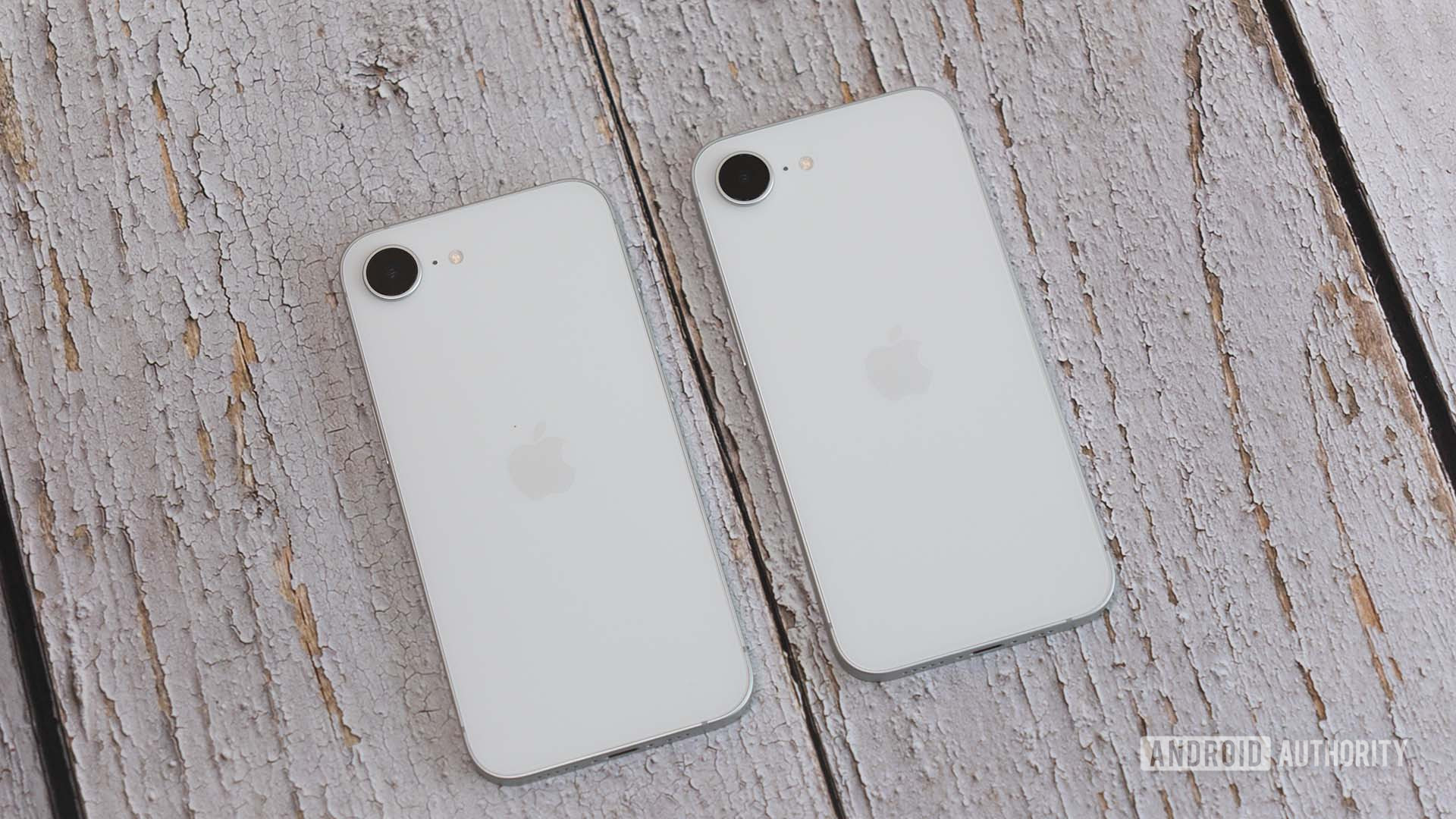
- iFixit confirms the iPhone 17e and 16e are nearly identical, featuring a dual-entry design and electrically debonding battery adhesive.
- Almost all parts are interchangeable. As a result, the iPhone 17e’s back panel can be transplanted onto an iPhone 16e, adding MagSafe accessory support for as low as $20.
- Unlike Apple, Android brands often make minor design changes, like shifting camera bars, that prevent part sharing across generations and make such upgrades impossible.
Apple launched the iPhone 17e earlier this month, bringing the fight to Google’s Pixel 10a at the $499-$599 price range. While the Pixel 10a starts at a lower price, the iPhone 17e’s trump card is MagSafe compatibility, which opens it up to a wide accessory ecosystem. If you already have an iPhone 16e, you don’t have to be too jealous of this coveted upgrade. As it turns out, the iPhone 16e can be upgraded with MagSafe compatibility thanks to the iPhone 17e, and this is something Android brands can learn from.
Don’t want to miss the best from Android Authority?


iFixit tore down the iPhone 17e and, unsurprisingly, found it nearly identical to the iPhone 16e, except for the MagSafe assembly.

The iPhone 17e retains the dual-entry design from the 16e, meaning you can open the device from either the front or the back, depending on what you need to repair. Apple had dropped the dual-entry design from the iPhone 17 Pro, so it wasn’t a given if the 17e would retain it. Thankfully, the 17e also retains the electrically debonding adhesive under the battery, so removing the battery is very painless.
iFixit notes that almost all parts are swappable between the iPhone 16e and the iPhone 17e — nearly everything can be transplanted across, and iOS’s Repair Assistant will calibrate the new hardware.
The big highlight here is that the iPhone 17e’s MagSafe back panel can also be transplanted onto the iPhone 16e. You won’t see the MagSafe animation, and the phone won’t enter StandBy mode when it’s on its side and MagSafe charging. You also won’t magically be upgraded to Qi2’s consistent 15W charging either. However, you will still be able to connect MagSafe accessories to the iPhone 16e, addressing its biggest limitation. You’ll also get better mileage out of iPhone 16e’s Qi charging, which offers a variable 5-15W charging rate, since magnetic chargers will align properly every time.

Apple hasn’t yet shared how much the iPhone 17e’s MagSafe back panel would cost. Third-party suppliers are said to be offering an equivalent part for about $20, making it a surprisingly cheap upgrade for the functionality it adds.
The only exception to the parts swapping is the TrueDepth camera system. The selfie camera works when swapped, but Face ID will not work, likely for security reasons.
Android brands should learn from Apple

Rita El Khoury / Android Authority
Apple has long been criticized for barely changing anything across phone generations, but in this case, this is a practical advantage. The iPhone 16e and 17e are nearly identical, creating a flexible parts pool that offers a practical upgrade at a fraction of the cost. Even if you’re not interested in the upgrade, the shared parts pool ensures more robust availability of repair parts.
On the other hand, we don’t see the same shared parts pool on Android phones. Make no mistake — many Android brands have also settled into a lull of barely upgrading phone specifications. But every generation sports a few changes here and there that render parts (and even cases!) from the older generation incompatible. This incompatibility makes part upgrades impossible. For example, you can’t upgrade the Pixel 9 Pro XL with the Pixel 10 Pro XL’s MagSafe back panel, even though the phones have the same dimensions, because the camera bar has shifted and changed slightly.
Further, this incompatibility also weakens part availability, as a repair shop needs to maintain separate stock for each phone rather than sharing a common bin.
We hope Android brands learn from Apple. If you’re not meaningfully upgrading phones year-on-year and are going to recycle specifications anyway, leave the door open for easy transplantation. Leave it open even for meaningful upgrades. You may not get a new phone sale right away, but you’ll definitely improve your customer loyalty.
Thank you for being part of our community. Read our Comment Policy before posting.

 By
By