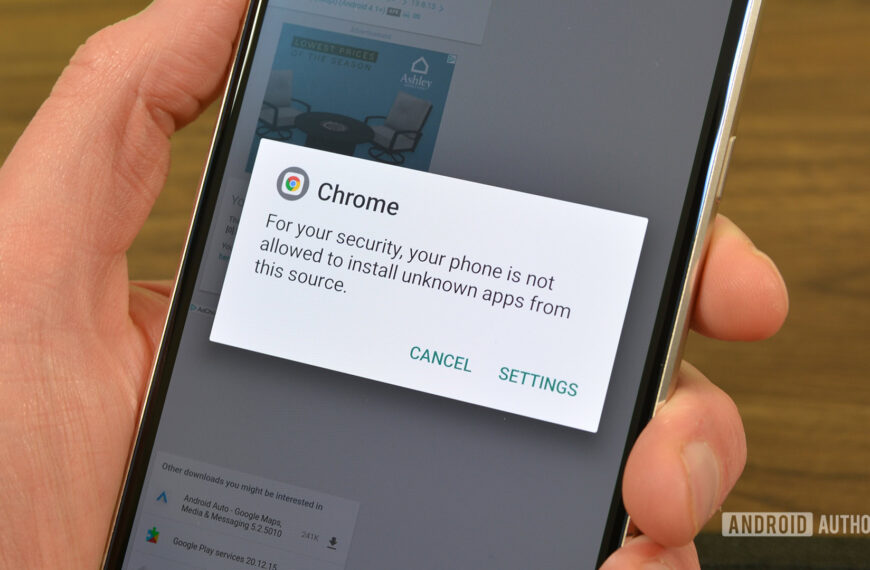

To be clear, sideloading isn’t going away from Android, but how it works will be significantly different from what we’re all used to. And for long-time Android fans, it’s going to be a particularly difficult adjustment.
If you’re an Android user and are confused about what’s changing, what’s staying the same, and when you should expect this new version of sideloading, here’s everything you need to know.
What do you think about Android’s new sideloading flow for unverified apps?
3099 votes
You still need to enable Developer Mode

Joe Maring / Android Authority
Let’s start on an easy note. To begin Android’s new sideloading process, you’ll still need to enable Developer Mode, just as you’ve always had to. Furthermore, the steps for enabling Developer Mode aren’t changing, either. You’ll still open the Settings app, tap About Phone, and repeatedly tap Build Number until Developer Mode is activated.
This is how you set up your Android device for sideloading right now, and that’s how you’ll still do it even when Google’s new rules take effect. However, where things change has to do with what comes next.
There are a few new steps after that

After enabling Developer Mode, Google will display a new pop-up asking you to confirm that no one is pressuring or forcing you to do this. The goal here is to add an extra safety measure for people who are asked by scammers to sideload an app they shouldn’t. It’s not something you or I may need, but for more casual users, it’s a fine thing to have.
The second new step is to restart your phone. Once again, Google’s thinking is that this forces you to disconnect from a potentially scammy/dangerous phone call with someone coercing you to sideload a dangerous app. Even if that’s not the case, you still have to perform a restart.
After restarting your Android device — and this is the biggest change — you have to wait 24 hours before you can sideload any apps onto your Android phone or tablet. Yes, everyone has to do this.
Once the 24 hours are up, you need to authenticate your device with your fingerprint or face unlock, and you’re finally free to sideload apps as you please.
Google’s 24-hour rule is annoying, but manageable

Adamya Sharma / Android Authority
That 24-hour rule is easily the most alarming change with Google’s new sideloading system, and while it is frustrating, the good news is that it isn’t as bad as it seems on the surface.
Once the 24 hours are up, you have two options: allow sideloading for seven days, or allow sideloading on your device indefinitely. If you choose the latter, you won’t ever have to restart your device or go through the 24-hour waiting period again.
It’s worth noting that this isn’t specific to a particular developer or website you sideload an application from — it’s a system-wide setting. If you choose to allow sideloading indefinitely, from that point forward, sideloading will work on your Android device just as it has for years.
These restrictions only apply to unverified apps

Mishaal Rahman / Android Authority
There’s some more good news about Google’s new sideloading process. All of the new safety measures — restarting your phone, waiting 24 hours, and authenticating your identity — only apply to sideloading unverified apps. If you want to sideload a verified application, you can do so without going through all those steps while still preventing unverified apps from being installed. In other words, sideloading verified apps will work identically to sideloading in its current form.
Developers who distribute applications via sideloading will have the option to verify their identity with Google to confirm they’re actually who they say they are. The verification process costs $25, and the goal is to provide reassurance that verified sideloaded apps have been “approved” by Google as safe to download.
Google’s verification process is open now. Google will enforce the verified rules in four countries (Brazil, Indonesia, Singapore, and Thailand) starting in September, and roll it out to other parts of the world in 2027 and beyond.
Smaller apps aren’t impacted either

In addition to verified apps, Google also bends the rules for apps with small distribution. For an application created under Google’s limited distribution account, it can be sideloaded by up to 20 people without being affected by the new sideloading rules.
Although the 20-person limit is far too small for any widespread public release, it’s perfectly fine for hobbyists who are tinkering around and want to test their apps without jumping through the new sideloading hoops.
The new sideloading rules start this August

Speaking of rollout timing, the new sideloading rules for unverified apps won’t be activated until sometime in August. Google hasn’t said when in August or how expansive that rollout will be, but that’s the time frame we’re looking at right now.
We don’t know which Android versions are included

Joe Maring / Android Authority
Similarly, Google hasn’t said which Android versions the new sideloading rules apply to. Will this just be for devices running Android 17? Is Android 16 supported? Is Google going all the way back to Android 15 or Android 14 to ensure as many people as possible are protected?
We’ll presumably learn more about Android version support leading up to August, but for the time being, this is something we’re still unsure of.
Don’t want to miss the best from Android Authority?


Thank you for being part of our community. Read our Comment Policy before posting.
 By
By