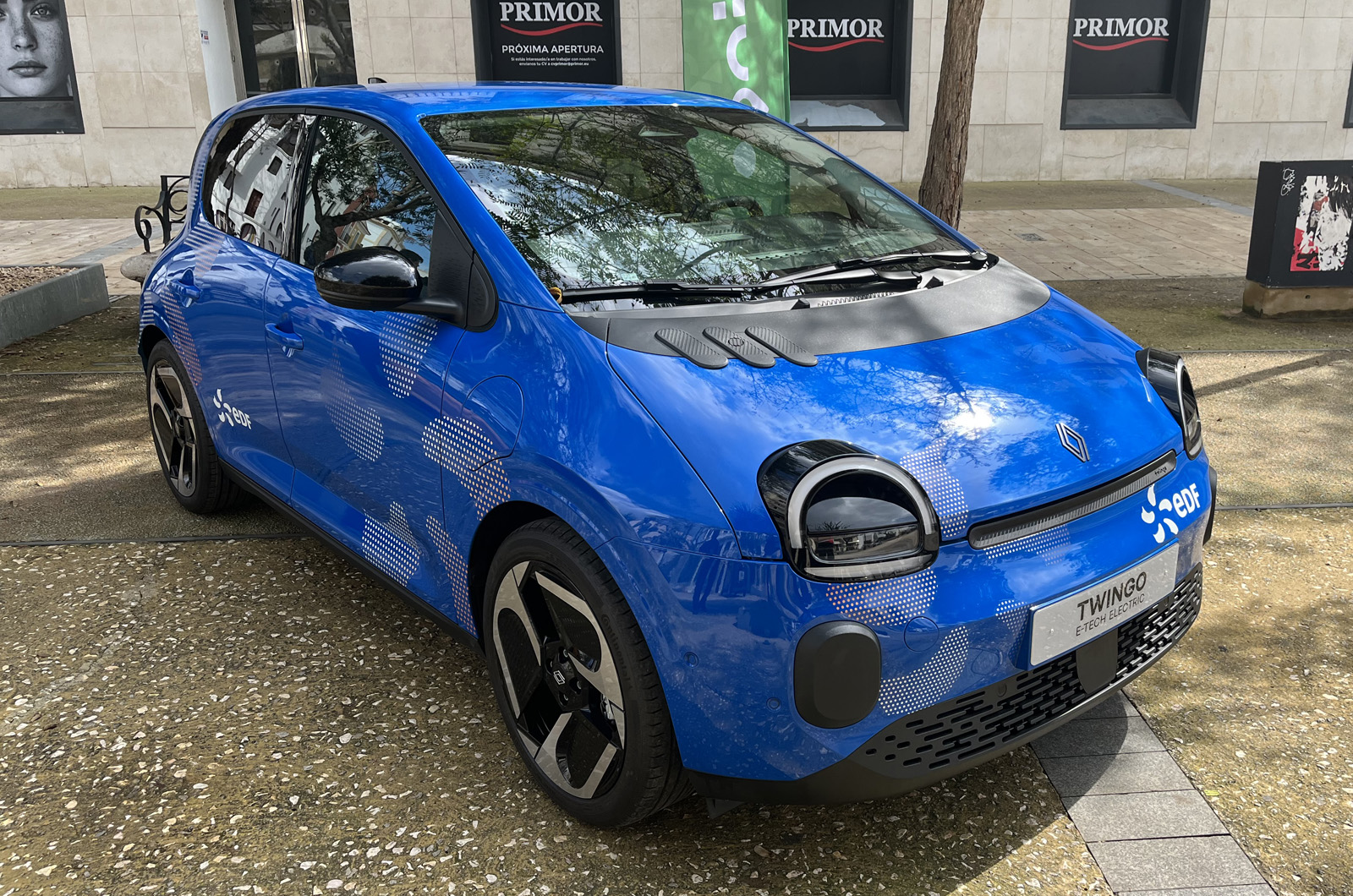

Renault has converted the new Twingo into a van for French energy provider EDF, boosting the city car’s load-lugging capacity to 797 litres.
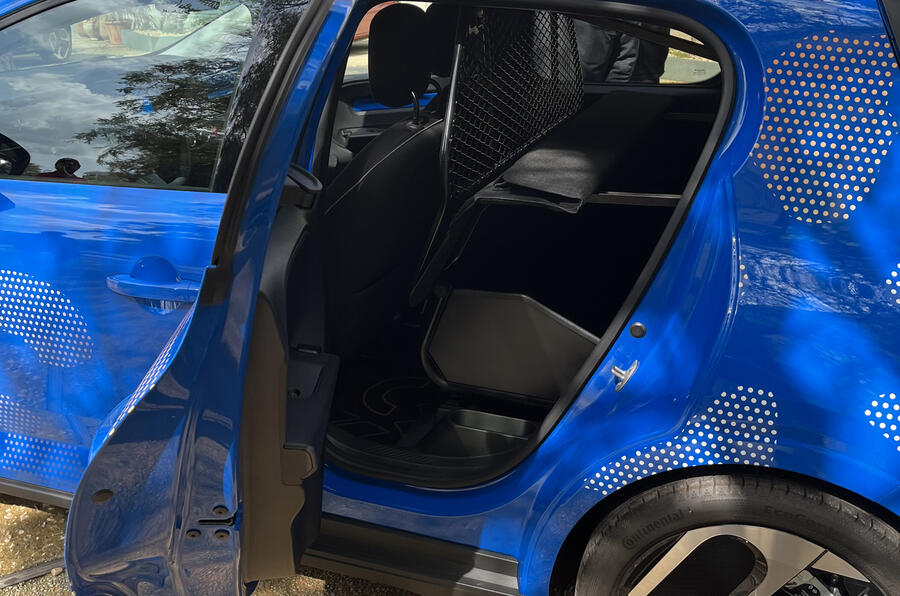
That figure is more than double the 360-litre maximum of the regular electric hatchback, coming thanks to the removal of the rear seats.
In their place sits a metal cage fitted with covers to disguise cargo, with the load bay separated from the cockpit by a mesh bulkhead.
Revealed on the sidelines of the Twingo’s media launch, the conversion package is completely reversible, helping to protect each Twingo van’s resale value once it has completed its duty on a company fleet.
From the outside, the van is distinguished from the regular Twingo by its black headlight surrounds and bold blue paint – part of EDF’s corporate livery. Its rear windows are also tinted almost completely opaque to help obscure the load on board.
The Twingo van remains a concept for now but, given its simplicity, could easily make it to market. However, Renault told Autocar it’s unlikely that any production version would be sold in the UK.
Renault offered a similar conversion on the 1990s Mk1 Twingo, although such examples are now extremely rare.
The new Twingo joins a long line of city cars converted into vans: BT commissioned a cargo-carrying version of the original Ford Ka and Fiat offered a van variant of the Panda through various generations.
The car-based van class has withered for several years but is now undergoing a renaissance: Renault also offers a van version of the 4 crossover and the rival Citroën ë-C3 can too be had in commercial guise.
 By
By