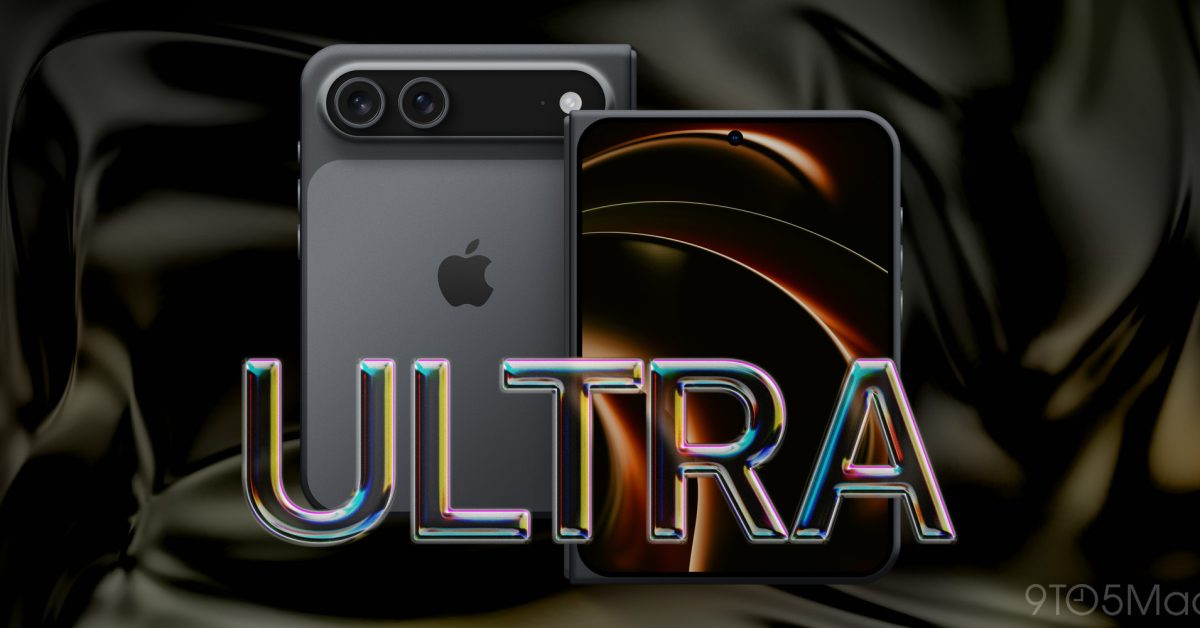

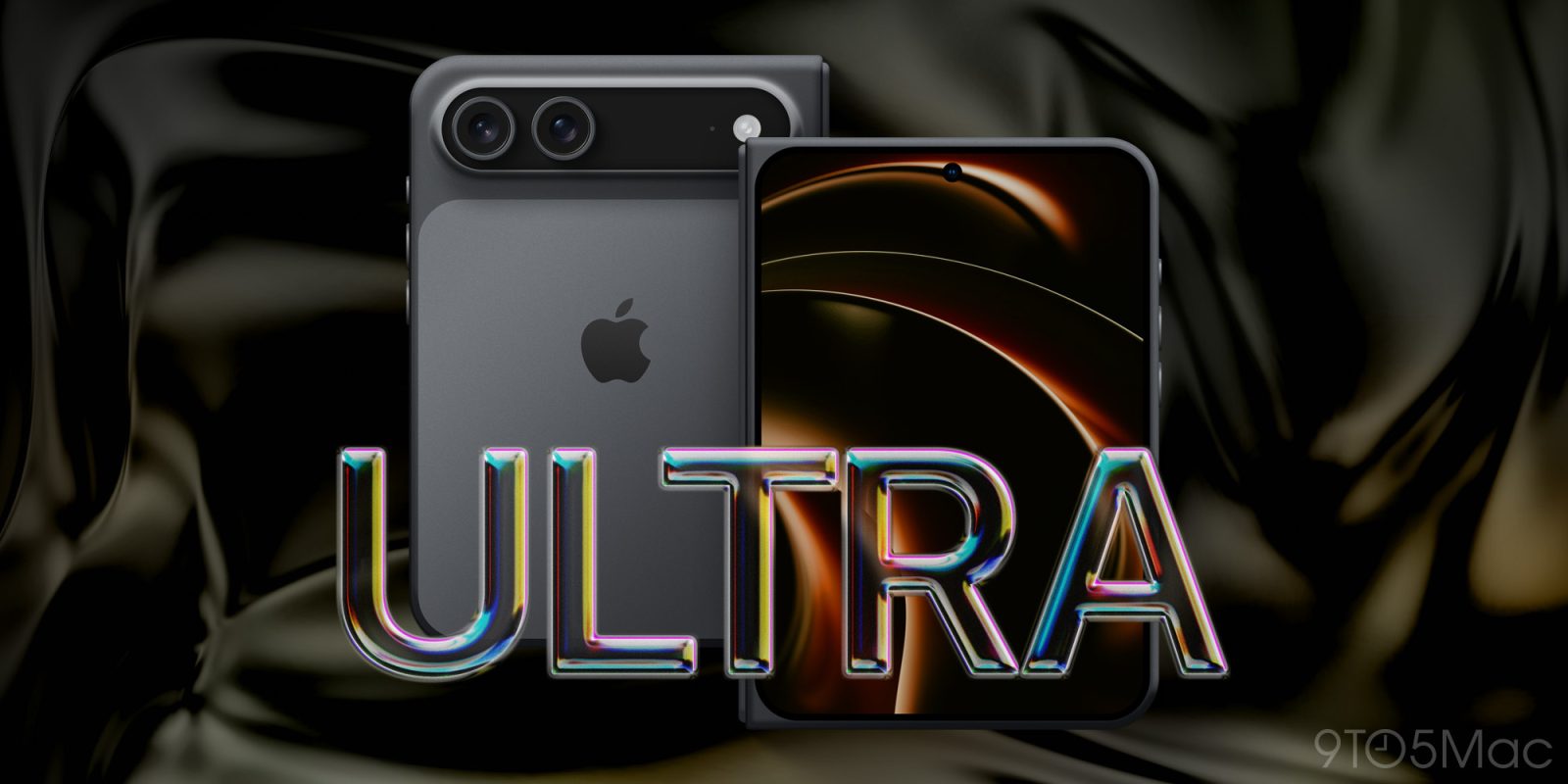
It’s believed that Apple has waited many years to launch the first folding iPhone in large part because the company wasn’t happy with the very visible crease in early competitor models. We’re expecting that foldable iPhone to be launched later this year, likely branded as the iPhone Ultra.
The crease problem was reportedly solved last year, but a new report suggests that multiple innovations have been required in order to make the crease near invisible – and that a hi-tech glue is one of the key elements …
Solving the visible crease problem
Early folding smartphones had a very visible crease. It was reported that the Cupertino company found this unacceptable for an iPhone, and rejected multiple samples provided by display partner Samsung before getting its own designers heavily involved to solve this problem.
Apple is believed to be using a number of different approaches in order to minimize the visibility of the crease, and supply-chain market intelligence firm TrendForce has outlined to us the elements it is expecting to see. Some of this was already revealed by Apple patents.
Creases originate from the misalignment of the neutral layer within the panel stack, which causes localized tensile stress, leading to micro-cracks or permanent deformation under stress concentration. The core solution lies in precise control of stress distribution and neutral layer positioning within the multilayer structure.
In next-generation foldable devices, ultra-thin glass (UTG) is no longer just a surface protection layer. As indicated in Apple’s patents, a variable thickness design combined with chemical strengthening allows the folding area to be locally thinned at the bending axis to improve bendability, while non-folding regions retain greater thickness for impact resistance.
Hi-tech glue is key
However, TrendForce suggests that the single most important factor is a sophisticated form of glue. It told us this remains sufficiently liquid to fill in microscopic irregularities that would otherwise take the form of visible creases.
The key breakthrough for foldable displays in 2026 lies in the evolving role of optically clear adhesive (OCA). No longer limited to a bonding function, OCA now exhibits pronounced viscoelastic properties through optimized modulus design and material composition.
Since elastic modulus determines a material’s resistance to deformation under stress, an optimized OCA enables dynamic modulation of the panel’s mechanical response. It remains soft during gradual bending to reduce fatigue stress, while under sudden external force, its modulus temporarily increases to provide localized structural support.
OCA uses these mechanisms to help stabilize the neutral layer and significantly reduce stress concentration during folding. Its micro-flow characteristics also allow it to fill microscopic irregularities formed over long-term use, reducing light scattering and further minimizing the visible crease.
The company believes that Apple will capture around 20% of the market share of foldable smartphones this year.


FTC: We use income earning auto affiliate links. More.

 By
By