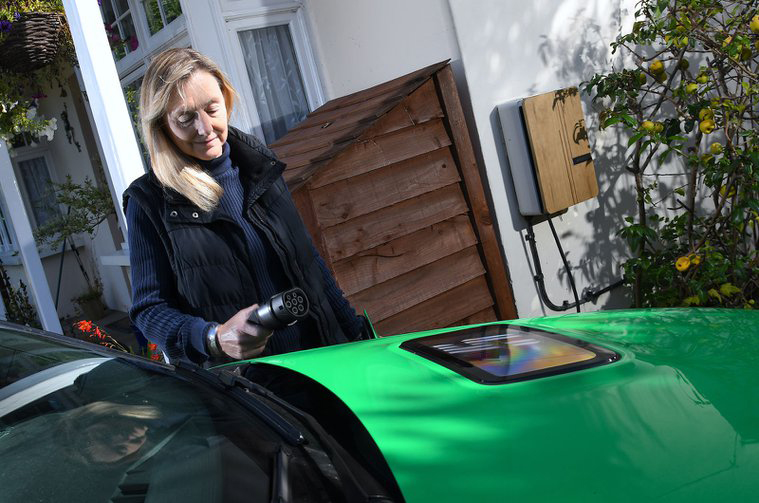

Octopus, the UK’s largest energy supplier, has launched a system that automatically invoices employers for the cost of home-charging company cars for business trips – even if they’re not a customer.
At home is by far the cheapest place for electric car drivers to plug in, thanks to an Ofgem-capped rate of 27p/kWh and utility companies (including Octopus) offering rates as low as 7p/kWh to charge overnight.
That compares with an average of 76p/kWh for the fastest DC public chargers or 54p/kWh for slower units, according to the latest Zap-Map data.
At the higher of those two rates, a typical EV averaging 3.5mpkWh would use around 22p of energy per mile. That’s equivalent to around 27mpg in a petrol car, although most round trips in an EV would include energy added at home.
The mileage rates approved by His Majesty’s Revenue & Customs (HMRC) have faced ongoing criticism for not recognising that diversity. It has set two advisory electric rates (AERs) for EVs: 7p per mile for home charging and 14p for public charging, regardless of how big the vehicle is. The former over-compensates drivers using overnight rates (which equate to around 2p per mile in energy costs) while the latter leaves them out of pocket if they use rapid chargers.
Employers can adjust the rates but run the risk of tax penalties for the company or for drivers unless they can prove that their adjusted rates reflect real-world costs.
Octopus is aiming to side-step that complexity by offering employers an automated system whereby drivers simply select whether the energy is for business or personal use when they plug in. If it’s for the former, the cost is credited back to their account and their fleet manager is invoiced instead.
Drivers don’t need to be Octopus customers or use the company’s own-brand home chargers, but they do need a compatible smart charger.
A data connection and the ability to report energy usage accurately has been a legal requirement for home chargers since 2022.
Octopus’s Home Charging Reimbursement Scheme costs £9.50 per driver per month.
It was developed with Rightcharge, which is already providing similar technology to fleets.
It’s just one element of the new Octopus Fleet portfolio, which provides a ‘menu’ of solutions, including access to the Electroverse network of 1.3 million charging points across 50 countries, expenses cards covering charging, meals, car washes and tolls and a suite of chargers, solar panels and batteries for homes and depots.
Matt Davies, director of Octopus Electroverse and Octopus Fleet, said: ”Choosing an electric vehicle is easier than ever, but every business operates differently, and we’ve seen that it can be a challenge to scale up electrification efforts and to make the EV switch a no-brainer for drivers.”
 By
By