
Dominik Voogdt, head of overall vehicle engineering for the GLC EV, describes this new braking system as a “game-changer” for overall efficiency.
The Galtispuoda Pass: a test of grit and grip
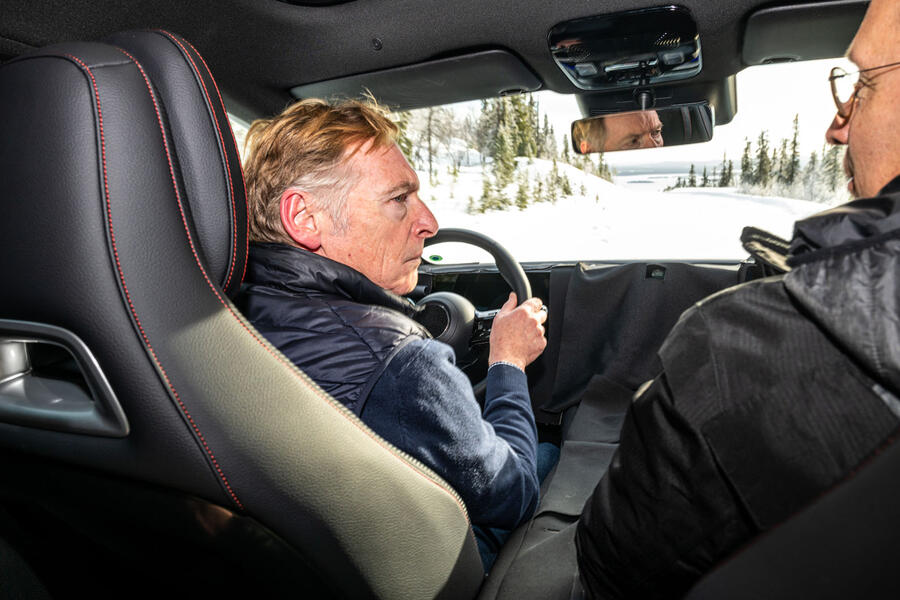
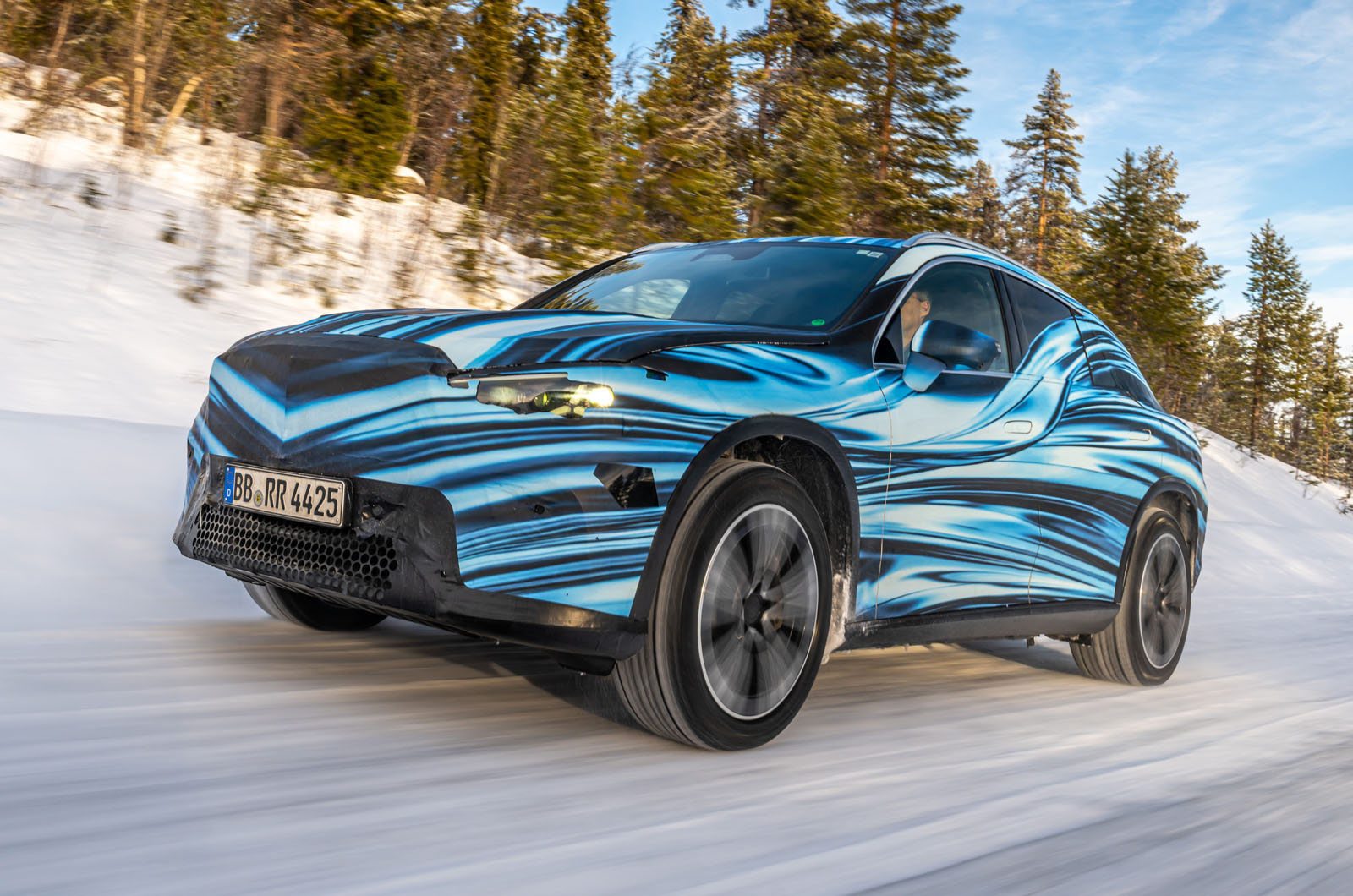
For my first drive of the GLC EV, Mercedes has brought me to the Galtispuoda mountain pass, just outside Arjeplog in Sweden’s Arctic north. This winding, snow-covered mountain road is a relentless test of a car’s mettle. It’s got it all: steep inclines, precipitous descents, fast open bends and sharp hairpins – all with surfaces that, at this time of year, shift unpredictably from compacted snow to sheer ice and back again before you realise.
With a heavy cloak of disguise covering the prototype’s dashboard and other areas, we can’t say much about the interior design yet, except that it departs quite radically from that of the ICE GLC models, which are likely to adopt it, along with a new pillar-to-pillar display panel and other digital developments, including the new MB.OS operating system, as part of a mid-life facelift before the end of next year.
That said, the driving position and ergonomics all feel familiar, with typical Mercedes refinement and attention to detail. A large glass roof floods the cabin with natural light, while a longer wheelbase than ICE GLC models (a benefit of the EV’s MB.EA platform) provides additional space, much of which has been allocated to extending rear-seat leg room. It’s very roomy, noticeably so in the back.
But I haven’t flown halfway to the North Pole to be a passenger: I’m here to drive. From my starting point at the summit of the Galtispuoda, there’s a silent yet undeniable urgency to the qualities of the new eATS 2.0 drivetrain in the first mile or so, the kind that pins me to the driver’s seat when traction is found and exploited by the GLC EV’s fast-reacting four-wheel-drive system and other driving assistance systems. Despite the treacherous conditions, there’s dependable traction and swift acceleration on the straighter sections of the pass.
The stability-control system works rapidly and completely in the background without ever feeling intrusive or overbearing, keeping progress smooth and controlled. Voogdt says changes to the vehicle operating system have reduced the amount of CPU networking, providing faster and more seamless control of power to each of the wheels.
 By
By