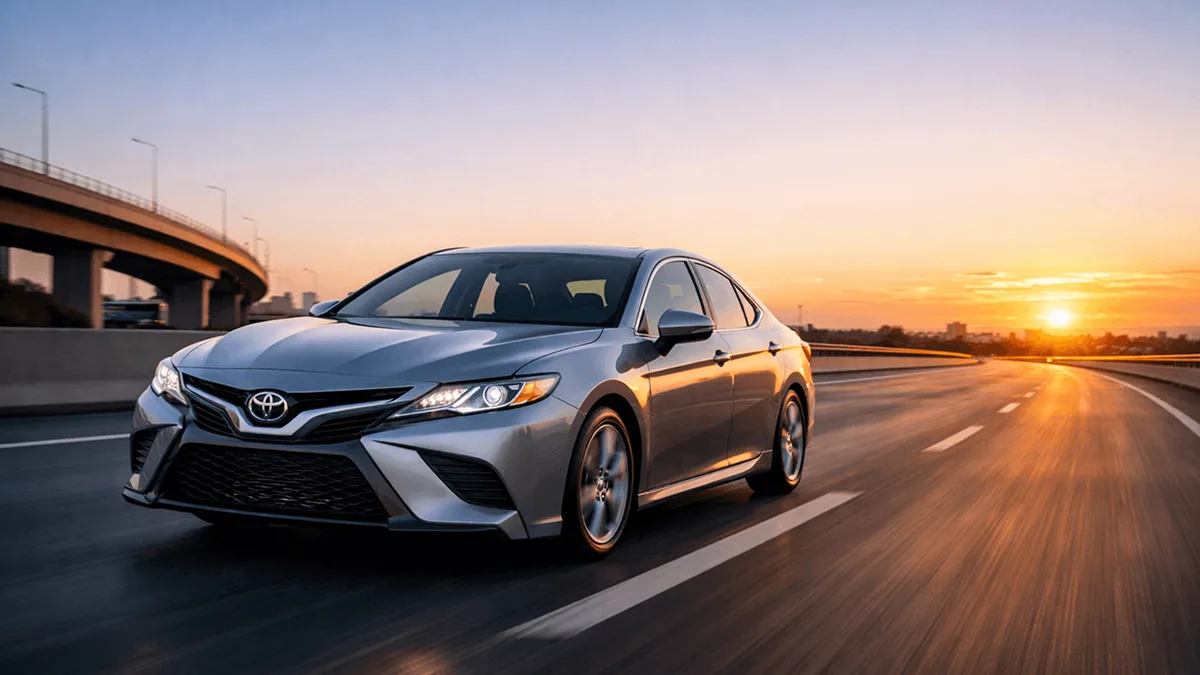

Few vehicles have earned the kind of trust the Toyota Camry carries. Nearly three decades as America’s best-selling passenger car is no coincidence. It reflects what owners, mechanics, and auction buyers already know: this car is built to last. It’s reliable, inexpensive to maintain, and easy to find parts for anywhere in the world.
That said, not every model year delivers the same level of reliability. Some generations are worth every dollar you bid. Others come with documented problems that can turn a promising auction find into an expensive repair project. This guide will help you tell them apart, so you can identify the best year for a used Toyota Camry to buy at auction.
Why Auction Buyers Keep Coming Back to the Camry
Walk through almost any car auction inventory, and you’ll notice the Camry appears more often than almost any other vehicle.
Rebuilders and budget buyers actively seek it out. The logic is simple:
- Parts are everywhere and affordable. No hunting, no special orders, no dealer-only pricing complications.
- Labor costs stay predictable. Any mechanic familiar with Japanese vehicles can work on a Camry without surprises.
- Salvage title Camrys hold resale value well. The nameplate carries enough buyer confidence that rebuilt examples sell consistently in the private market.
- Properly maintained examples run well past 200,000 miles. iSeeCars data places the Camry among a very short list of sedans that regularly reach 250,000 miles.
The Best Years for Toyota Camry
2013–2017 (7th Generation): The Most Reliable Generation Overall
Of all the Camry generations, the 7th-gen Toyota Camry is the one most mechanics, rebuilders, and long-term owners point to first. For many buyers, it represents the Toyota Camry’s best model overall. It sits at an interesting point in the model’s history — modern enough to offer real comfort and technology, yet engineered simply enough that repairs stay accessible and affordable.
The core of this generation is the 2.5-liter 2AR-FE four-cylinder. Toyota retired the problematic 2AZ-FE from the previous generation and replaced it with something far more dependable. Mechanics who service these engines regularly describe it as one of the more trouble-free units Toyota has installed in a passenger car.
The reliability data backs that up:
- J.D. Power scored the 2014 Camry at 92/100, the highest figure recorded for any Camry year.
- Across the entire generation, NHTSA recalls never exceeded three in any single model year.
- Owner complaints are mostly about comfort, not drivetrains.
- KBB found that 83% of surveyed owners would recommend this generation to someone else.
Model year breakdown:
| Year | Notes |
| 2012 | First year of gen: torque converter complaints and AC mold reports. Skip if possible. |
| 2013 | Solid entry: updated interior, 7″ infotainment screen, J.D. Power 84/100 |
| 2014 | Strongest year: J.D. Power 92/100 with mid-cycle structural improvements |
| 2015–2016 | Refreshed styling, backup camera standard, IIHS Top Safety Pick+ |
| 2017 | Final year: J.D. Power 86/100, only 3 NHTSA recalls |
When shopping on AutoBidMaster, the 7th-gen is among the most frequently listed used Toyota cars at any given time. A “Run and Drive” listing with cosmetic damage in the 2014–2016 range is often where real value hides.
1997–2001 (4th Generation): The Low-Budget, Long-Life Option
Not every auction buyer is looking for a recent rebuild. Some need something dependable, something they can put on the road quickly without spending much. For that purpose, the 4th-generation Camry is still worth considering.
These cars were engineered with simplicity in mind. Both the 2.2-liter 5S-FE four-cylinder and the 3.0-liter 1MZ-FE V6 are well-documented long-runners. The 2001 model in particular has very few NHTSA recalls and earns consistent praise from owners. It is not unusual to find examples that have crossed 200,000 miles on nothing more than regular oil changes and basic upkeep.
At auction, high odometer readings on 4th-gen examples are expected. A car at 180,000 miles with clean oil change records and no structural rust is often worth considerably more than its auction price suggests.
2019–2022 (8th Generation): Modern Technology, Improving Reliability
The 8th-generation Camry was a significant redesign. Toyota moved to its TNGA platform, gave the interior a meaningful upgrade, and made Toyota Safety Sense standard across all trims. Automatic emergency braking, lane keep assist, and radar-based adaptive cruise control were standard.
On reliability, though, the first year tells a cautionary story. The 2018 model carried 8 NHTSA recalls, three of them tied to fuel pump failures.
From 2019 onward, reliability improves considerably. The 2021 logged only 1 NHTSA recall and 3 complaints on CarComplaints, which is an excellent record for a modern vehicle. The 2022 scores 84/100 and holds an “Excellent” rating from AutoReliabilityIndex. The 2.5-liter four-cylinder delivers 206 hp and up to 39 mpg on the highway, which makes it a strong choice for buyers who want efficiency alongside reliability.
One thing to keep in mind during online auto auction bidding: 8th-gen parts cost significantly more than earlier generations. Headlight assemblies can run $1,000–$1,800 or more per unit. On a heavily damaged example, those figures need to be part of your bid calculation.
Toyota Camry Best Years: Specs by Generation
Here’s a quick breakdown of Toyota Camry models by year and generation to help guide your search.
| Generation | Years | Engine Options | Reliability Verdict |
| 4th Gen | 1997–2001 | 2.2L 4-cyl / 3.0L V6 | Excellent: simple and durable |
| 5th Gen | 2002–2006 | 2.4L 4-cyl / 3.0L V6 | Good: $388/yr avg maintenance |
| 6th Gen | 2007–2011 | 2.4L 4-cyl / 3.5L V6 / Hybrid | Caution: avoid 4-cyl 2007–2009 |
| 7th Gen | 2012–2017 | 2.5L 4-cyl / 3.5L V6 / Hybrid | Best overall: prioritize 2013–2017 |
| 8th Gen | 2018–2024 | 2.5L 4-cyl / 3.5L V6 / Hybrid | Good: target 2019–2022, skip 2018 |
| 9th Gen | 2025+ | Hybrid only | Too new to assess |
Toyota Camry Years to Avoid
2007–2009 (6th Generation, 4-Cylinder): Oil Consumption Issues
This is one of the most common Camry problems, and it matters greatly at auction.
The 2.4-liter 2AZ-FE four-cylinder fitted to these years had defective piston rings from the factory. The result was severe oil consumption — in many cases, one quart lost every 1,000 to 1,200 miles. Toyota acknowledged the defect via Technical Service Bulletin T-SB-0094-11 in 2011, and a class-action lawsuit followed in 2014. CarComplaints alone records 285 reported cases on the 2007 model, with average repair costs landing around $2,420.
The concern for auction buyers is specific. An engine starved of oil accumulates damage quickly, often invisibly. At auction, you have no way to know whether the previous owner stayed on top of oil levels. If you are bidding on a 2007–2009 with the 2.4L four-cylinder, the safe approach is to budget for a possible engine overhaul before you set your maximum.
Worth noting: The V6 in this generation is unaffected by the oil consumption defect and maintains a strong reputation for V6 engine reliability.
2002–2003 (Early 5th Generation): Automatic Transmission Complaints
The first two years of the 5th gen saw a noticeably higher volume of automatic transmission complaints — slipping gears and delayed engagement — than the 2004–2006 models that followed. It is a known pattern that deserves attention when reviewing an auction listing you cannot test-drive first.
2018 (8th Generation, First Year): Too Many Early Recalls
Eight NHTSA recalls in year one are a red flag for any model. For the 2018 Camry specifically, three of those recalls involved fuel pump failures. The 2019 corrected course quickly, making it the better entry point into the 8th generation.
4-Cylinder vs. V6 vs. Hybrid: Which Engine Makes Sense at Auction?
| Configuration | Best For | Important Consideration |
| 4-Cylinder | Daily drivers, budget rebuilds | Near-zero concerns on 7th and 8th-gen |
| V6 | Performance buyers | Tighter engine bay; some 8th gen V6 shifting complaints on record |
| Hybrid | Commuters, fuel economy focus | High-voltage battery replacement runs $2,000–$8,000 |
The four-cylinder is the most straightforward option for most auction buyers. On the 7th and 8th generations, there is very little to worry about once you have confirmed the maintenance history.
The V6 offers more performance, though the tighter engine bay makes certain repairs more involved. Worth considering if the price is right, but not the first recommendation for someone focused on low-cost ownership.
Hybrids deserve careful attention before bidding. The “Check Hybrid System” warning light in auction photos is a cost variable that significantly changes the math. Third-party hybrid specialists typically charge 40–50% less than dealerships for battery replacement, but $3,000–$5,000 is still a real cost to account for. At the right price, a salvage Toyota Camry Hybrid remains a worthwhile buy.
Among hybrid options, the best Toyota Camry hybrid years generally fall within the 2019–2022 range, where reliability and efficiency are both strong.
For a broader look at hybrid options available through AutoBidMaster, this article highlights some of the top hybrid and electric cars worth comparing.
Used Toyota Camry Estimated Auction Price Ranges
| Generation | Approx. Auction Range | Notes |
| 4th Gen (1997–2001) | $400 – $3,000 | Mostly high-mileage Toyotas; strong budget option |
| 5th Gen (2002–2006) | $600 – $4,000 | Dependable and affordable; avoid 2002–2003 automatic |
| 6th Gen (2007–2011) | $800 – $7,000 | Check 4-cyl oil history carefully |
| 7th Gen (2012–2017) | $1,300 – $9,000 | Most active generation at auction; consistent value |
| 8th Gen (2018–2024) | $3,000 – $15,000 | Higher parts cost; focus on 2019–2022 |
Prices shift based on title type, mileage, trim level, and extent of damage.
What to Check Before You Bid
Even the most reliable generation can become an expensive problem if you skip the research. Before placing a bid on any used Toyota Camry for sale, go through this list:
- Undercarriage rust: Light surface rust on older models is common and manageable. Rust on frame rails or subframes is a different matter entirely — that is a reason to move on.
- Comprehensive vehicle history report: A ClearVIN report reveals maintenance records, prior accidents, and odometer readings. A Camry with no oil change history loses much of its reliability advantage right there.
- Title type: Know whether you are bidding on a Clean, Salvage, or Non-Repairable title before the auction opens. Registration rules vary by state and country. They affect the car’s value and usability.
- 2007–2011 four-cylinder listings: Look for any evidence in auction photos that oil maintenance was taken seriously. Neglect in these years carries heavier consequences than in most other Camry generations.
- Hybrid warning lights: Visible dashboard warnings in listing photos mean you need to factor battery replacement costs into your maximum bid.
- Inventory filters: Use AutoBidMaster’s year and title type filters to go straight to the generations covered above. It saves time and keeps your bidding focused.
FAQ
Which is the best year for a used Toyota Camry to buy?
The 2014 holds the highest J.D. Power score (92/100) of any Camry model year. If you are looking for the most reliable year for the Toyota Camry to anchor your search, this is it. More broadly, any year between 2013 and 2017 lands in that same dependable range, making it one of the strongest Camry generation years to target.
Which Camry years should I stay away from?
The 2007, 2008, and 2009 four-cylinder models are the highest-risk purchases due to the 2AZ-FE oil consumption defect. Beyond those, the 2012 and 2018 models both carry elevated complaints as first-year models for their respective generations. They are not impossible buys, but they require more scrutiny.
What years did the Toyota Camry have transmission problems?
The 2002–2003 models saw the most transmission-related complaints in the model’s history. Some 2018–2021 V6 models also drew owner feedback on shifting behavior from the 8-speed automatic, though actual mechanical failures remain uncommon.
What is Toyota’s most reliable vehicle?
Toyota consistently finishes at or near the top in J.D. Power and Consumer Reports surveys. The Camry, alongside the Corolla and Tacoma, is one of the models that has driven that reputation over decades.
Final Thoughts
The Camry’s strength at auction comes from a simple reality: it is well understood, well supported, and well regarded in the resale market. That applies whether you are rebuilding a Toyota Camry salvage title or buying a clean title car on a budget.
For most buyers, the 2013–2016 7th generation is where the best value sits. The combination of proven engineering, low ownership costs, and wide parts availability makes it the most practical target. If you want something more recent with modern safety features, focus your search on 2019–2022 8th gen examples and price accordingly. And if the budget is tight, a clean 4th generation with a routine maintenance history can still cover serious miles without serious expense.
Ready to start bidding? Register a free account with AutoBidMaster and browse current salvage Toyota Camry listings available below retail pricing.
 By
By