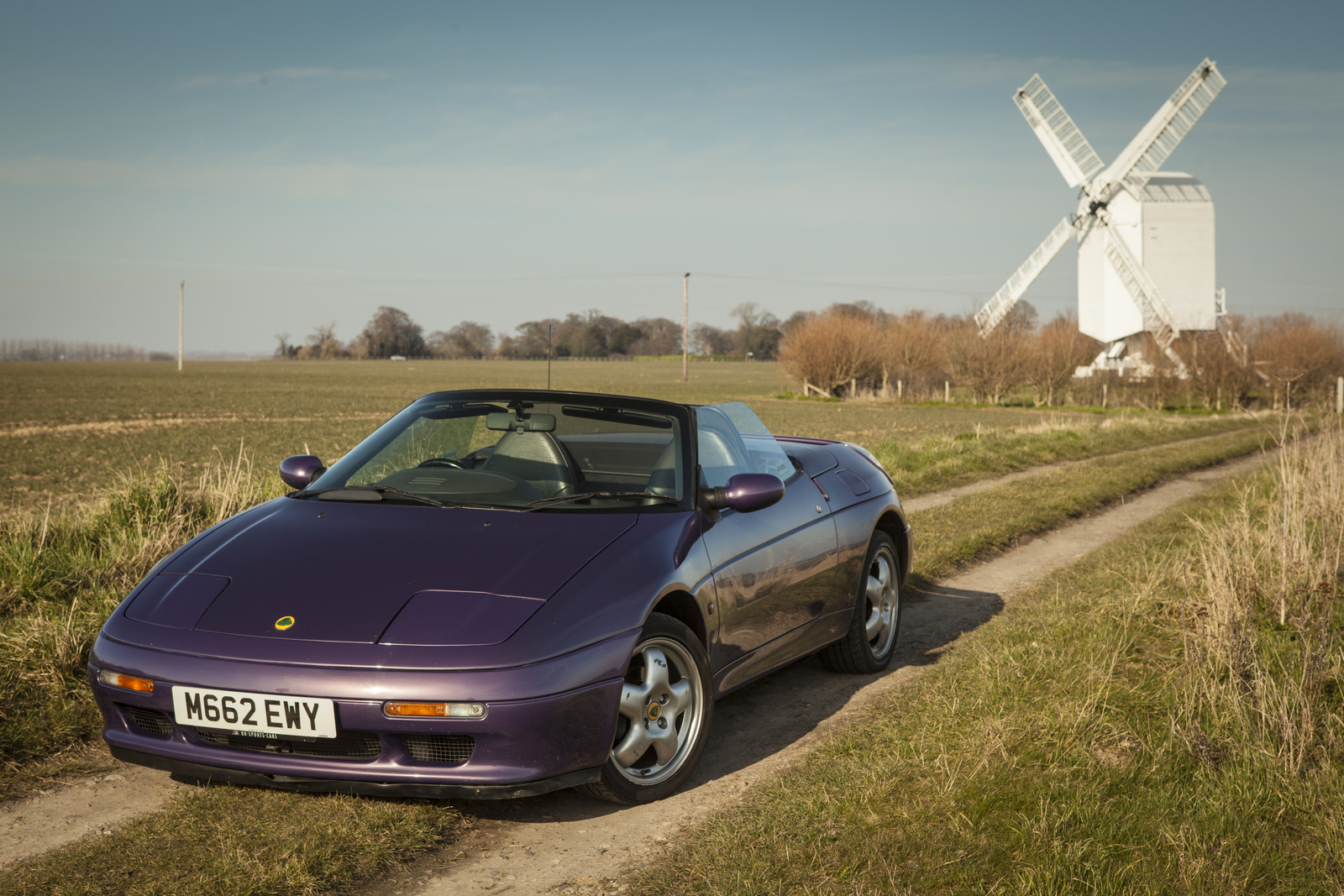

John Miles, ex-Formula One racer, engineer and once Autocar road tester, led the development to produce a chassis of extraordinary capabilities. The Elan’s absorbency and resistance to being knocked of line, allied to its chewing gum-to-shoe grip, produced a car that, from A-to-B, was almost uncatchable.
And, rather painfully, it also produced a boring car. Well, almost. You’d marvel at the speeds at which you could attack battered B-roads, marvel at the imperturbable roadholding and marvel at the Lotus’s beautifully damped and elastic bump-gobbling, but your marveling would be slightly remote, as if you were only along for the ride. And this despite the Elan’s feelsome steering. So that was a bit of a dampener.
Meanwhile, trouble was brewing on the other side of the world, and trouble with a bitterly ironic edge. Mazda had developed itself a new sports car that owed plenty to the heyday of the breed in the 1960s and, in particular, to the original Lotus Elan.
It was rear-wheel drive. It was small. It put clean, safe, predictable and entertaining handling above absolute grip, above power and above scoring breathless point-to-point journey times. The Mazda MX-5 even looked a little like the Lotus, right down to twin cam covers rounded off to look like the covers of the Elan. Truth was, it was more fun than the technically ingenious new Lotus. It looked better, too.
It was also more keenly priced and would prove to be massively more successful than the new Lotus. Lotus never planned Mazda volumes despite the Elan’s mass-production-grade dashboard, but Hethel certainly banked on more than the 3855 cars it had managed by July 1992, less than three years after launch.
Yearly sales of 4500 were the actual target. The car was losing money, as was Lotus, and GM wanted out, production ending well before the car’s intended life had expired. Bizarrely, the company went to Romano Artioli’s Bugatti, to complement the Italian company’s factory in Modena. The new management’s discovery that there were more than 800 unused Isuzu engines at Hethel lead to the Elan S2, this lightly facelifted version produced in a limited series of 800. It wasn’t over then, either, with a deal worthy of an automotive pub quiz question seeing Kia purchase the tooling and rights to the car, which it made in tiny numbers in Korea. And then it really was over.
 By
By