

Lanh Nguyen / Android Authority
TL;DR
- Google has revealed a new design language for Android XR glasses with built-in displays.
- The design language, called “Glimmer,” relies on neutral elements and an interplay of light colors and shadows.
- This implementation goes against the bright and vibrant visuals in Apple’s visionOS.
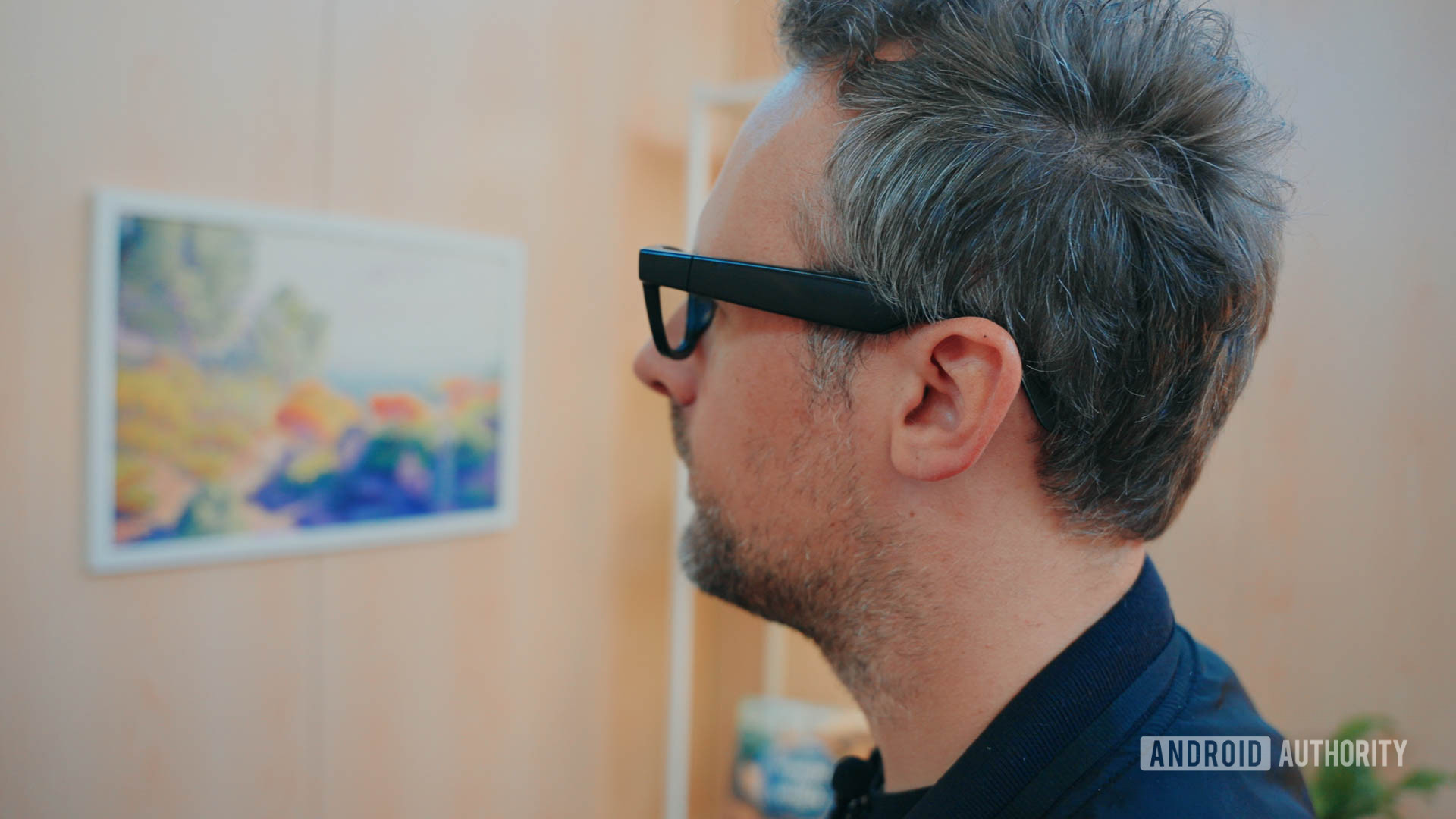
Google has officially published details about the user experience for its upcoming Android XR glasses. The design team at Google has just revealed “Glimmer,” a library of Jetpack Compose tools that will help developers create UIs for transparent screens, i.e., lenses in smart glasses. David Allin Reese, a senior visual designer at Google, recently explained the fundamentals of this new design in a dedicated blog post.

As we saw in yesterday’s leak, Google is relying heavily on transparent elements. These elements are visually distinguishable from Apple’s visionOS, which is profoundly influenced by tinted and frosted glass and depends on a play of contrast to make elements more visible. In contrast, Google is using the principle of putting the “interface at arm’s length.”
Don’t want to miss the best from Android Authority?


Instead of mingling with different shades and colors, Google’s approach hinges on shifting the display’s focus and blurring the background to make the lenses’ contents legible, much like we humans do with our eyes. As a result, the elements are text are projected onto transparent screens in a way that they appear roughly a meter away from your face.
The UI is primarily designed with light elements to prevent any darker shades from blocking passive vision, even when users are engaging with what’s on the screen. Google is also straying away from Material Design elements from Android phones or tablets since they rely on vibrant colors and opaque backgrounds. Instead, Google for something it calls a more “neutral look.”
Rather than using darker colors for texts or visuals, Glimmer focuses on white or light colored elements backed by a darker shadow. That also addresses the problem of halation, which is when bright light from the background bleeds into the darker elements. Additionally, shadows of variable strength are used to establish a hierarchy. For instance, a button appearing under a pop-up message will likely feature a thicker and darker outline to give you a sense that it’s closer to you in the open space, and is, therefore, more important.
Similarly, the UI also uses different sizes of text to influence the perception of distance or significance. A thicker, rounder variation of the Google Sans font replaces the standard version on phones to make the text easier to read, even with busy backgrounds.
Since Android XR glasses are meant to be worn outside, Google wants developers to implement notifications that fade in and fade out slowly to avoid getting lost due to motion blur. The gentle nudges are more likely to “invite” users’ focus rather than “demanding” it, the team says.
Thank you for being part of our community. Read our Comment Policy before posting.
 By
By