
I last year explained why the iPhone had become my favourite video camera for B-roll footage despite owning a relatively expensive Blackmagic Pocket Cinema Camera 4K rig.
I outlined the three benefits of shooting with an iPhone in public places, and in my latest video project I discovered another one …
The three benefits I mentioned last time were:
- My iPhone is always with me, so I can capture impromptu footage
- Nobody takes any notice of someone shooting with a phone, including security guards
- It’s non-intimidating when being filmed
Having really enjoyed my two previous interview projects, I naively imagined that I might be able to do one a month. Ha – I had absolutely zero appreciation for the scheduling challenges involved! For various reasons, arranging and filming the variety of B-roll footage I wanted for the latest one ended up taking several months.
The final piece of footage I needed was my interviewee dancing in a salsa club. The total footage used only amounted to 21 seconds, but it was a pretty important part of the story, so I did feel I needed to include it.
Walking into the venue, however, I had rather a big shock in store for me. I’ve been to many dance events with funky mood lighting – including a Scottish reeling event also featured – but this particular venue was almost pitch black! The very limited lighting was also red, which casts way less illumination than any other color – which is why it’s commonly used in environments where you don’t want to affect the night vision of those present.
It was so dark I could scarcely make out the face of the friend I was there to video, even when standing six feet away. I wasn’t at all optimistic about the likely results. However, it had taken many weeks to obtain this opportunity, so it was what it was. I just had to shoot and hope for the best.
With a manual camera, I would have struggled to even achieve a light reading to set the exposure, let alone be able to focus on constantly moving dancers in those conditions. I usually use the Blackmagic Camera app when shooting on my iPhone, but setting exposure was a non-starter, so I just used the stock video app and let Apple’s video processing algorithms get on with it.
To be clear, the results weren’t great. Indeed, if we take a frame grab from the footage, it looks very potatocam-like.
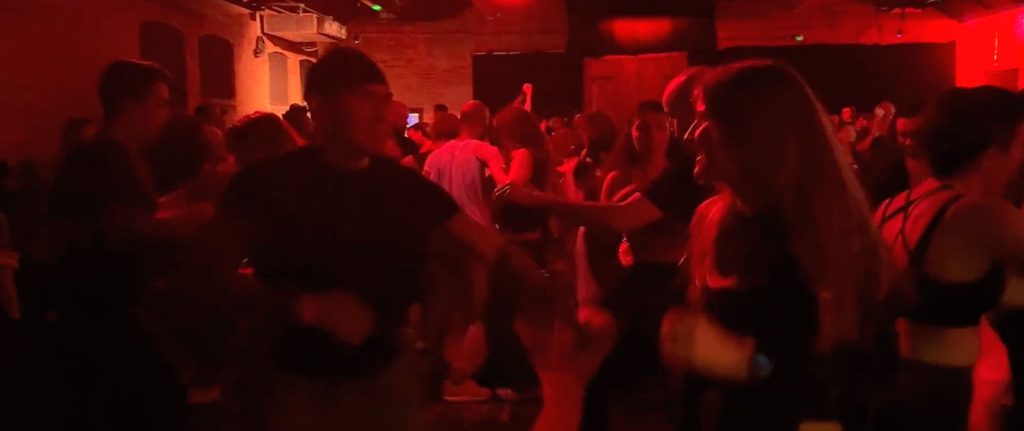
I certainly couldn’t have used any still photos taken in that environment. However, video is more forgiving, as we don’t study it in the same way we do a still. Given that the point of it was to essentially capture a feeling, the video footage met the “fit for purpose” standard – and most importantly, it enabled me to get footage in near-impossible conditions.
You can watch the video below, and if you want to see just how challenging the salsa conditions were, compare the Scottish reeling footage at 44 seconds (where the lighting is typical of most dance events) with the salsa clips at 1m 31s!
Top photo by Nadine E on Unsplash


FTC: We use income earning auto affiliate links. More.

 By
By