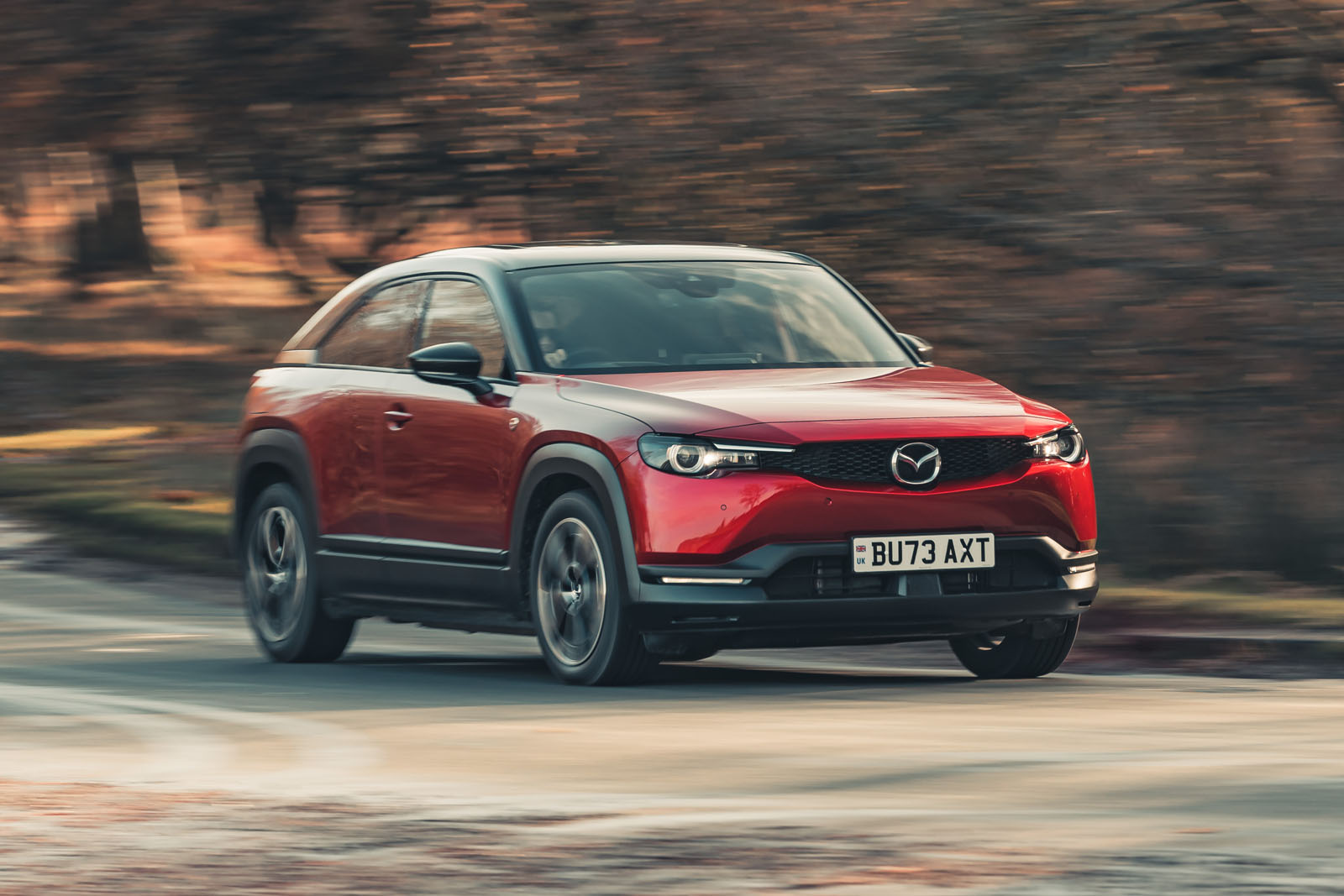

Mazda has discontinued the MX-30 R-EV in Europe, bringing an end to the lifespan of its first electric car.
The pure-electric MX-30 had been removed from the brand’s line-up last summer, after five years on sale, and the rotary-engined range-extender version has now followed it after just two years.
A spokesperson for Mazda told Autocar that the R-EV had been cancelled for a “combination of reasons”, including “consumer trends” and “production priorities”.
The R-EV was “a relatively small seller in Europe”, they said, with 678 having been registered in the UK, compared with 1872 examples of the pure EV.
The model also struggled outside Europe: in the US, the pure-electric MX-30 was sold exclusively in California, the nation’s biggest EV market, but Mazda pulled the plug on it in 2023 after selling only around 600 examples.
Among the MX-30’s key limitations were a short range for the EV (124 miles), practicality compromised by the half-sized rear doors and high prices against longer-legged alternatives (£27,995 for the EV and £32,505 for the R-EV).
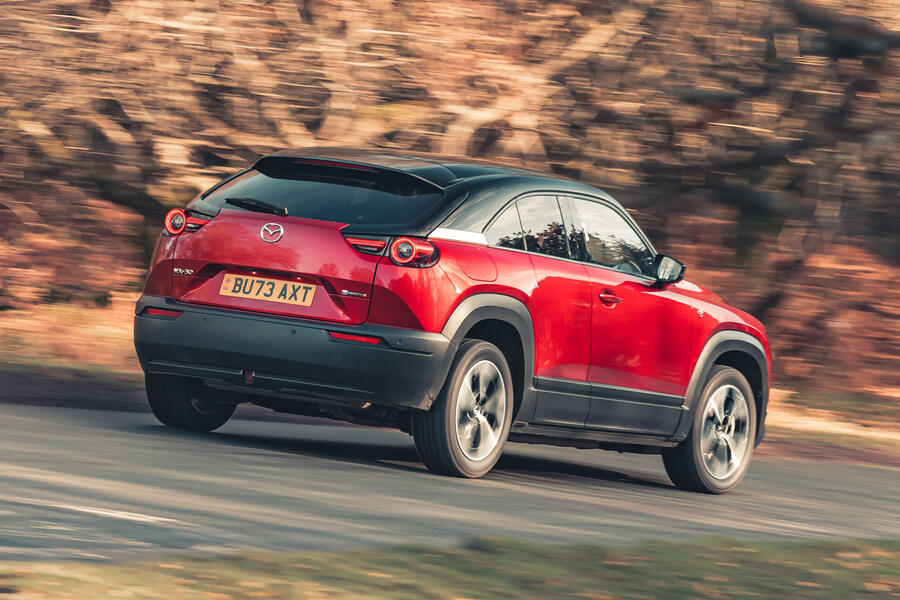
The MX-30 remains on sale in Japan, where it’s offered with a petrol engine. Production of the R-EV for the Japanese market has been paused but will resume this summer.
Mazda said the MX-30’s removal from its UK line-up is “permanent” and the model won’t be replaced directly.
However, it will bring two new EVs to the UK this year, both based on cars built by Chinese firm Changan. First to arrive will be the 6e saloon, replacing the combustion-engined 6 that was axed in 2023. That will be followed by the CX-6e SUV, positioned as an electric equivalent to the CX-60.
Mazda said it remains committed to its rotary range-extender powertrain, having used the design in the Iconic SP and Vision X-Coupé concept cars.
In the latter concept, a turbocharged twin-rotor engine was allowerd to drive the wheels as well as top up the battery, unlike the MX-30 R-EV’s single-rotor engine, which worked only as a generator.
Mazda is also working on its first in-house bespoke EV to exploit the advantages offered by electric power. All its previous EVs have either been converted from ICE car platforms (as in the case of the MX-30) or licensed from other manufacturers (such as the 6e).
 By
By