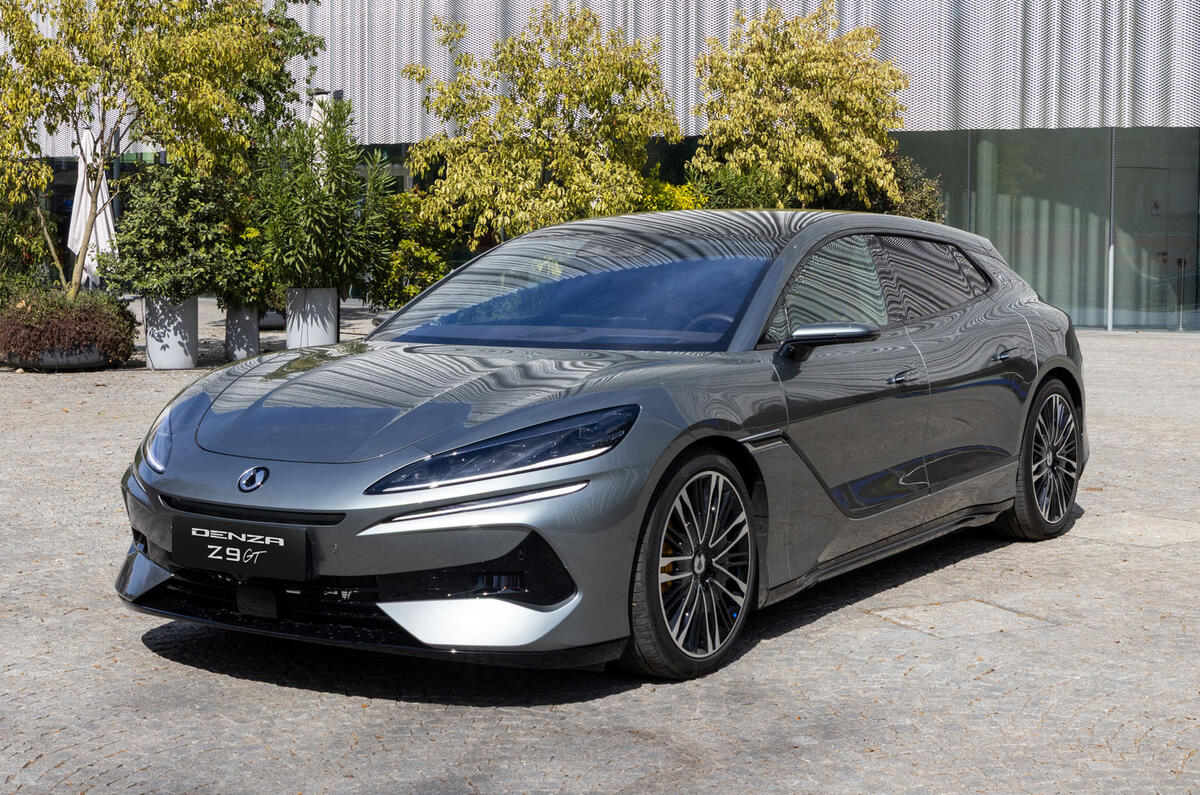

An electric car battery that can fully recharge in under 10 minutes has been unveiled by Chinese car maker BYD – and it will be fitted to the UK-bound Denza Z9 GT.
The second-generation ‘Flash-charge’ version of BYD’s Blade Battery can accommodate up to 1500kW of charging power, offering what the firm claims is a speed comparable with filling up an ICE car at a fuel station.
As a result, a 10-70% recharge takes five minutes and a 10-97% recharge nine minutes. Even at temperatures of -30deg C, conditions where speeds normally drastically drop off, a 20-97% recharge takes just 12 minutes, according to BYD.
The firm has not yet revealed the capacity of its new battery, but the packs are 5% more dense than today’s Blade, which is offered in sizes up to 150kWh.
The electric Denza Z9 GT shooting brake uses a 100kWh pack. It will lead Denza’s European rollout and the first models are due to arrive here later this year.
To hit those speeds, however, cars need to fill up using BYD’s own Flash charging stations, which have the only public chargers in the world currently capable of supplying such power. Stations will be installed across Europe, the firm said, but no timeline has been given. Currently, there are 4239 in China, with plans to install 15,000 more there by the end of the year.
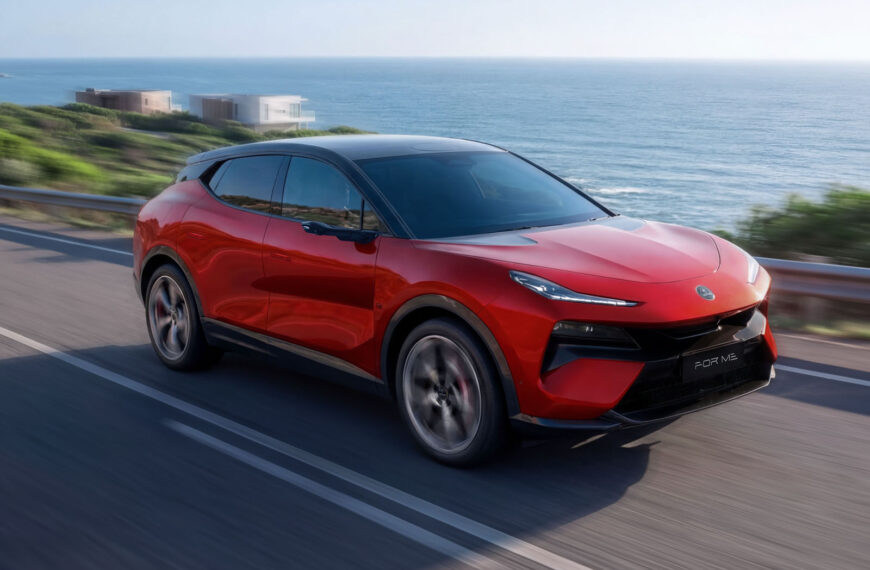
To put it into context, the fastest charger in Europe is supplied by Ionity and offers speeds of up to 600kW (although this is limited to a few stations in France). The production car that can accommodate the fastest charging speeds is currently the Lotus Emeya (400kW).
Mercedes-Benz is currently testing higher-speed charging rates and next-generation batteries with a similar goal of bringing ICE refuelling speeds to EVs. Using its ‘ELF’ rolling test bed – derived from a V-Class – it has so far achieved a maximum rate of 900kW, again highlighting the feat achieved by BYD.
BYD’s ‘Flash-charge’ Blade battery – which uses a lithium-iron-phosphate chemistry – was first launched last March, offering up to a 1000kW charging speed. The first iteration was the culmination of six years of research.
 By
By