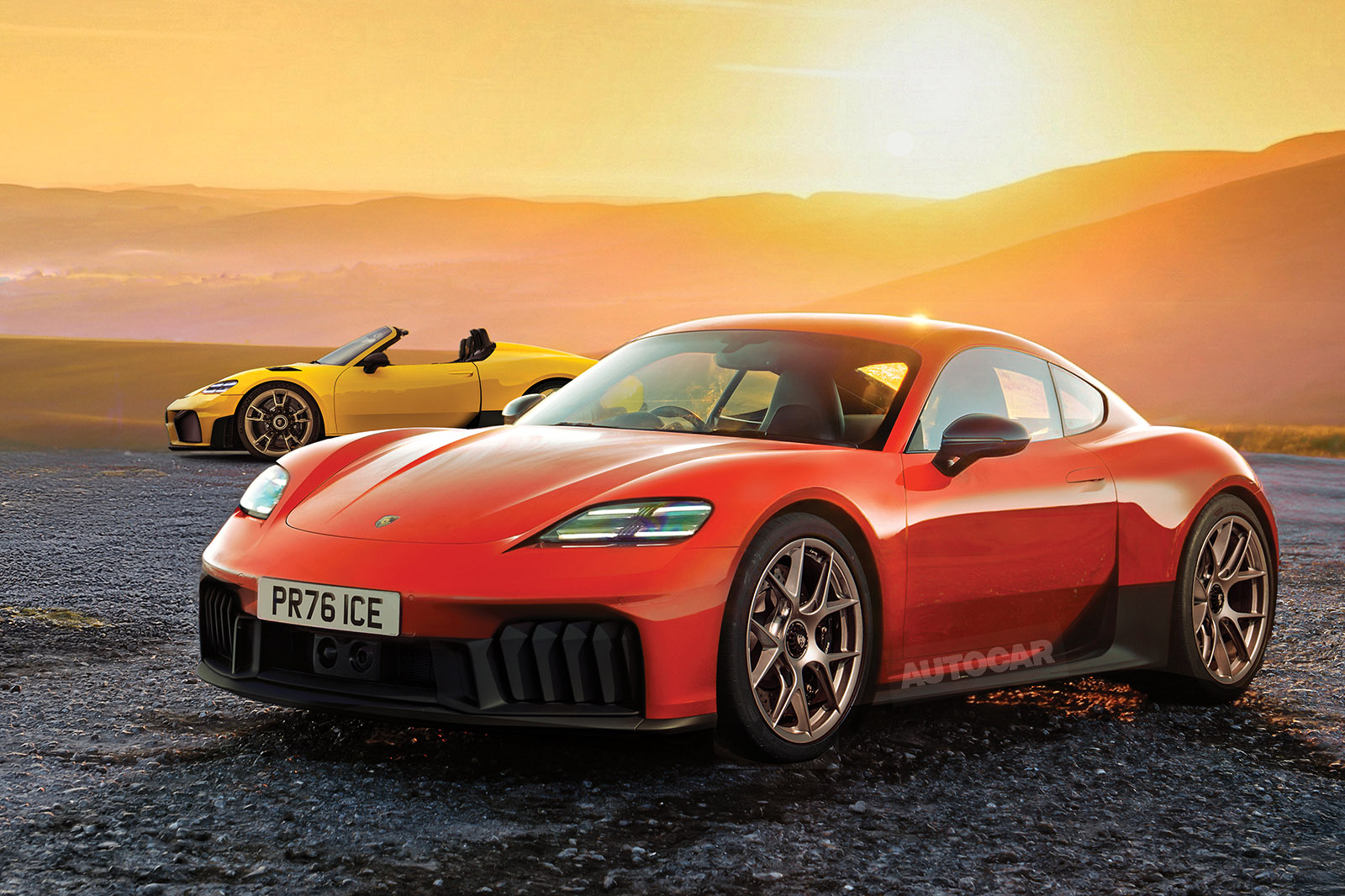

Porsche is preparing to adapt its next-generation 718 Boxster and Cayman platform to accept petrol engines, in an abrupt U-turn on plans for the models to go EV-only.
Production of the fourth-gen Boxster and Cayman ended last month, with new bespoke electric versions due this year. But with EV demand waning, Porsche had already announced it would continue selling “top” variants – tipped to be the RS and GT4 RS versions – of the current models.
That was part of a “strategic realignment” that included Porsche rolling back a number of EV plans, taking a £6.65bn hit in the process.
Now, senior sources at the company’s Weissach engineering centre have told Autocar that Porsche is also working on returning the petrol duo to the line-up by reverse-engineering the EV-only PPE Sport platform, developed for the 2026 electric successors, to accommodate a mid-mounted engine.
The move is aimed at ensuring maximum production efficiency and volume of scale on key components and it represents one of the most radical drivetrain reversals in Porsche’s history. It follows the route taken by other car makers, including Fiat with the 500 Hybrid and Mercedes-Benz with the Viano.
The decision is part of a wider recalibration of Porsche’s previous new-model strategy. Other models in the line-up that were previously earmarked to go exclusively electric, including the Macan, are now also set for an internal combustion engine reload.
Indeed, these new PPE Sport-based 718s are different from the “top” 718 variants that Porsche said were in the works during September’s “strategic realignment”. Those models are expected to be the continuation of the current-generation RS and GT4 RS, which are being positioned to sit above the 2026 EVs. This new information suggests they will be used as a stopgap until the upcoming fifth-generation models arrive towards the end of the decade.
Porsche insiders stress that, to be viable, the new fifth-generation ICE models must achieve dynamic parity with their electric siblings – a high bar, given what they described as an “ultra-low centre of gravity” provided by the electric architecture.
Achieving that will be no small task. The PPE Sport platform uses a stressed, load-bearing battery pack and a flat floor, so removing the battery would significantly weaken the entire bodyshell.
As a result, the proposal from Porsche engineers centres on developing a new structural floor section that bolts into the platform’s existing hard points, effectively adding the rigidity back in. A redesigned rear bulkhead and subframe will then support the engine and transmission, Autocar has been told.
 By
By