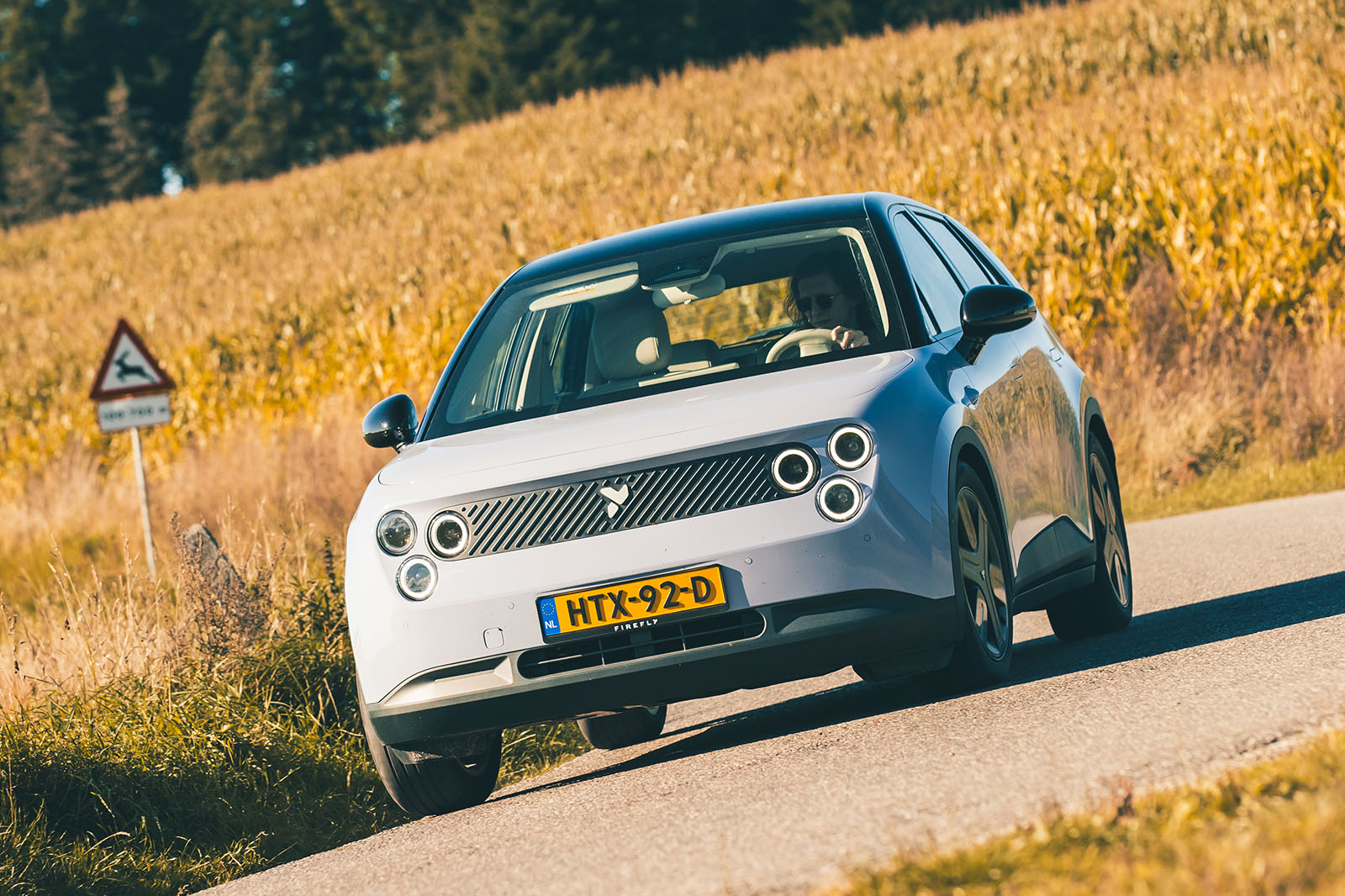

The exterior’s cheery design extends inside to a certain extent, with some playful colours and fabrics, although fundamentally the typical Chinese minimalism dominates. There’s not much to it other than a massive touchscreen, acres of beige and a steering wheel that’s an idiotic shape.
The seats are comfortable, though, with good support despite limited adjustment. Adults can just about sit in the back and there’s both a 348-litre boot and a 65-litre frunk. None of those things can be said of the Mini or the 5. Both of those are slightly smaller cars overall, it must be said.
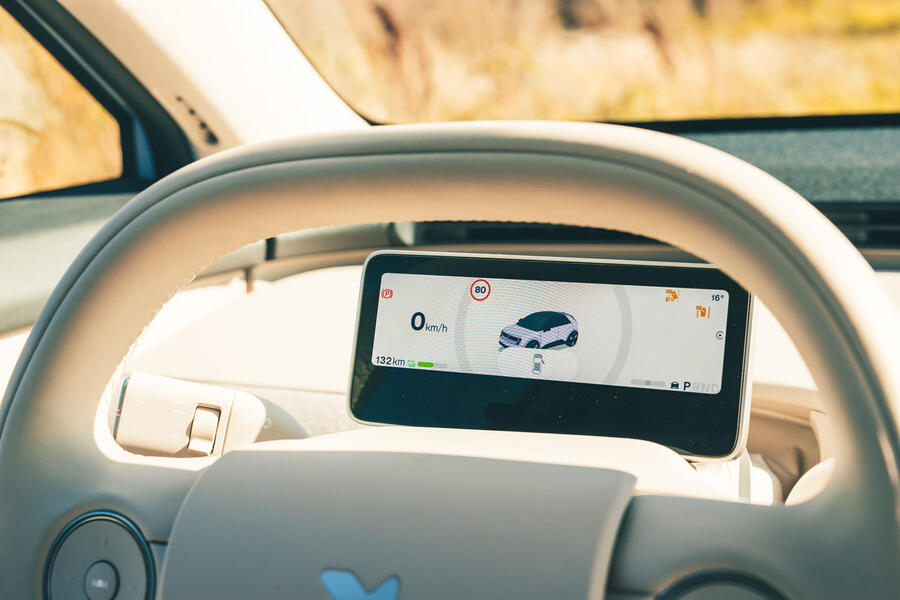
I’d need to spend longer with the car for a full verdict, but the touchscreen interface seemed much better than in most Chinese cars as well. The cheery colours and bold graphics give it a visual identity of its own, as well as a sense of hierarchy to the menus. The home screen is well thought out, with customisable multi-functional tiles for things like navigation and media.
Where it still falls hard on its face is that you still need to press eleventy thousand different widgets to turn off all the bings and bongs. A ‘button’ marked ‘Mute driver assistance’ was promising but didn’t seem to do anything.
 By
By