

The BMW’s engine, however, is the standout. It is torquey and responsive at accessible revs and very willing to work to the higher ranges, with plenty of outright potency and a slightly digitally enhanced but still genuine-sounding combustive charm and presence. It’s clearly a little bit special.
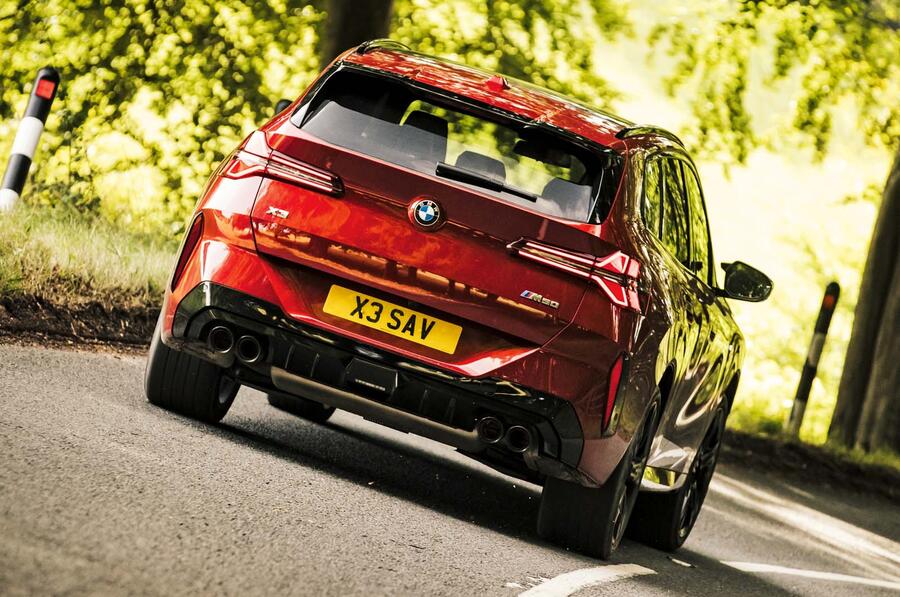
From a performance perspective, this is ‘point and shoot’ rather than ‘plan, invest, unleash and enjoy’. We have read it all before, but that doesn’t make it any less true.
Even so, I would still have given the Macan a very good chance of shading the BMW and Audi as a driver’s car in an aggregated sense – if only its ride and handling were as good as those of its predecessor. But, for various reasons, they just aren’t.
The Macan does feel smaller and narrower on the road than its rivals, which is a promising start. It steers well enough, although the more fluent, communicative wheel of the X3 shows how much genuine feedback the Macan is missing.
There’s an agility, balance and poise about what the Porsche does through tighter bends that feels like its dynamic calling card, and it belies the usual inertia that typically characterises an SUV.
But this calling card also costs the car a fair bit, primarily by way of ride comfort. The Macan 4S Electric rides as if its anti-roll bars were the thickness of scaffolding poles (and, unlike on the bigger Cayenne, PDCC active anti-roll bars aren’t offered).
 By
By