
“I would hope by 2028/29,” says Ramesh Narasimhan, Nyobolt’s executive vice-president, when asked how soon its tech might appear in car showrooms. “In four years’ time, the fast-charging network is going to be completely different. Car makers have to think about their customer experience in that scenario.”
A world of 10-minute charging would increase public DC charger throughput and thus boost revenues for the charge point owners (or allow them to reduce costs, if we’re being truly idealistic) while cutting queues and inconvenience for drivers.
Eight undisclosed car makers are in discussions around adopting Nyobolt’s cell technology, which could be retrofitted to current applications. Narasimhan reckons it’s a more viable option than solid-state batteries for customers keen to hurdle range and charge anxiety.
“The questions around solid-state batteries concern timeframe and cost and none have been answered,” he says. “We believe that this technology, given the competitive nature of it and the customer experience that it brings, is perfect for an automotive application that is here right now.”
Will they build it?
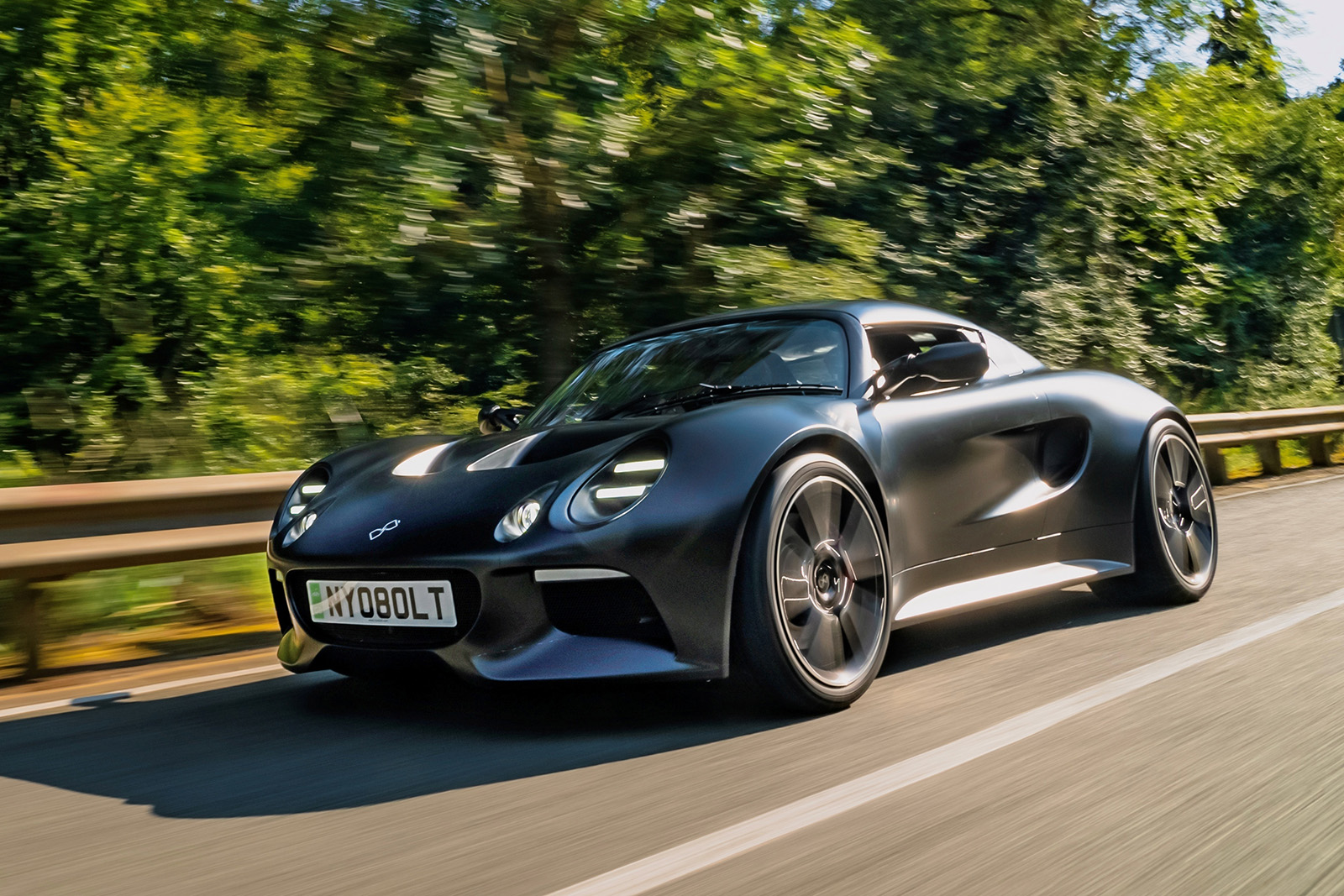
A reimagining of a seminal British sports car (one that’s no stranger to EV transplants thanks to the original Tesla Roadster and Detroit Electric SP.01), Nyobolt’s proof of concept sits in a Callum-designed exterior atop a Lotus Exige V6 chassis. The car has naturally drawn lots of attention with its dramatic looks, modest 1246kg weight and the promise of startling performance.
But could Nyobolt actually build it?
“I think the answer is yes, absolutely,” says Shane Davies, whose CV includes the Mercedes SLS Electric Drive and AMG Project One.
“This car is a one-off to demonstrate our capability, but I wouldn’t write off the chance of us producing a number of them. A lot of us at Nyobolt are ex-automotive, so we understand when you do that, you’ve got to think of parts stock, dealers, diagnostics. There’s a whole environment around the car to consider. It’s more likely that we would look at partnering with an OEM that already has those things in place. You’d be looking at a run of around 50 cars to make it viable.”

 By
By