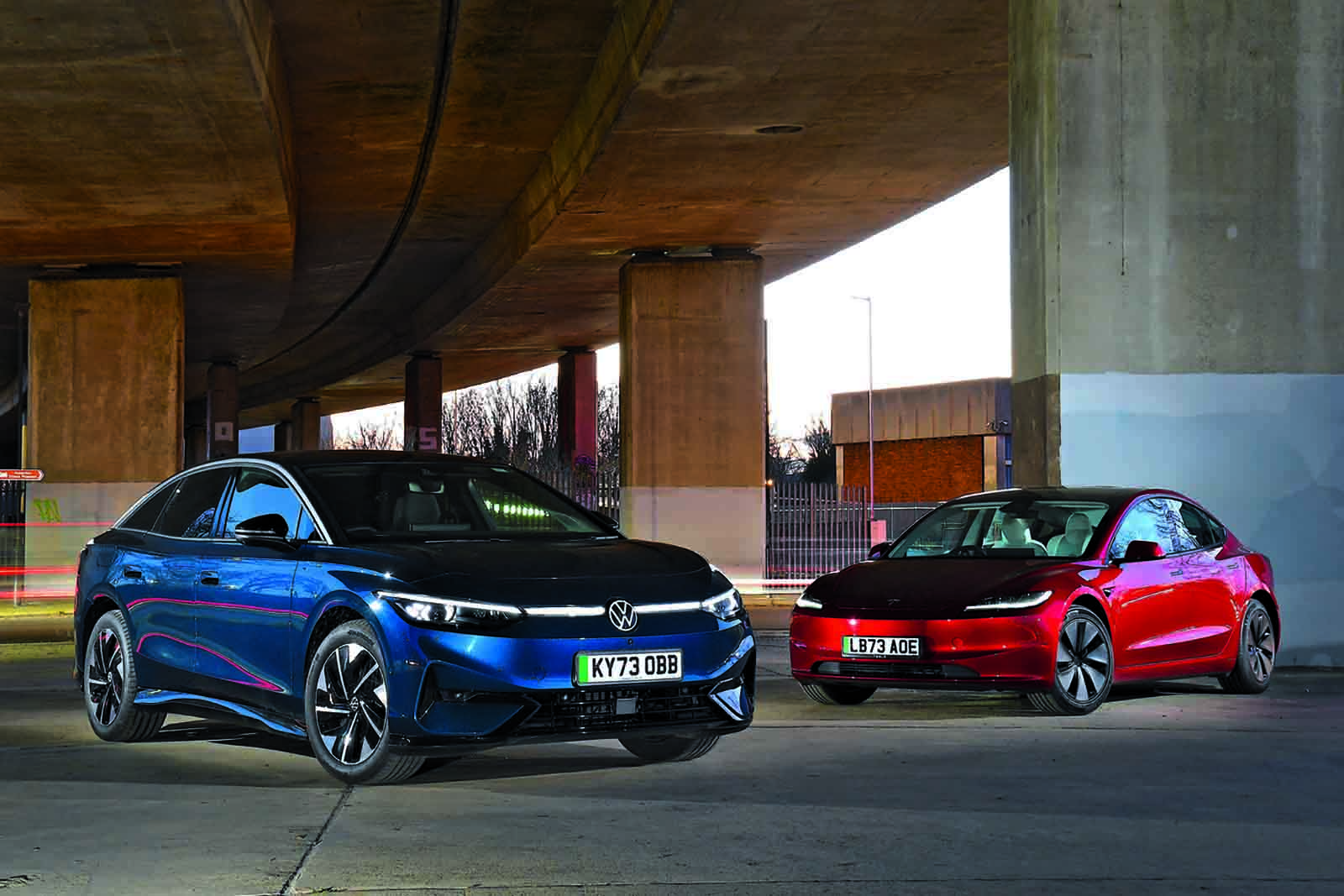

Almost half (47%) of the UK’s leased company cars are electric, new industry figures have revealed, but concerns about residual values, running costs and the longevity of new brands mean leasing companies are bracing for tighter profit margins this year.
The latest quarterly report from industry body the British Vehicle Rental and Leasing Association (BVRLA) shows the sector is weathering stagnant economic conditions, Members are operating a combined 1.5 million leased cars at the end of September – up 12.5% year on year.
However, there’s a growing imbalance between business and private demand.
Members’ combined business contract hire (BCH) fleet – the most common way to fund company cars – has grown by 7.9% to 936,352 vehicles, of which 47% are electric.
That’s supported by cheap benefit-in-kind (BIK) taxation and a shift away from purchasing to avoid EVs’ high up-front pricing and uncertain depreciation and maintenance costs.
With fewer incentives and waning consumer confidence, members’ combined personal contract hire (PCH) fleet shrank by 3.7% to 237,111 vehicles.
Some of that volume was cannibalised by booming demand for salary sacrifice – a fleet that more than doubled (up 123%) to 209,119 vehicles over the same period.
Salary sacrifice enables drivers to lease cars through their employer, often at a discount, using their pre-tax wages. If it emits 75g/km CO2 or less, it’s taxed as a company car at much lower rates than the salary they’re using for the monthly rentals, which means it’s typically more affordable than an equivalent PCH deal.
Whereas only 18% of the PCH fleet is electric, 83% of salary sacrifice cars are battery-powered.
The BVRLA said heavy discounting to meet government-mandated sales targets and an influx of cheaper electric cars had enabled more drivers to benefit, because the monthly rental bills can’t take drivers’ remaining income beneath the minimum wage threshold.
However, the growing EV fleet is also presenting challenges. A slow used market, discounts averaging £11,000 per vehicle in 2025 (according to the SMMT) and competition from new brands has put pressure on residual values.
Five-figure losses on EVs were common, the BVRLA said, while members raised concerns about brands potentially pulling out of an overcrowded market and frustrations about the incoming pay-per-mile tax (eVED) on electric and plug-in hybrid cars and its effect on demand for used cars.
Meanwhile, two thirds (65%) of new BCH and 99.9% of salary sacrifice cars are on maintenance-inclusive contracts, which are hard to price. Despite higher reliability and cheaper servicing costs than petrol or diesel cars, EVs require more frequent replacements of more expensive tyres and incur higher recovery and repair costs if they go wrong.
On the upside, leasing companies are confident that EVs are reliable enough and their batteries are durable enough for second and even third leases.
The BCH fleet includes 33,191 used cars, up 290% year on year, despite competition from aggressively discounted new cars.
 By
By