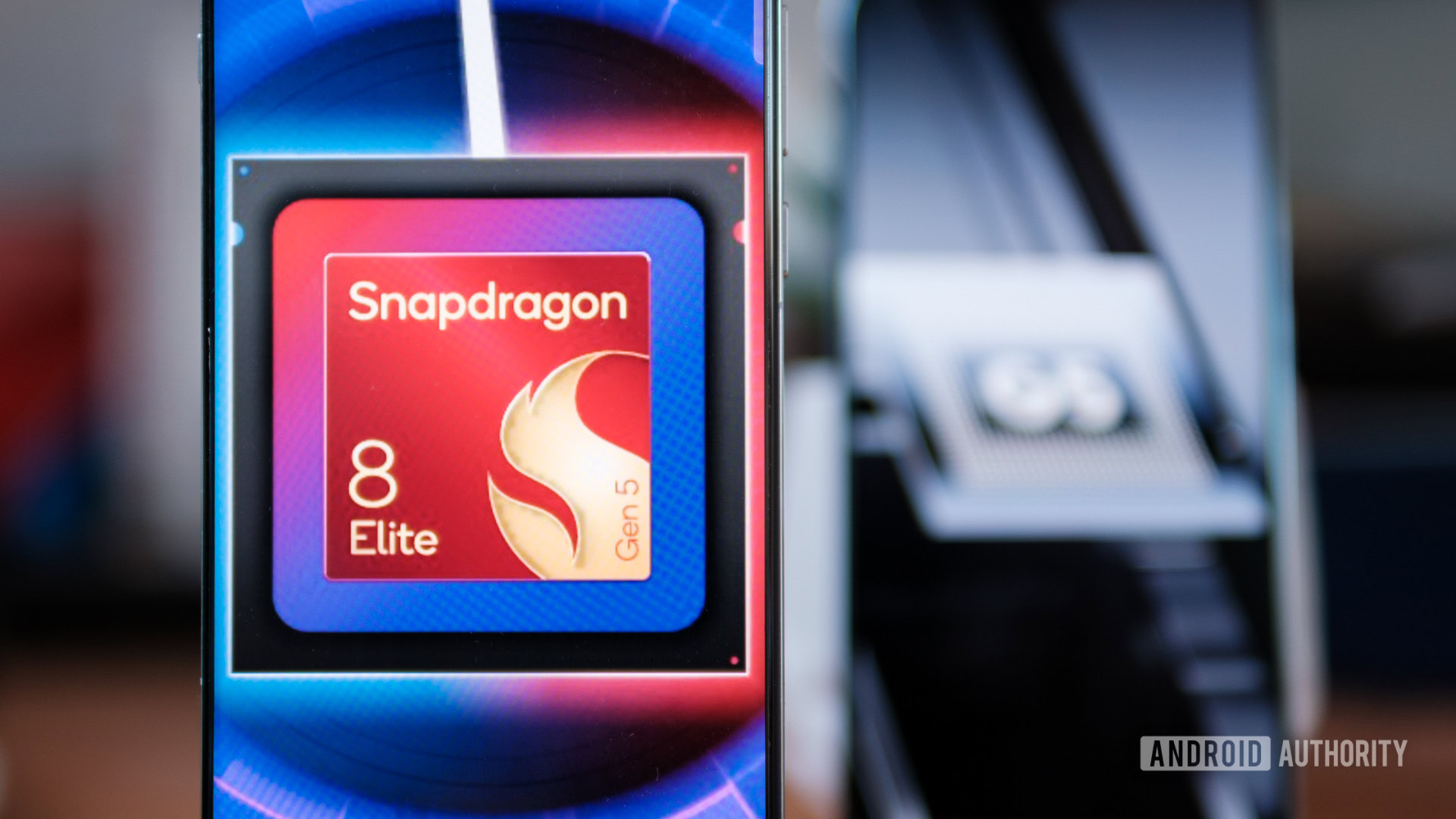


Robert Triggs / Android Authority
Look, I’m a performance enthusiast, but reports that Qualcomm is apparently preparing not one but two Snapdragon flagship chipsets for launch later this year is music to my ears. Not that I’m tired of the never-ending specs race (though it is somewhat less exciting these days), but when it comes to spending my hard-earned money on a new phone, I’m finding it increasingly hard to justify astronomical sums just to have the fastest chip on the market.
As cliché as it is to say, day-to-day performance is a solved problem for smartphones. Pick any flagship or even mid-range phone from the past three years, and it’ll doomscroll and churn through emails as good as any modern flagship. Google’s Pixel phones and Tensor processor combo are a prime example of cutting through the benchmark noise to provide good-enough performance. As an added bonus, the chip allows Google to offer seven years of software support, which is arguably even more important. In any case, whatever Qualcomm is cooking up will run laps around Tensor, but I’m far more concerned about how much it will cost rather than how much it wins by.
Would you opt for a Standard or Pro-tier Snapdragon?
29 votes
Of course, there are still uses for next-generation performance — cutting-edge gaming and emulation, video editing, or turning your phone into a mini-PC — but those are a little more niche than mainstream consumer needs. Based on my testing, this year’s and even last year’s flagships already hit rock-solid frame rates in the most popular games. With few signs that ray tracing is making much of a dent in ramping up requirements, even mobile gaming has a ceiling in its current form factor.
With that in mind, I think the market should be moving away from devices that aim to master all trades toward a model that better balances the needs of performance enthusiasts against those who want something a bit more well-rounded that doesn’t break the bank. Peak benchmarks matter far less when thermals and battery life cap real-world performance anyway. It’s a consistent bugbear of mine that $799 flagships spend a small fortune on the processor while their camera, charging, and battery setups have remained the same for half a decade.
Why do $799 flagships spend a fortune on silicon we can’t max out?
By not chasing the absolute pinnacle of performance, mainstream models gain the headroom to improve on areas that can still offer more meaningful gains and help brands differentiate their products. Or at the very least, keep their prices in the realm that consumers actually want to pay. That appears to be exactly what we’re looking at with rumors of the next-gen Snapdragon SM8975 (Pro) and the SM8950 (Standard) — with the Pro apparently destined for the most expensive ‘Ultra’ flagships and the Standard model for the more reasonably priced standard, Plus, or Pro variants.
Of course, the Snapdragon portfolio has long offered cut-down processor variants to bridge the gap between affordable and flagship phones. However, these have too often arrived late, featured older CPU or GPU architectures, and missed out on multimedia and AI features we’ve come to expect from the cream of the crop. The recent Snapdragon 8 Gen 5 is better than its predecessors in this regard, but it is still a clear step below the Elite variant. The gap between Standard and Pro should be close enough that it makes sense to use the chips within the same product line, a delicate act that Apple has managed to balance just fine for years with its A-series silicon.
While this is an early rumor and we can’t pretend to know about Qualcomm’s eventual announcement (which remains months away), the report suggests a very similar primary feature set across the two models. The same 2+3+3 CPU configuration and presumably identical AI, imaging, and networking capabilities. The separator simply appears to be the type of memory supported and the graphics setup. That’s a good place to draw the line; well outside what most of us would require for our daily work or pleasure pursuits.

Robert Triggs / Android Authority
That said, this rumored move could also be a necessity in today’s climate. With Qualcomm’s Snapdragon Pro tipped to use cutting-edge LPDDR6 memory (offering up to a 50% improvement over existing speeds and lower power), the ongoing RAM crisis no doubt means this configuration is even more expensive than initially anticipated.
Having a model with LPDDR5/5X support will be cheaper, at least in the current climate. In addition, a slimmed-down graphics configuration could improve yield from the chip’s expensive TSMC N2P manufacturing process. In other words, if Qualcomm can get a few extra chips off the wafer by disabling cores and reducing clocks, that’s ultimately good for consumer prices as well. Not that any next-gen Snapdragon will be cheap, but these could help make it less expensive.
There’s even the possibility of brands sticking with this year’s already very capable Snapdragon 8 Elite Gen 5 to keep prices under control, such is the rising cost of pushing up performance by a meaningful margin year after year. But again, that’s a fine compromise; I’m happy to sit out on some performance gains if it means flagship phones remain around the same price until the RAM situation abates.
A Standard/Pro silicon split would finally catch up to consumer wants and needs.
Smartphones have been spoiled by double-digit performance gains year after year, but that’s come with a price — one that consumers are increasingly struggling or unwilling to pay. If Qualcomm really is moving toward a Standard-and-Pro split at the very top of its lineup, it could be the shakeup the flagship market badly needs.
Let the Ultra phones chase bragging rights and benchmarks, but give the rest of us devices that feel just as fast in daily use while finally pushing forward on cameras, batteries, and pricing that makes sense. Performance will always matter, but in 2026, value, balance, and smart compromises should matter more — and for once, the silicon roadmap might actually align with reality.
Don’t want to miss the best from Android Authority?


Thank you for being part of our community. Read our Comment Policy before posting.
 By
By