
Depending on your outlook, in 2026 you’ll find the V60 cabin to be either reassuringly traditional or a touch long in the tooth.
Certainly, the infotainment touchscreen feels cramped today, and while Volvo has swapped the lengthy old gear selector for a stubbier handle in keeping with current trends, the switchgear in general has a touch of ‘previous generation’ about it. (Not that we should complain about, say, adjusting the mirrors with real knobs and buttons – items so conspicuously absent in some of Volvo’s more contemporary cars.)
Equally, the dashboard is tall and proud, the digital instrument binnacle properly cowled, and that small, portrait-oriented central display is unobtrusively integrated into the fascia, unlike so many artlessly tacked-on screens you now get even in quite expensive cars. It is a reassuring, homely cockpit, with neat proportions, few gimmicks, excellent seats and good adjustability in the driving position. It would be more compelling still had this car been optioned with the ‘blond’ leather interior, which lightens the ambience considerably.
The software is also better than ever. The infotainment’s response and usability have come a long way since the Sensus era, which ended in 2021 when Volvo transitioned to using Google’s Android Automotive OS, with built-in Maps and Google Assistant. The system has recently been upgraded with faster Qualcomm Snapdragon processors, and we experienced bright, crisp graphics and no latency, with neat integration of Android Auto smartphone mirroring.
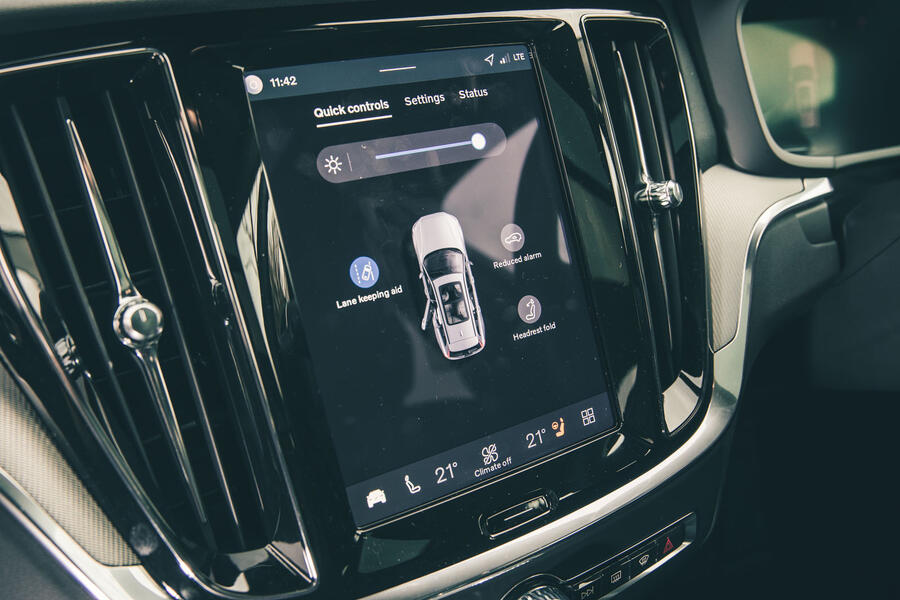
That said, the ‘contextual’ bar of everchanging icons, depending on which app you’re using, still irks. Where is the consistency? Elsewhere, the V60 remains a smaller car than you might expect, so far as capacity goes. Its low roof is partly to blame, and even in the B4 the boot floor is high due to the 48V battery. The bay is longer than that of a 3 Series Touring, mind.
 By
By