
Combustion engines are still firmly in the sights of global manufacturers, including diesels.
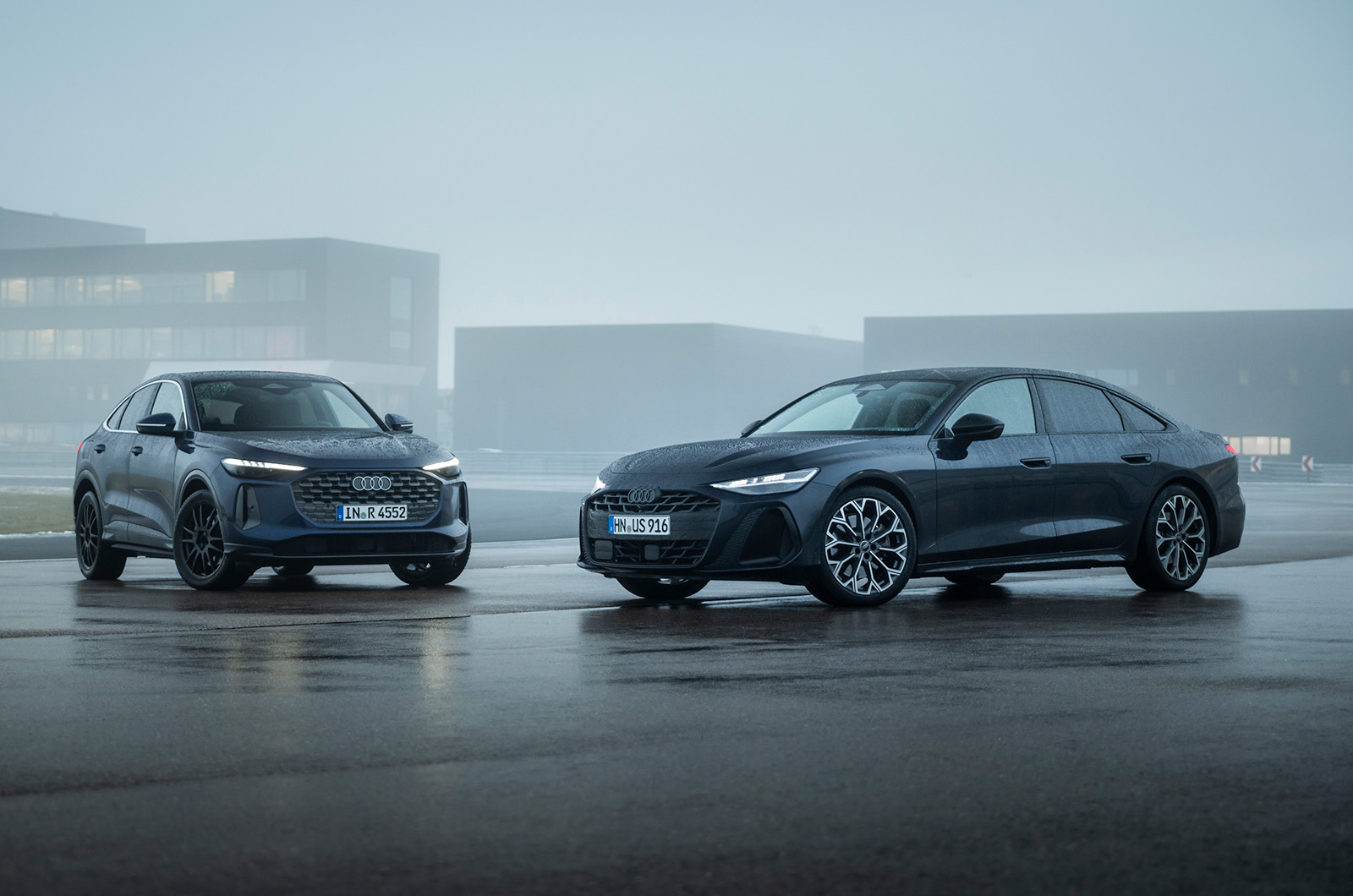
One such is Audi, which has announced an interesting “evolution” of the V6 TDI with MHEV Plus technology for its Q5 and A6.
Known internally as the EA897evo4, it produces 295bhp and 428lb ft of torque and Audi has thrown everything at it in terms of electrification, although it’s not expected in the UK because of diminishing demand for diesel here and the higher cost.
The 48V set-up includes a belt-driven starter-alternator, a powertrain generator (a hybrid drive motor-generator) and an electric compressor piggybacked with a turbocharger. The air-con pump is also electric.
The electric compressor is like a turbo but powered by an electric motor instead of exhaust gas, giving virtually instantaneous response. It’s especially effective for producing high torque at low engine speeds when there’s not much exhaust pressure to spin a conventional turbo up quickly.
We first drove two 48V ‘technological studies’ back in 2014 at the launch of the then new 3.0-litre TDI. Mounted downstream of the intercooler, one was billed as the ‘3.0-litre TDI monoturbo’ driving an A6 and the other the 3.0-litre TDI biturbo fitted to an RS5 TDI.
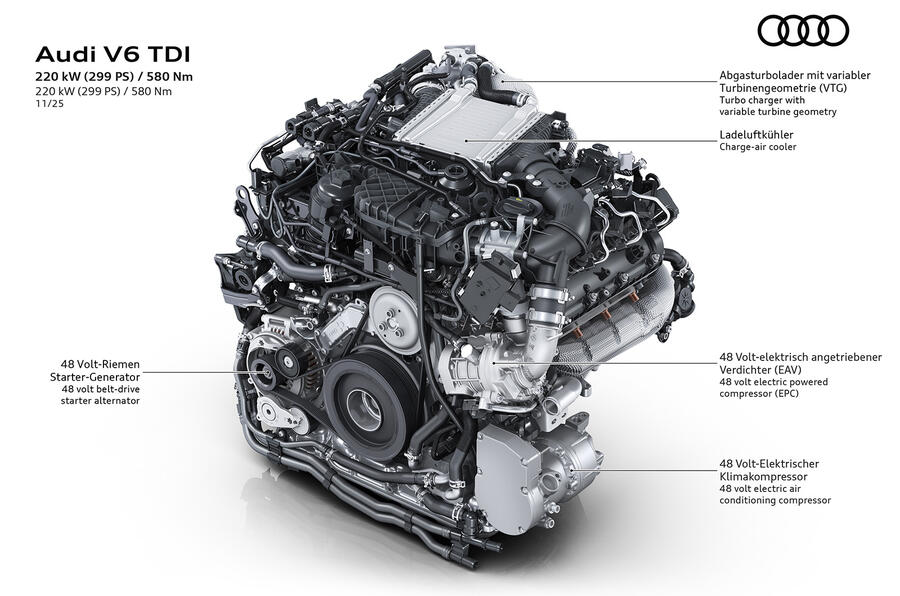
The compressors filled the torque gap below 1500rpm on the monoturbo version and below 1250rpm on the biturbo. The compressors also provided instant response following a gearchange, making a significant improvement over standard engines.
Audi says this latest version has improved response still further compared with earlier production versions.
As before, when the driver is on the throttle but the engine is spinning slowly and exhaust pressure is low, the conventional turbo draws air from the electric compressor, increasing boost pressure rapidly.
But where previous versions used on the S4, S6 and SQ5 work in a limited engine speed range, this version of the electric boosting system functions across the entire range and maximum boost of 3.6 bar builds up almost a second faster.
The compressor wheel spins to 90,000rpm in just 250 milliseconds, 40% faster than the earlier versions. The instantaneous torque is added to by the powertrain generator and Audi claims acceleration is boosted by an extra car’s length in the first 2.5sec.
The powertrain generator can be decoupled by the engine management system and provide limited electric-only driving such as in city traffic.

 By
By