
As someone who uses over 75 phones in any given year, I rely on Android’s data transfer feature extensively. By now, setting up a new phone is second-nature; it takes me just under an hour to move data, and it’s about as seamless as it gets. While the underlying transfer system hasn’t changed too much, Google made a few tweaks last year that makes moving to a new phone a little easier.
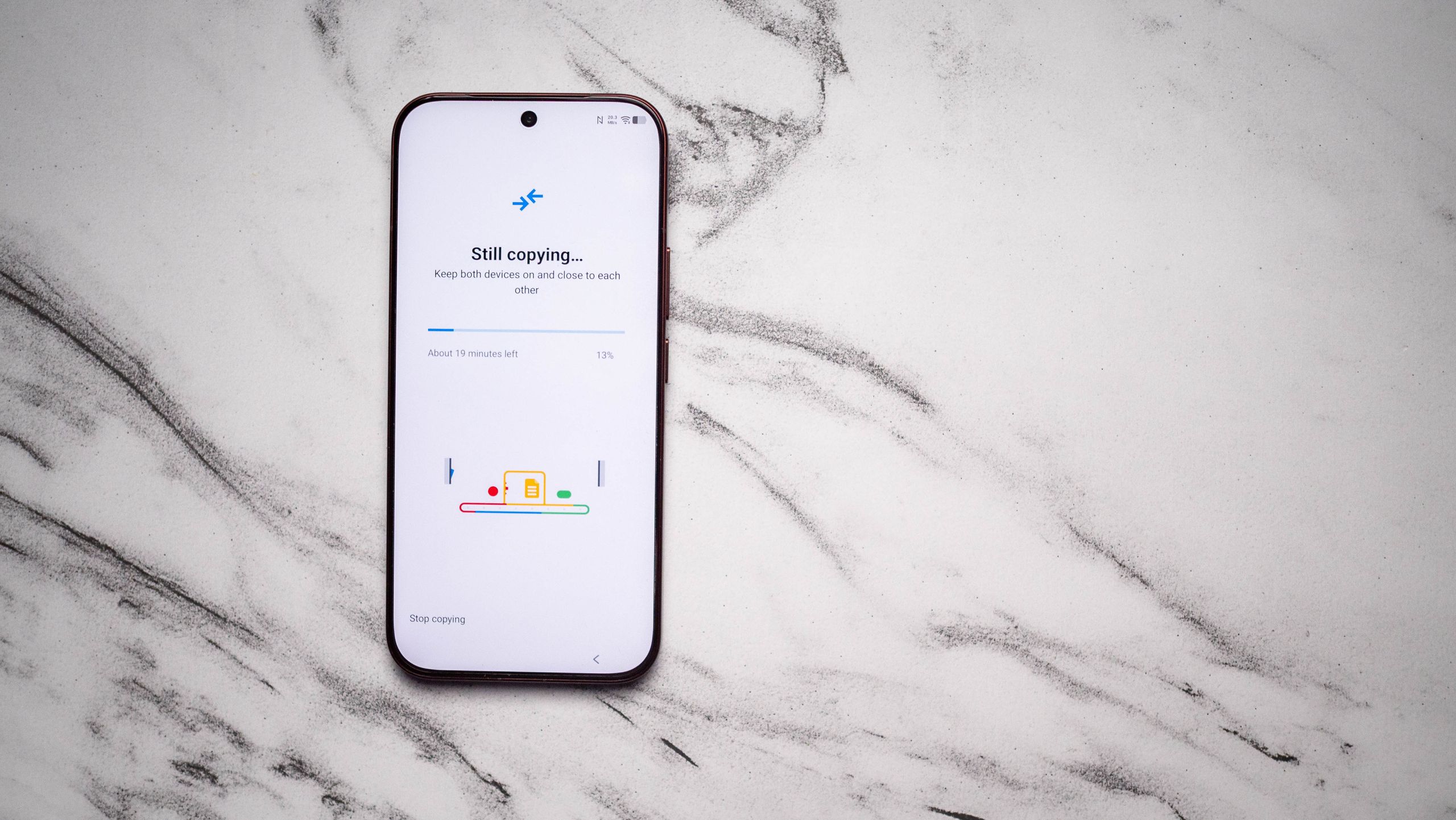
Whenever you’re setting up a new phone, there’s a QR code that lets you share your home network details easier. But the change that I like the most is the percentage indicator that shows up when you’re actually transferring data from your old Android phone to your new one. I’ll admit that it is a small thing, but I found it to be quite useful; Google rolled out the change a year ago, and it has made quite the difference when setting up a new Android phone.
You can now see just how much data transferred over

Just yesterday, I moved over to a new phone that’s launching later this month, and the data transfer page indicated it would take 20 minutes to move the relevant data from my old device. So I left both devices aside, did a few chores, and returned in half an hour to only see that it still showed 16 minutes left. Thankfully, by seeing that it was 54% done by that point, I understood that the data was still being transferred over — albeit a little slower.
In addition to this, Google made tweaks to the transfer feature to ensure it doesn’t stall inadvertently. This used to be a problem in the past where devices would lose connection mid-transfer, or the entire data wouldn’t move to the new device. Thankfully, I don’t see those issues any longer, even when switching between device with different Android OS versions.
Another change I like is that the data transfer is much more reliable even if you don’t use a cable. In my guide to transfer data to your new phone, I mention that the best way to connect your older device with the new one is via a USB-C to USB-C cable; it just ensures there are no problems. But in recent months, I just moved data wirelessly, and it proved to be just as easy as plugging in. It takes a little while longer to transfer data this way, but it’s easier to use.
Admittedly, Android’s built-in data transfer feature isn’t quite as good as what Chinese manufacturers provide. OPPO, Vivo, and Xiaomi have their own utility that transfers data significantly faster, but these are usually limited to devices sold exclusively in China. Most global phones — like the Xiaomi 17 Ultra and the Vivo X300 Pro — rely on Android’s native data transfer mode, and I like that there’s consistency in this regard; no matter what phone you’re switching to, you get a similar feature-set.
 By
By