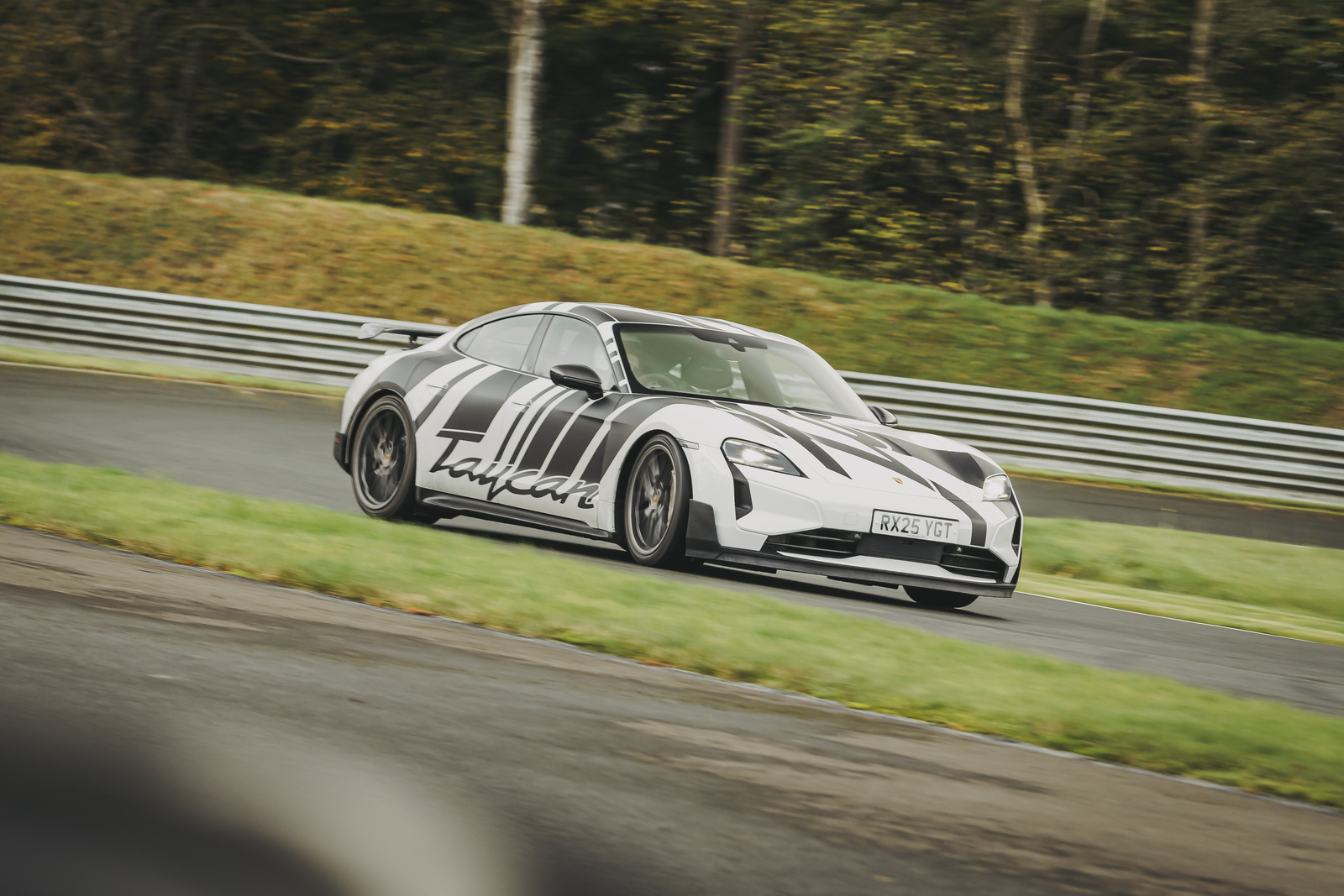

Attack a series of corners, even at moderate speed, and the tyres of an EV will experience greater lateral loads. Modern stability-control and torque-vectoring systems do a great job of disguising the mass from the driver, but ultimately the tyres are still trying to stop a great deal of mass from heading to the scene of the accident.
Many EVs feature a wider-section tyre for a greater contact patch, increasing overall grip, but the tread blocks and compound are working harder – and therefore wearing faster – than they would on lighter cars.
What’s the answer?
Tyre manufacturers are racing to find solutions to the specific challenges of EVs. The cynical among us might think that faster wearing tyres would be causing the bosses of rubber companies to be rubbing their hands with glee at the potential increase in revenues, but business doesn’t always work like that.
As a cash-strapped punter, are you going to fork out for the same set of boots when the previous set appears to have worn out prematurely or instead shop around for a potentially harder-wearing option? Exactly.
EV-specific tyres are already gaining traction (pun very much intended), but so far the emphasis has been on reducing rolling resistance for greater efficiency and increased sidewall strength to cope with heavier kerb weights. Engineers have also been working on reducing noise levels, with the lack of an internal combustion engine’s machinations resulting in occupants’ ears turning their attention to road noise and tyre roar.
A lot of work is now being done in the highly secretive area of compound technology, with tyre makers mixing different blends of rubber to improve longevity. Many brands are even looking at the application of nanocarbon and nanosilica, both of which have the potential to increase EV tyre life with no loss in performance.
As a result, almost every major tyre brand has an EV-specific tyre on its books, each claiming an increased lifespan. In fairness, this is often a comparison with standard, off-the-shelf rubber that could be fitted to any car regardless of motive power. Even so, the big hitters – such as Continental, Michelin and Pirelli – all claim to sell EV tyres that have pretty much eliminated that 20%-increased wear rate compared with an ICE car.
 By
By