
Hardwired

In Hardwired, AC Senior Editor Harish Jonnalagadda delves into all things hardware, including phones, audio products, storage servers, and networking gear.
If you want to buy a TV, your choices are LED, QLED, or OLED. LED TVs are mainstream, and they’re budget-friendly models that have decent image quality. QLED TVs have steadily gained momentum over the last decade, delivering better image quality and brightness levels but still being pretty affordable. OLED TVs continue to dominate thanks to unmatched picture quality, but they’re costly, and are often limited to the high-end category.
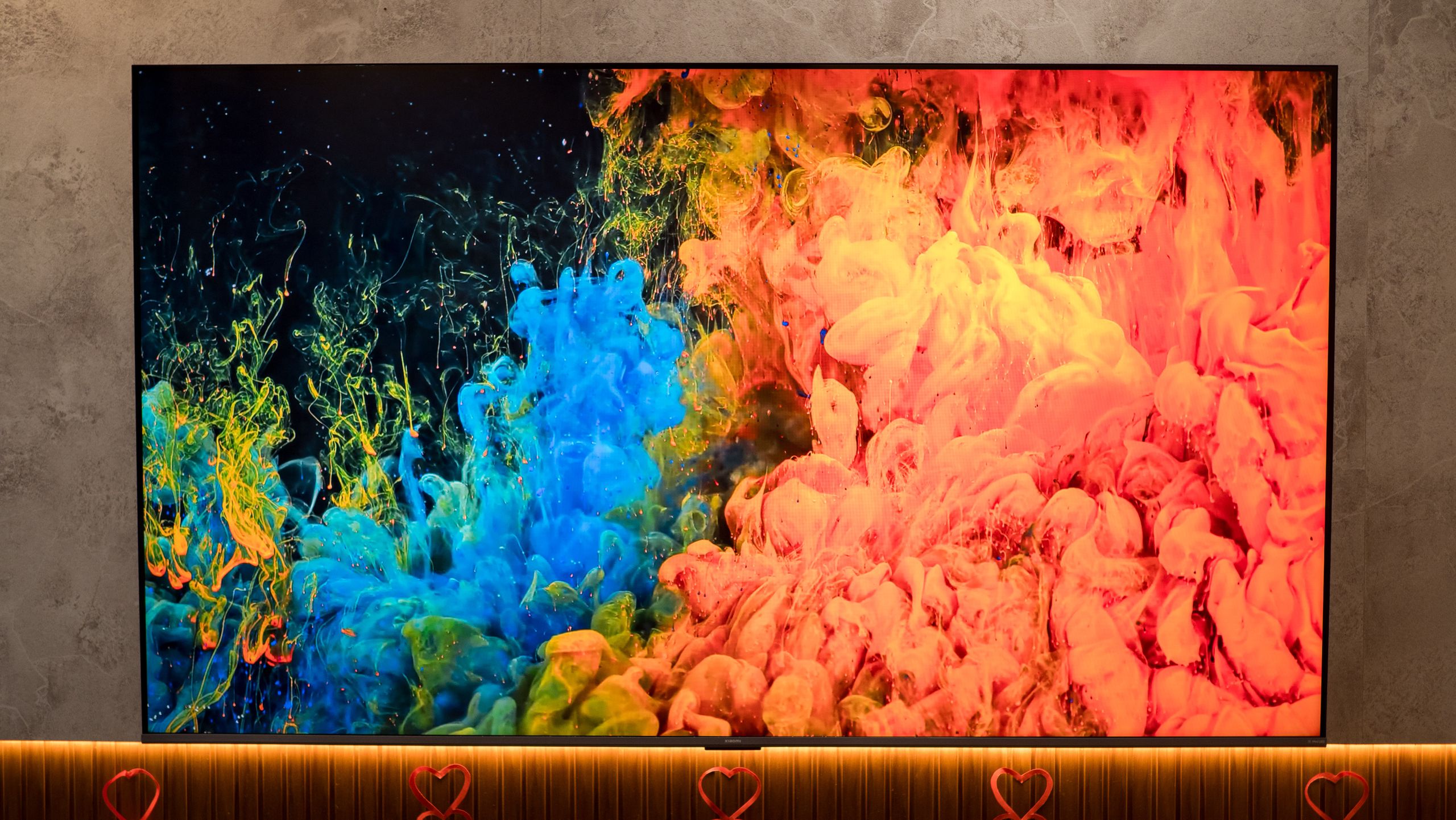
That’s why I was excited to see the rise of Mini LED tech, particularly Xiaomi’s latest TV series that just debuted in India. The Xiaomi TV S Mini LED 75 2026 is a mouthful, but the 75-inch TV ticks all the right boxes, and coming in at ₹99,999 ($1,065), it costs less than the Mi QLED TV 75 that I’ve been using for the better part of four years.
Mini LED TVs are the natural evolution of standard LED TVs, and the smaller LEDs that make up Mini LED (as the name suggests) allow for greater dimming zones, much better contrast levels, increased brightness levels, and less blooming — particularly with HDR content.
Article continues below

Now, Xiaomi is using QD-Mini LED (Quantum Dot Mini LED) tech on its latest TVs, and this essentially has a layer of quantum dots that deliver better color vibrancy interlaced with a Mini LED backlight. The result is that you get much better brightness, vibrant colors, and detailed clarity that you just don’t get with a regular LED TV.
That much was evident in just two days of using the TV S Mini LED 75. As I noted above, I was previously using Xiaomi’s 75-inch QLED TV, and there’s a clear difference in the image quality with the TV S Mini LED 75. Colors in general look much better, and there’s a level of detail that I just didn’t get before.
What I like the most is how it handles HDR content; there isn’t anywhere as much blooming — where light bleeds through because of the inherent nature of LED lighting — and this makes a huge difference when viewing movies in particular. Thankfully, the TV S Mini LED 75 did a great job in this regard, and while colors aren’t quite the same as an OLED, the TV costs less than half as much as an equivalent OLED model, so I’m not too fussed about that.
Image 1 of 3


It’s the brightness levels where the Mini LED tech really shines; the TV gets much brighter than a regular LED or OLED, and this is a decent enough differentiator with the TV S Mini LED 75. Xiaomi has a good selection of modes as well, and while MEMC is enabled out of the box, it’s easy enough to disable. I like that the TV adjusts colors based on ambient lighting, and the Filmmaker Mode is the one to use if you want accurate color rendition.
In fact, the only issue with the TV S Mini LED 75 is that it’s limited to 60Hz refresh. Yes, there is a game mode that lets you go up to 120Hz, and while it does make a difference when using the TV with a PS5, I would have liked native 120Hz at the least, and not having that makes the TV a little less exciting if you’re looking to pair it with a game console.
The design of the TV is pretty good; it isn’t quite as big as the previous 75-inch Xiaomi TV, with thinner bezels all around. The bottom bezel has Mini LED branding, and is a little chunkier, but on the whole, the TV S Mini LED 75 has a decent design. Connectivity includes a trio of HDMI ports (with one eARC), two USB ports, optical out, Ethernet, and 3.5mm audio.

Basically, Mini LED TVs solve a lot of the problems that LED and QLED TVs have, and the best part is that these TVs don’t cost anywhere as much as their OLED rivals. Now, while Mini LED doesn’t have the same image quality as an OLED, it’s much better than LED and QLED, and you get higher brightness as well, and that makes these TVs the ideal choice, if you’re interested in getting a bigger 65-inch or 75-inch variant. TCL and HiSense even sell 98-inch and 100-inch Mini LED TVs in India, and I’m mulling buying one of these over the coming months.
Until then, though, the 2026 version of the Xiaomi TV S Mini LED is a great alternative, and the pricing makes it a terrific choice all things considered.
 By
By