

Take a look around your house. If you’ve built out a decent smart home setup, I’d bet you’ll notice something. I’m guessing that most, if not all, of your smart home accessories are from the last few years — say 2023 at the earliest. Why? Well, smart home gadgets have improved enough recently that anything older struggles to stay relevant. I know that’s the case in my apartment at the very least.
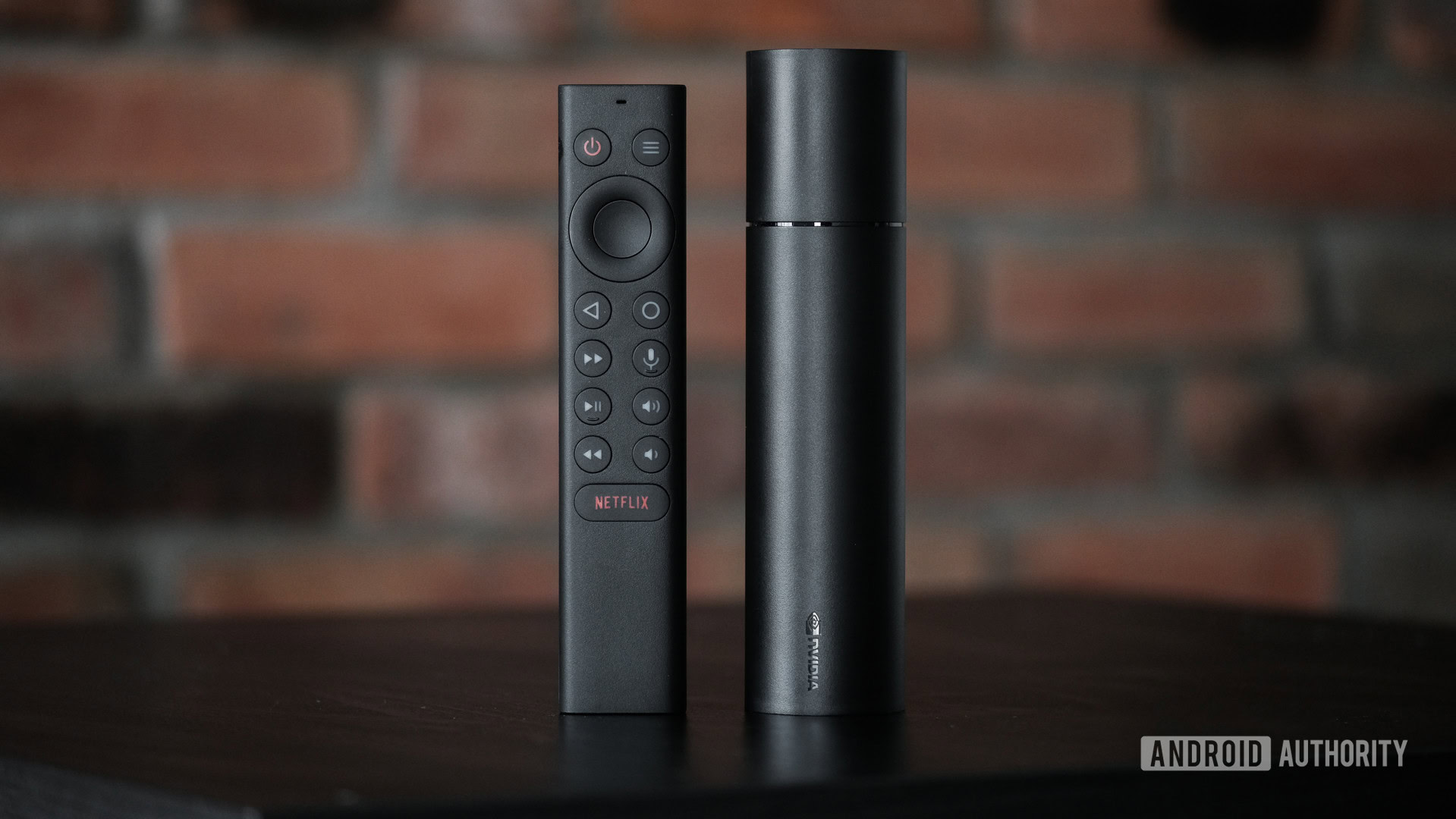
And yet, there’s one almost unbelievable exception to the rule, one older gadget that I just can’t turn away from. After seven years, I still trust the NVIDIA Shield TV for all my Android TV needs.
Are you still using an NVIDIA Shield TV in 2026?
50 votes
Better update support than some modern Android phones

The most obvious reason to use something this long after it’s come out is, well, it still works — and it works well. Even though I have the less powerful tube-shaped Shield TV, I’ve yet to notice a hiccup or a stumble. The 2GB of onboard RAM is still plenty for all my streaming needs, and I think I’ve had to clean up my storage only once in the several years since I adopted the Shield TV as my go-to streamer.
More importantly, though, NVIDIA is just as determined to keep its streaming platform feeling as fresh as I am. While that hasn’t manifested in new hardware in a few years, the company continues to roll out software updates every few months, with major patches every year or so. For those keeping track, we’re now at seven years since the last NVIDIA Shield TV hardware came out, but the company is still bringing most of its updates to the older 2015 and 2017 hardware, too. That’s more than a decade of support — something I guarantee no other device in your smart home has received.
I can count on one hand the number of times I’ve bought something that got this many updates: One.
The most recent update, by the way, was a major one — not just a security patch. It fixed an issue some users had with Disney Plus, a few problems with sleep mode, and a hiccup with Bluetooth connectivity on third-party remotes. Other cheap Android TV boxes? Yeah, such issues could have spelled the end, but not the Shield TV. I hadn’t noticed any problems with my own streaming tube, but I’m glad to have the patches either way.

And, if we compare NVIDIA’s commitment to those of most Android flagships, the TV streamer looks even better. Its seven-plus years is longer than what OnePlus and Motorola offer on most devices, and ties promises from Samsung and Google at the very least. Compare it to other Android-based streaming boxes from 2019, and there’s no contest — Google doesn’t even make the Chromecast anymore, it’s a relic kind of like a film camera or a record player (though I use both of those, too).
The best part of NVIDIA’s continued software support, though, is that it’s going to keep going. The company apparently has no plans to stop updating its older hardware, having designed it to work right up until its engineers retire (or die, according to NVIDIA CEO Jensen Huang). Right now, I don’t really have an incentive to replace my streaming box, because it’s nowhere near giving up on me — and that rules.
I love NVIDIA’s remote (except for the Netflix button)

Almost as important as the Shield TV’s software support is the hardware itself — more specifically, the remote. Yes, the triangular design takes a minute or two to get used to, especially to avoid accidentally pressing the Netflix button, but it’s easily my favorite of all the streaming remotes on the market. The triangular design rests comfortably in the hand, and there are few enough buttons that I can feel my way around without ever looking down.
Honestly, I think NVIDIA’s remote falls in just the right spot — not too big, yet not too small. Roku remotes feel too small and cute by comparison, and Google’s TV Streamer puts its most important button (the power button) right where my thumb naturally rests, making it easy to accidentally press. That said, I’d love a Shield TV remote with a mute button — I can’t stand pressing the volume down button a dozen times to get the same effect.
The remote does everything right, but I wish it had a mute button.
Also, I thoroughly appreciate that NVIDIA kept things simple with just one shortcut button. Outside of the main volume and navigation controls, there’s a single button for Netflix, and that’s it. I don’t have Netflix, so I don’t use the button, but it beats the Fire TV approach of having buttons for Prime Video, Disney Plus, Netflix, and Hulu or Peacock. If I’m launching one of those, I’ll just use a voice command — don’t give me one more thing to worry about pressing.
One last thing to love about the NVIDIA Shield TV’s remote is that it’s really, really hard to lose. Unlike a thin, flat remote that can easily slip between couch cushions, the wide front and angled back keep this remote sitting on top like a wedge. It’s so simple, yet so clever — I’d love more oddly shaped designs if they were all this convenient.
I still think I’d like a hardware upgrade…

As if I haven’t made it clear enough, the NVIDIA Shield TV rules. I still love it, and I’ve been using it longer than just about anything else in my apartment. However, I do agree with the voices on the internet: it’s time for a new one. Smart homes and streaming devices have changed a lot in the last few years, which means that the things a streaming platform needs to support have changed, too. Unfortunately, there are just some things that seven-year-old hardware can’t handle.
For starters, it’s probably about time NVIDIA adopted a new chipset. Yes, the Tegra X1 Plus processor is still pretty good, supporting AI-enhanced upscaling, GeForce Now gaming, and Dolby Vision and Atmos, but it’s starting to fall behind. It can’t handle the required codecs for HDR playback on YouTube, and I’ve had issues opening the YouTube app itself in recent months.
More importantly, though, I would love to see a hybrid version of the Shield TV launch — something that falls between the base and Pro versions. It would be nice to have extra ports to expand storage and extra RAM to work with while maintaining the convenient tube design as it currently exists. Some of these hardware upgrades should help to bring a little more gaming punch back to the Shield TV, too, which is why NVIDIA designed and launched the streamer in the first place.
That’s a hope for the future, though. In the meantime, you can still grab the Shield TV and tap into this long-term support for yourself. How cool is that?
Don’t want to miss the best from Android Authority?


Thank you for being part of our community. Read our Comment Policy before posting.
 By
By