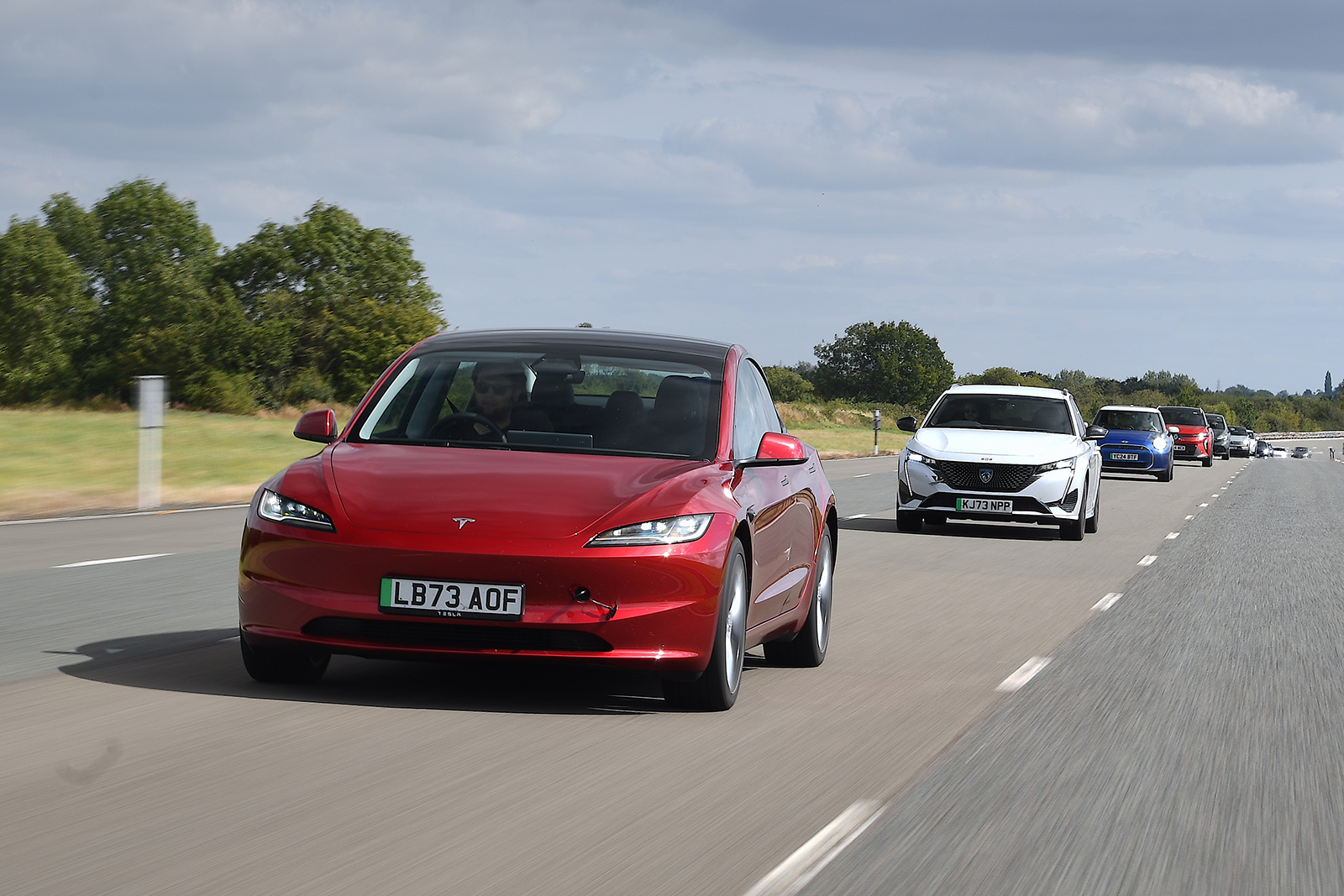

Range anxiety is still a big barrier to electric car ownership, potential punters being put off by a fear of getting caught short on the side of the road.
Yet bigger and denser battery options are helping make 300 miles between the rule rather than the exception these days, even on more affordable EVs.
It’s not just better batteries that are allowing EVs to go farther between top-ups. Higher-voltage electrical architectures, more efficient motors and better aerodynamics are helping them massage ever more mileage from every kWh. And there’s another area that’s often overlooked in the race to for ever-improving efficiency: tyres.
The only thing separating the car from the road, these four circles of rubber play a crucial role in how it behaves on the move. We often obsess about how much grip they generate in the corners or how quiet they are on a motorway run, but very few of us think about how they can save us energy.
So here we take a look at the technology tyre manufacturers are using and developing to ensure that an EV can make the most of its store of energy. Moreover, we will discover that boosting efficiency is only one of the challenges engineers face when creating rubber that’s designed specifically for an EV.
What makes an EV tyre different from normal rubber?
Before we get stuck into the technical nitty-gritty of EV tyre development, it’s probably worth taking a moment to understand some of the unique demands these types of vehicle place on the rubber.
First of all, we can’t talk about EVs without mentioning mass. The fact is that these types of vehicles weigh quite a bit more than an equivalently sized ICE machine – and that brings some challenges.
The heftier the kerb weight, the faster the tyres wear, because the car is working the rubber harder in all conditions. As an extension of this, the tyre needs to balance wear rate and rolling resistance against grip as, once again, increased heft means adhesion levels will technically be lower than those for a lighter car.
Another special challenge an EV provides is in the area of noise reduction. With a near-silent electric motor and just a single-speed transmission, an electric powertrain is much less aurally intrusive than an ICE equivalent. As a result, any racket from the road in an EV feels like it’s being amplified, as there are fewer mechanical harmonics that might have the potential to drown it out.
However, that need to enhance the range by boosting efficiency is at the top of the list. This requires tyres that have a low rolling resistance (so they don’t absorb as much energy when the car is moving). This is a challenge that isn’t necessarily specific to EVs, as for the last 20 years or so the fashion of ultra-frugal diesel models and fuel-sipping hybrids has naturally led to advances in this area.
How do EV tyres extend range?
Ultimately, the best way for a tyre to help improve EV range is through a reduction in rolling resistance.
Assuming the rubber is inflated to the correct pressure, there are usually three elements dictating a tyre’s efficiency when moving: friction through contact with the road surface, tyre deformation through load and aerodynamic drag.

 By
By