

Big screen, thin body
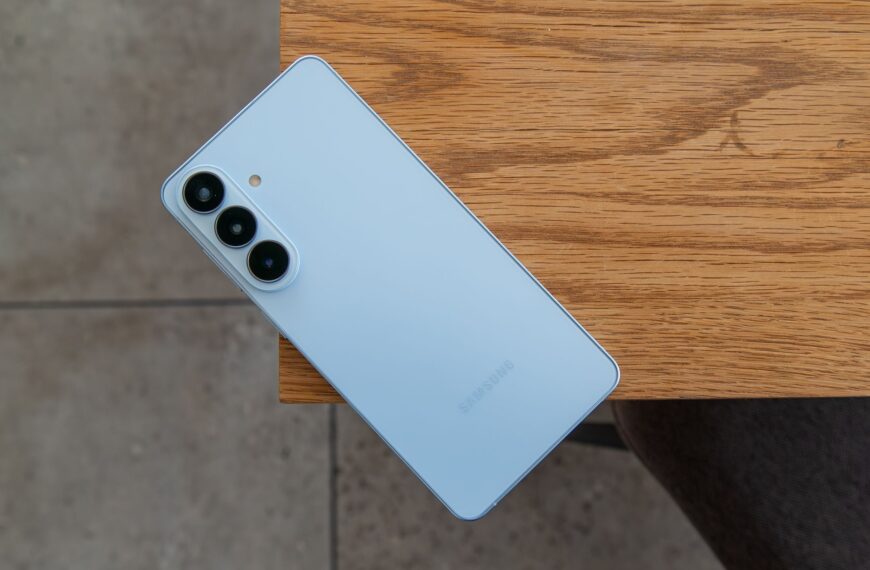
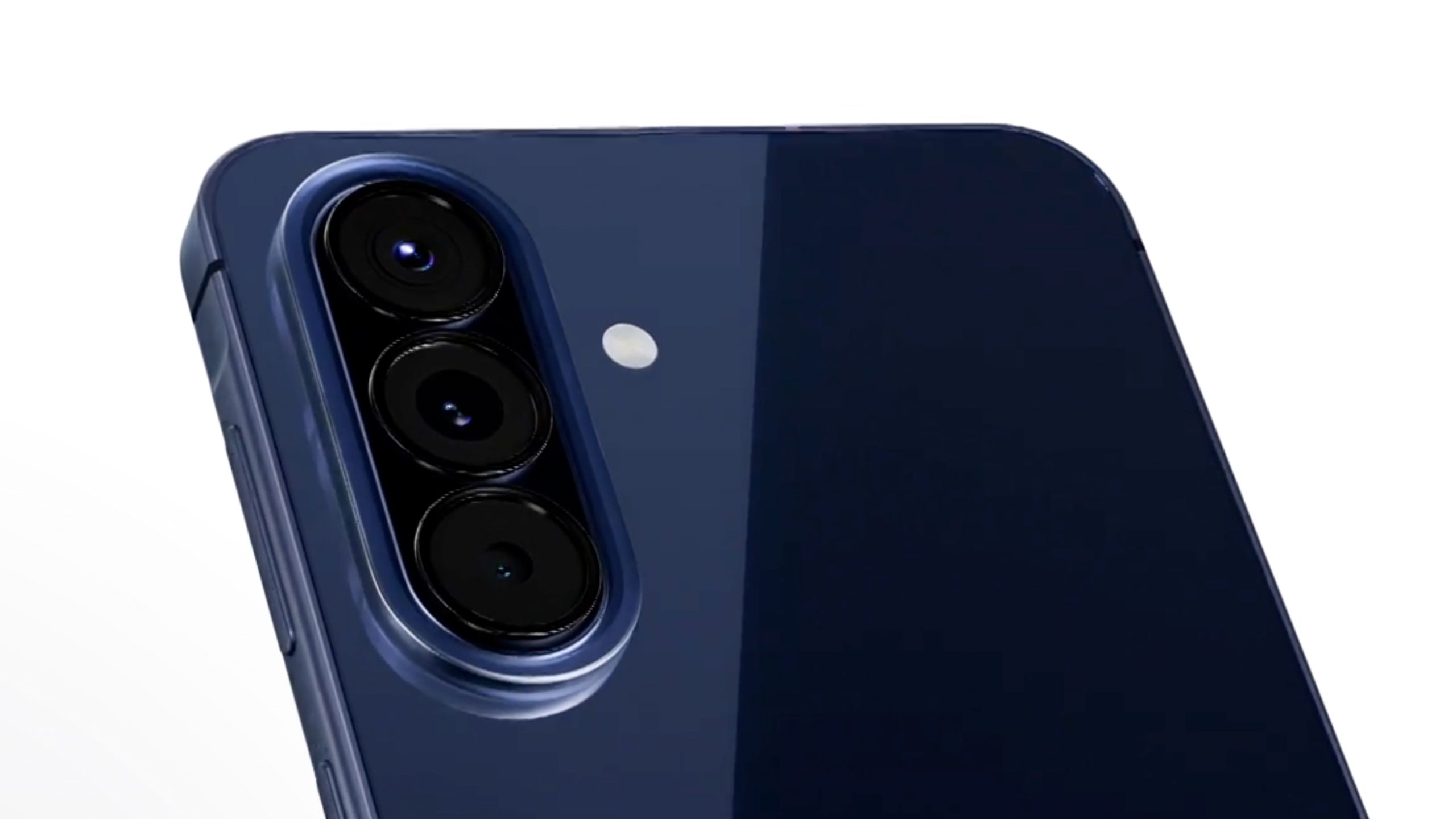
The Galaxy A57 is a midrange phone with a 6.7-inch OLED, and Samsung somehow managed to make it thinner and lighter than its predecessor. Combine that with a slight redesign and IP68 certification for the first time, and the Galaxy S57 impresses in the $550 segment.
Pros
- Thinner and lighter form factor
- 6.7-inch display with slimmer bezels
- One UI 8.5 with six years of software support
- Triple-camera system
- 45W fast wired charging
Cons
- 5MP macro lens is uninspiring
- No wireless charging support
- Asymmetrical bezels
- “Awesome Intelligence” is less robust than Galaxy AI
- More expensive

Smaller and cheaper
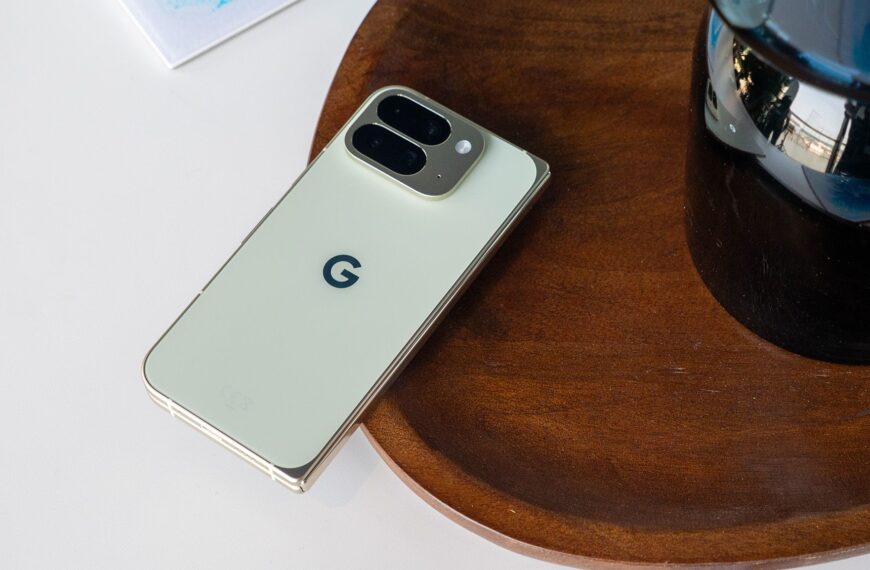
The Google Pixel 10a made headlines by not upgrading the Tensor G4 processor carried over from its predecessor. Once you look past that fact, the Pixel 10a is a stellar midranger that offers longer software support while coming in at a lower price than the Galaxy A57. It also has a bigger battery, wireless charging support, and a flat back.
Pros
- Compact, 6.3-inch form factor
- Affordable $500 retail price
- Flat back with no camera bump
- Well-optimized Android 16 with Gemini and Google AI features
Cons
- Thicker and heavier
- Last-gen Tensor G4 chip
- Slow charging
The latest mid-range phones from Samsung and Google are here, and the two phones take distinct approaches to making an affordable Android phone. Google opted to keep the Pixel 10a’s affordable $500 price point intact, and as a consequence, the handset didn’t get a lot of upgrades this year — even the Tensor G4 chip is carried over from the Pixel 10a. Meanwhile, Samsung made more substantial upgrades to the Galaxy A57, but it’s also more expensive this year.
But should you buy the basic Google Pixel 10a or the pricier Samsung Galaxy A57? Let’s compare all the differences to help you find out.
Article continues below
Samsung Galaxy A57 vs. Google Pixel 10a: Design and display

The Samsung Galaxy A57 and Google Pixel 10a are polar opposites in terms of design, and the in-hand feel you prefer will probably determine which midrange Android phone is best for you. One isn’t inherently better or worse than the other; they’re just different. The biggest separator is screen size, and the Galaxy A57 is incredibly appealing to those who want a phone with a large display at an affordable price.
Samsung offers a 6.7-inch screen on the Galaxy A57, which is great news for people who love a big phone with plenty of space for content consumption and multitasking. The display bezels still aren’t symmetrical, and this is a frustrating compromise of buying a budget Samsung phone, but they’re slimmer than the Galaxy A56’s bezels. The Samsung Galaxy A57 has 1.5mm top and side bezels, while the bottom bezel is thicker at 2.5mm.
The screen offers a 1080×2340 resolution, 120Hz refresh rates, and a 1,900-nit peak brightness. Altogether, it’s a solid midrange display, but the Google Pixel 10a offers a sharper, brighter panel in a smaller package.

Google equipped the Pixel 10a with a 6.3-inch display, which is a breath of fresh air for small-phone lovers. It has a 1080×2424 resolution on a smaller screen than the Galaxy A57, meaning the Pixel 10a will have a sharper display thanks to a higher pixel density. The maximum 120Hz refresh rates match the Galaxy A57’s capabilities, but the Pixel 10a is much brighter, with a peak brightness rating of 3,000 nits. Additionally, the Pixel 10a has uniform display bezels, albeit thick ones.
The build quality is where Samsung starts to create an advantage. To Google’s credit, the IP68 durability rating, aluminum side rails, and completely flush back are key perks of going with the Pixel 10a. However, the Galaxy A57 also offers IP68 certification and metal side rails, and Gorilla Glass Victus Plus on both the front and back. By comparison, the Pixel 10a only has Gorilla Glass 7i on the front while using a plastic back.
I don’t mind the Pixel 10a’s plastic back — it feels great in the hand — but most would find the Galaxy A57’s glass more premium.

Samsung also wins in the Galaxy A57’s in-hand feel, as long as you can live with the larger screen size. Despite the larger overall footprint, Samsung managed to make the Galaxy A57 just 6.9mm thick and weigh only 179 grams. Not only is that smaller than the Galaxy A56, but it’s also considerably thinner and lighter than the Pixel 10a. Google’s midranger is 9mm thick and weighs 183 grams.

It’s worth reiterating that part of the reason for the Pixel 10a’s thick chassis is the phone’s lack of a camera bump. While the Galaxy A57 has a triple-camera system that protrudes from the rear case, the Pixel 10a’s dual-camera cover is actually recessed beneath the plastic back. This means the Pixel 10a will feel completely flat in the hand and won’t rock back and forth on a table.
This is a neat perk and really makes the Pixel 10a stand out, especially compared to phones like the Galaxy A57, which have a large camera bump.
Samsung Galaxy A57 vs. Google Pixel 10a: Hardware and specs

In terms of performance, neither the Galaxy A57 nor the Pixel 10a offers top-of-the-line specs. However, both will be capable of handling daily smartphone needs for years to come, with long software support guarantees. Each handset ships with Android 16, with the Pixel 10a debuting with Pixel UI and Material 3 Expressive and the Galaxy A57 launching with One UI 8.5. Google offers seven years of OS upgrades, while Samsung only offers six.
Google chose to use the Google Tensor G4 for another year on the A-series Pixel, which is disappointing for those who wanted extra performance and more RAM. The Pixel 10a performs almost exactly like the Pixel 9a, as both phones have the same chip and 8GB of RAM. Meanwhile, the Galaxy A57 offers the Samsung Exynos 1680 chip and either 8GB or 12GB RAM, depending on the configuration.
|
Category |
Samsung Galaxy A57 |
Google Pixel 10a |
|---|---|---|
|
Operating System |
One UI 8.5 (Android 16), six years of OS upgrades |
Android 16, seven years of OS upgrades |
|
Display |
6.7-inch Super AMOLED, 1080 x 2340 resolution, 120Hz, 1900 nits peak brightness, Gorilla Glass Victus+ |
6.3-inch Actua P-OLED display, 1080 x 2424 resolution, 120Hz, 3000 nits peak brightness, Gorilla Glass 7i |
|
Processor |
Exynos 1680 |
Google Tensor G4 |
|
RAM |
8GB, 12GB |
8GB |
|
Storage |
128GB, 256GB, 512GB |
128GB, 256GB |
|
Rear cameras |
50MP wide camera, 12MP ultrawide camera, 5MP macro |
48MP wide camera, 13MP ultrawide camera |
|
Front camera |
12MP |
13MP |
|
Battery |
5,000mAh |
5,100mAh |
|
Charging |
45W wired, no wireless charging |
30W wired, 10W wireless |
|
Durability |
Aluminum frame, glass back |
Plastic frame, Glass back |
|
IP rating |
IP68 |
IP68 |
|
Weight |
179g |
183g |
|
Dimensions |
161.5 x 76.8 x 6.9 mm |
153.9 x 73 x 9 mm |
|
Colors |
Navy, Gray, Icyblue, Lilac |
Obsidian, Fog, Berry, Lavender |
The Google Pixel 10a has a slightly larger battery, but the Samsung Galaxy A57 charges faster. Google packs a 5,100mAh battery inside the Pixel 10a, while you get a 5,000mAh cell inside the Galaxy A57. That said, the Samsung midranger charges at up to 45W over a cable, compared to Google’s 30W maximum. This could prove to be more valuable than a bit of extra capacity in real-world use.

However, it comes at a cost. The Galaxy A57 doesn’t support wireless charging, let alone magnetic charging. Wireless charging used to be a common omission on midrange phones as a cost-cutting measure, but it feels like a feature that should be standard in 2026. The Google Pixel 10a does include wireless charging, albeit at slow 10W speeds with no built-in magnets.
Samsung Galaxy A57 vs. Google Pixel 10a: Cameras

The camera systems on the Galaxy A57 and the Pixel 10a are a classic example that more doesn’t always equal better. The Galaxy A57 has three cameras, and the Pixel 10a only has two, so the Samsung phone must be better, right? Not exactly. That third camera on the Galaxy A57 is a tiny, low-resolution 5MP macro lens you’ll probably never use.
The Pixel 10a has a software-based Macro Focus mode that lets you take macro shots with the ultrawide lens, and it might actually perform better than the Galaxy A57’s dedicated macro lens. On midrange phones like these, the secondary lenses are usually lackluster, and it all comes down to the primary shooters.

With that in mind, the main cameras on the Galaxy A57 and Pixel 10a are quite similar. The Samsung phone offers a 50MP sensor, while the Google handset provides a 48MP sensor. The Google Pixel 10a and Samsung Galaxy A57 also feature ultrawide cameras at 13MP and 12MP, respectively. On the front, the Pixel 10a comes with a 13MP sensor, and the Galaxy A57 sports a 12MP camera.
Samsung Galaxy A57 vs. Google Pixel 10a: Which should you buy?

No one likes price hikes, but the Samsung Galaxy A57 includes a larger screen, a premium design, and almost-flagship specs to justify the price. There’s just one issue — Samsung is competing with itself. The Samsung Galaxy S25 FE is the better all-around phone, and it’s discounted to just $500 right now. You can get a Galaxy S25 FE for less than a Galaxy A57, and that makes it hard to recommend the new A-series midranger.
The same can be said about the Google Pixel 10a, though. While it’s a great phone at $500, it shares many similarities with the Pixel 9a. The difference is that the Pixel 9a isn’t seeing great discounts at the moment — it’s only $30 cheaper than the Pixel 10a. So, the Pixel 10a makes more sense to buy at full price than the Galaxy A57, even though the latter is arguably better.
If you have your eye on the Galaxy A57, perhaps consider waiting for discounts. If the Galaxy A57 gets a price cut by even $50 or $100, it becomes a much easier sell. That’s inevitably going to happen, but it doesn’t make sense to buy the Galaxy A57 at full price when the Galaxy S25 FE and Google Pixel 10a exist.
Too expensive
The Galaxy A57 could be an excellent midrange phone in a few months when discounts hit, but now, it’s hard to justify paying more. This phone has the large screen and refined design going for it, although the Galaxy S25 FE and Pixel 10a are looming with better value propositions.
The better value
With a lower price and an extra year of Android OS support, the Pixel 10a is the value Android midranger to beat. The 6.3-inch compact screen might be appealing to some buyers, and the same goes for the flat back. It’ll only get cheaper when discounts start to roll around.
 By
By